


 Shkruar nga Pamfleti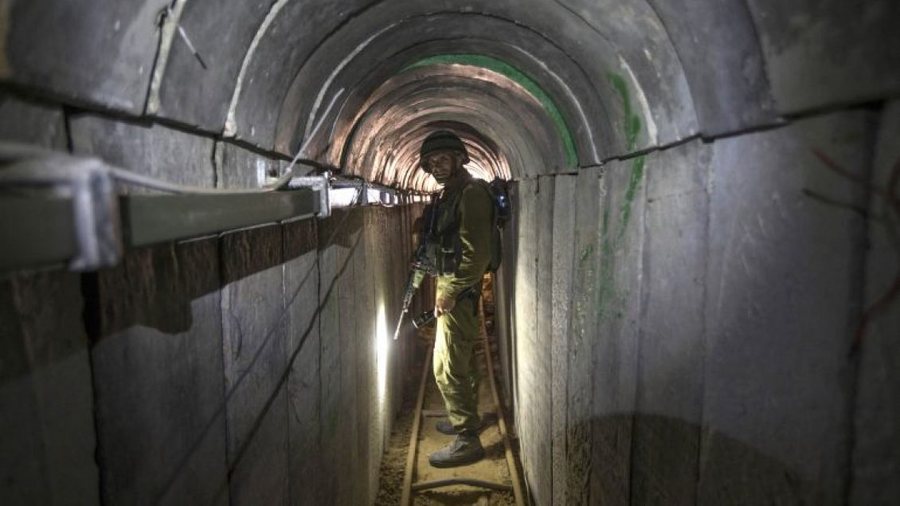
A week after Israeli troops surrounded Gaza City and cut it off from the southern part of the Gaza Strip, there appears to be no evidence of a serious attack on the center.
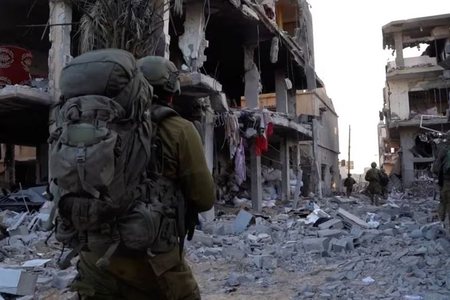
On Wednesday, a select group of foreign reporters based in Israel were sent to a part of the battlefield, which the journalists described as the "borders of Gaza City".
There, writes an Al Jazeer analysis , almost every building was destroyed or severely damaged by aerial bombardment, artillery fire or the advance of tanks and infantry. There, tanks were seen clustered in a besieged camp, and defensive sand walls likely denied Hamas fighters the opportunity to strike.
Thus, as the paper assesses, the position and attitude of that company of the 401st Brigade shows more than perhaps the Israelis wanted. This tells us that progress will be slow – street by street rather than block by block. It also proves that Gaza City's most difficult battle, the underground one, has not begun in earnest.
In this direction, some tunnels may have been identified and destroyed as the troops advanced, but this is likely to be a small fraction. Meanwhile, the 34 Israeli soldiers Israel has admitted to have been killed so far appear to have been killed individually or in small groups – when the tunnel war begins, the numbers are likely to rise in larger groups. So, to enter the tunnels, Israeli forces will have to use decades-old and long-forgotten military practices to overcome the challenges of underground combat.
In order to gain a fighting position in the tunnels, Israel must identify as many entrances as possible. But for a network believed to be up to 500 km (310 miles) long, they probably number in the tens of thousands. Most are hidden, inside residential buildings, garages, industrial facilities, warehouses, under waste dumps and, after more than a month of bombing, under piles of rubble. But Israel has been preparing to tackle the tunnels since the 2014 incursion into Gaza.
Continuous drone surveillance, using sophisticated software that analyzes movement patterns and can recognize individual faces and match them to a database of known Hamas members, revealed hundreds or thousands of entries.
Informants have probably added more, and it would not be a surprise if Israel's specialized Weasels (Samur) tunnel warfare unit knows half of the tunnel entry points.
Knowing the entrances is useful, but even if all the known ones were attacked, that would not make the tunnels unusable for Hamas. Most tunnels have several entrances at each end, so some will always remain open. The tunnel's builders, Hamas, have a huge advantage as they know the network, Al Jazeera's article estimates.
The Israeli software can provide hints for linking movement patterns to reveal that two points are possibly connected, but it does not detect underground roads, directions or intersections. To map the tunnels with any degree of accuracy, commandos must go inside, facing great danger and hardship. The first is technical: down there, GPS positioning devices are useless because satellite signals can't penetrate the ground. Thus, devices that combine magnetic sensors, which are unaffected by ground input, and motion sensors such as those used in pedometers are most likely to be used.
A crude and imprecise system, but better than nothing. Another problem, however, would be movement within them and communication with the outside.
For practical purposes, everything has been analyzed so far assuming that there are no "countermeasures" in the tunnels. This is completely unrealistic: Hamas is surely prepared to put up fierce resistance. Most of the tunnels are probably blocked with pre-planted improvised explosive devices (IEDs). They can be related to remote detonators, but they can also be triggered by specialized detonators that react to light, vibration, noise, movement, and even increased carbon dioxide concentrations when people are present.
The tunnels are connected by wires and cables that carry electricity, internet, telephone and military lines. Hamas may have surveillance and reconnaissance equipment that will let them know where the Israelis are so they can remotely detonate that location. The Israelis simply cannot cut all the wires because, like in the movies, some detonators can go off when the power supply is cut.
As anyone connected with mining knows, explosions in closed tunnels are far more deadly than on the surface. They spread further and absorb oxygen, so those who survive the initial blast often suffocate from lack of oxygen.
"Getting" Hamas out of there
Every commander, on both sides, prefers to avoid fighting in the tunnels. Hamas may not be able to prevent Israelis from entering some tunnels, but it can try to deny them the freedom to operate in them. The Israeli command knows that its advantage in technology and weapons is significantly higher on the ground than under it, so it would prefer to take Hamas out of there and fight on the surface.
Për ta bërë këtë, mund të përdorë agjentë kimikë të tillë si gaz lotsjellës, një pjesë e të cilit shkon shumë në tunele të ngushtë, shkruan në analizën e Al Jazeera. Ka të ngjarë që Hamasi të mos ketë pajisje të mjaftueshme mbrojtëse për luftëtarët e tij të tunelit, kështu që çdo agjent me bazë gazi mund të jetë efektiv. Edhe pse Izraeli nuk ndihet i kufizuar nga konventat ndërkombëtare, pasi nuk e konsideron Hamasin si një luftëtar ligjor, nuk pritet të përdorë gazra vdekjeprurëse. Kjo do të shkaktonte akuza shtesë ndërkombëtare që do të ishte e vështirë të mohoheshin. Uji është përdorur shpesh në të kaluarën për të përmbytur tunelet dhe për të detyruar banorët e tyre të largohen, por thjesht nuk ka ujë të mjaftueshëm në Gaza. Por mund të ketë mundësi të tjera. Egjipti thuhet se ka derdhur ujërat e zeza në tunelet e kontrabandës nga Gaza.
Lufta urbane është e vështirë, kërkon njohuri dhe pajisje specifike; Lufta në tunel është edhe më sfiduese dhe e specializuar. Siç zbuluan ekspertët ushtarakë vite më parë, armët e zakonshme janë shumë të mëdha dhe të rënda për t’u përdorur në hapësira të mbyllura. Çfarëdo arme zjarri që ata zgjedhin, luftëtarët e tunelit do të kenë fuqi të kufizuar zjarri pasi vetëm dy mund të qëllojnë në të njëjtën kohë, njëri i gjunjëzuar, tjetri duke qëndruar mbi të, duke bllokuar fushën e zjarrit për pjesën tjetër të ekipit. Granatat trullosëse dhe ndezëse mund t’i japin atyre një avantazh duke e bërë armikun përkohësisht “të shurdhër dhe të verbër”, por është e diskutueshme nëse ato mund të përdoren pa rrezik për anën e tyre.
Në përputhje me praktikën shekullore, ata sigurisht që do të pajisen me thika luftarake ose hanxhar, pasi luftimet “ballë për ballë” është e sigurt që do të ndodhin. Ndërkohë është folur shumë për qentë izraelitë të sulmit në tunele, por ekspertët e qenve ushtarak dhe policor hedhin poshtë idenë. Qentë janë shumë të paparashikueshëm në kushtet e stresit ekstrem luftarak dhe ka pasur shumë raste kur nën ndezjet dhe zhurmat e një përleshjeje zjarri ktheheshin kundër “pronarëve të tyre”.
Hamasi ka nevojë për tunelet dhe mund të dëshirojë vetëm t’i bllokojë disa prej tyre taktikisht, por jo t’i shkatërrojë krejtësisht duke përdorur shpërthime të vogla për të parandaluar armikun të përdorë një tunel të caktuar. Por gërmimi në kushte luftarake është jopraktik dhe i bën gërmuesit të prekshëm në momentin që pengesa hiqet, kështu që një tunel i bllokuar ka të ngjarë të mbetet i tillë gjatë kohëzgjatjes së konfliktit.
And Israeli combat engineers had announced that they were testing a "sponge bomb," a device containing two chemical substances that create rapidly expanding foam. The idea is to immediately create a strong concrete "blockade" to block the tunnels, but there have been mishaps in use and it is not certain whether the sponge bomb is ready for deployment. Rather than simply blocking it, Israel wants to destroy any tunnels it needs to, so it will have to make sure all structures are submerged, not just the entrances.
In most cases, this cannot be done simply by placing explosives inside the tunnels. For more permanent demolitions, it is usually necessary to drill deep holes in the walls and ceilings of the tunnel, fill them with explosive dynamite, and detonate so that the deep structure shakes and the ground collapses to fill it. It seems rather implausible that such a massive engineering undertaking would begin during the fighting, so Israel might see its task as first destroying Hamas fighters and then destroying their entire underground network. To get to the last part, Israel may need months and must first win the underground war, something that will also take time.





Lini një Përgjigje