


 Shkruar nga Pamfleti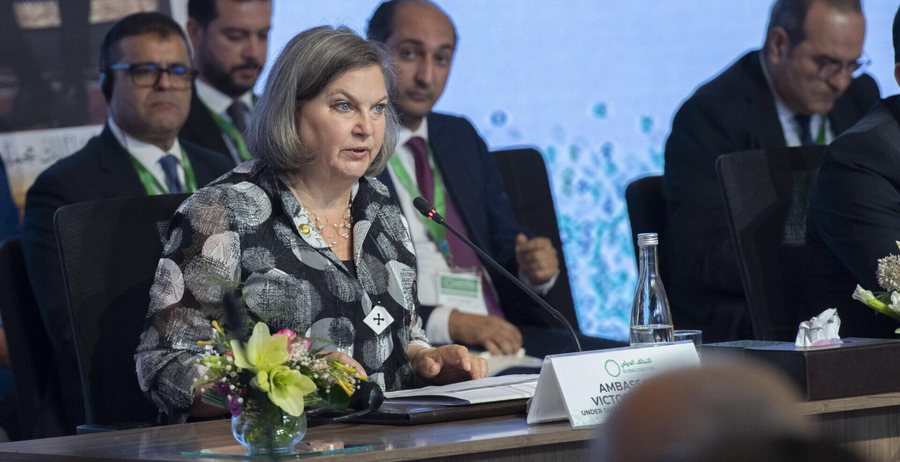
How the credibility of one of the most cited sources on the war in Ukraine was shaken
For years, maps published by the Institute for the Study of War (ISW) have been an important reference point in the Western narrative of the war in Ukraine. They have been used by journalists, broadcasters, analysts and politicians as a visual compass to understand where Russia is advancing, where Ukraine is resisting and, above all, how the war is actually going. These maps were considered authoritative, technical and almost neutral.
But in recent months, something seemed to have broken. On November 15, 2025, as fighting raged around the Ukrainian city of Myrnohrad, a very specific market opened on the Polymarket platform, a prediction market where users can bet with cryptocurrencies on real-life events: Will Russia capture Myrnohrad on that day?
To those following the situation on the ground, the answer seemed clear: no. The city had not fallen, nor did it seem to be in any danger of falling. However, that evening, some bettors won incredible sums of money, with profits of up to 33,000%, convinced that the Russian army had suddenly penetrated the city.
Based precisely on an ISW map, which for several hours showed a decisive Russian advance into Myrnohrad. This modification, after the payout of the winnings, mysteriously disappeared from the site. The next day, Myrnohrad continued to be the object of battles, but the money had already been distributed.
What did ISW say?
About 48 hours later, ISW published a brief, self-critical announcement: the change to the map had been made without authorization, without internal institutional approval, and had been removed before it could be incorporated into the normal workflow. There was no reference to Polymarket and no real explanation of who had made the edit.
Shortly after the statement, the name of an ISW researcher, a geospatial systems specialist, was removed from the institution's website and, according to specialized media, he has been fired. ISW has not confirmed or denied this information.
Meanwhile, Polymarket users, who had bet around $1.3 million on this single market, have begun accusing the think tank of a total loss of credibility.
The problem with prediction markets
As some observers have explained, prediction markets like Polymarket, where bets are treated like stocks, are particularly vulnerable to manipulation: there are no clear rules for insider trading, and the authority that oversees these markets in the US has no mechanisms to directly pursue such cases.
By 2025, prediction platforms had raised tens of billions of dollars, allowing bets on everything from the use of nuclear weapons to new offensives to the timing and manner of bombings in Gaza or Venezuela. The ISW-Polymarket case shows us that modern wars are not only fought, but also turned into betting games.
Why ISW has long been under criticism
The case of the maps falls on a terrain that is influenced not only by cold data but also by ideology. The Institute for the Study of War, founded in 2007 by Kimberly Kagan with the stated goal of providing independent, open, and up-to-date reporting on conflicts, has become a central player in Euro-Atlantic debates over the war in Ukraine. Although it presents itself as nonpartisan, non-profit, and neutral, the ISW has its roots and influences within the orbit of American conservatism.
Its board is often composed of figures closely associated with neoconservative movements: former senior military officers, diplomats, regime change theorists, and business leaders related to defense, finance, and law.
Founder Kimberly Kagan is part of a family with great influence on American military policy: wife of military historian Frederick Kagan, and granddaughter of Robert Kagan, one of the ideological architects of the "War on Terror" of the early 2000s, who is married to Victoria Nuland, a diplomat with a key role in American policy on Ukraine after Euromaidan.
This combination of research, power, family networks, and strategic interests does not automatically disqualify ISW's work, but it does make it much more difficult to consider it objective and politically neutral. /Adapted from Inside Over




Lini një Përgjigje