


 Shkruar nga Pamfleti
Second terms have rarely been successful endeavors in recent American presidential history. Ronald Reagan and Bill Clinton saw their re-election luster quickly fade in the face of scandal - Iran-Contra for Reagan, Monica Lewinsky for Clinton - while George W Bush was brought down by an unwinnable war in Iraq.
Even Barack Obama, whose second term was untainted by either scandal or war, found it nearly impossible to repeat the legislative triumphs of his predecessor amid an increasingly hysterical partisan war.
And it's fair to say they were the most "successful" two-term presidencies of the modern era. Lyndon Johnson was so shaken by Vietnam that he decided not to run for re-election in 1968. The less said about Richard Nixon's second term, the better.
All of this should be a cautionary tale for Joe Biden and the team around him as they fight hard to keep his place at the top of the Democratic presidential ticket after his disastrous debate performance. Even if we were to take their arguments at face value — that the president remains at the top of his game and can still defeat Donald Trump in November — how could they imagine what a second Biden term would look like given given the events of the last two weeks?
It goes without saying that any trust built up during his first four years in office has now been irreparably damaged. How can anyone, whether legislative leaders on Capitol Hill or foreign dignitaries in distant capitals, take what his administration says at face value when so many of them feel betrayed by the White House's long-repeated insistence that welfare of the president was unchanged?
Once trust in an official is lost, that elusive attribute known as political capital begins to crumble. A second-term president, by definition a lame duck, is already returning to office with this exhaustion. He who has been re-elected with much of the political and geopolitical establishment believing they have been duped about something as fundamental as mental acuity is starting from an even deeper hole.
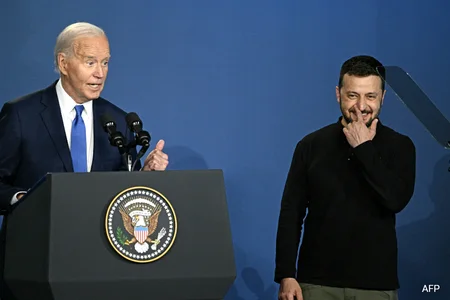
There was one moment during the furor after the debate of the past two weeks that put this point into sharp relief. On July 4, with most of America distracted by fireworks, Biden held a 30-minute phone call with Benjamin Netanyahu, the Israeli prime minister with whom the White House is increasingly frustrated. A senior administration official said the two men discussed Biden's three-phase peace plan for Israel's war in Gaza and insisted "the conversation was detailed, going through the text of the agreement."
It was hard to hear those words without thinking back to just a week ago, when the president seemed unable to even remember the second and third phases of his plan. Can Netanyahu — or any other world leader, for that matter — take Biden seriously as a mediator on such important issues?
Biden's defenders will argue that such assessments are unfair, that the president has an admirable record of galvanizing allies in Ukraine and keeping pressure on Netanyahu. In addition, some have argued that he has a strong crisis management team. But politics is a contact sport, and his team must now face a new reality: Allies and foes will inevitably consider Biden's health.
If the past two weeks are any indication, we already know what a second Biden term would look like. Any public appearances will be subject to forensic examination of gaps in the president's memory. Any attempt to shield him from the public or the press will be met with a furious backlash – which could then force him to make even more public appearances, inevitably resuming the hand-wringing over his competence if a mistake. And this for a politician who was prone to gaffes at the best of times.
Policy initiatives will be clouded by questions about who is pulling the president's strings. Calls for regular cognitive and neurological testing will become a regular part of political discourse. A second presidential term that was already burdened with the political disadvantages faced by Biden's predecessors will be immeasurably more difficult because of questions about his age.
Therefore, this is what the Biden loyalists are fighting for. It seems one of the most poisoned chalices ever offered to a politician and his offspring. Perhaps they are right that Trump's demagoguery and unpopularity will convince voters to support Biden, despite doubts about his age.
But is this really the presidency they wanted? Shouldn't they be asking themselves this question before continuing their campaign? / The Economist


Lini një Përgjigje