


 Shkruar nga BIRN
While the US presidential election in November is almost certain to be the most important event of the year, many other key countries will also elect new leaders this year. The results, particularly in the United States, will have profound consequences for war and peace, climate action, and perhaps the future of democracy.
In my old job at the US State Department, colleagues often asked me what could happen in this or that situation. Often, there was no way of knowing this, and I reminded those who asked that I was Director of Policy Planning, not Forecasting. That said, forecasting can be a useful intellectual exercise to carry us through the coming year.
The US presidential election in November is almost certain to be the most important event of 2024. In fact, US elections are always important given America's power and influence. But what makes these elections fundamentally different is that they are likely to be ones in which the differences between the major party candidates outweigh their similarities. Assuming President Joe Biden and former President Donald Trump win their respective parties' nominations, who wins will matter a great deal, both for the United States and the world.
In fact, there are some similarities between Biden and Trump. Neither believes in free trade, although Trump, unlike Biden, is a complete protectionist. Both favor a greater role for government in the economy. Both wanted to leave Afghanistan. They also agree on the need to keep a tough line on China, especially when it comes to trade and investment in critical technologies.
But the differences are much greater. Biden is a career politician who believes in democracy, embraces its norms, and is willing to work across party lines to create compromises that benefit the country. Trump rejects political norms (such as accepting electoral defeat), often putting himself ahead of the country's democracy.
Biden's foreign policy approach centers around America's allies, which he sees as a major source of comparative advantage with the US. Trump considers allies more as economic competitors and a drain on America's treasury. While Biden has seen this period of history as a contest between democracy and autocracy and has argued that America should help democratic friends around the world, Trump gets along much better with autocrats and seems to envy their political control. The list of issues on which the two differ markedly is long and includes climate change, immigration policy and access to abortion, to name a few.
As of this writing, Trump should be seen as the favorite. His politics and personality are better suited to this populist era. Biden is also weighed down by the perception that he is too old, and by inflation and an unpopular influx of immigrants. The biggest question hanging over Trump is the extent to which his legal problems will translate into political problems.
But Americans won't be voting for just one president this fall. Their ballots will also decide whether Congress will be controlled by the same party. Right now, the upper house, the Senate, is in the hands of Democrats, while the House of Representatives has a Republican majority. The opposite is likely to happen after November.
If Trump wins, a Democratic-controlled Senate could be the most significant limit on his power at the federal level, unless the Supreme Court proves to be more conservative than ideological. If Biden wins, a Republican-controlled Senate could make governing very difficult.
Beyond the US, there will be dozens of elections around the world in 2024. The first big one will take place in Taiwan in mid-January. Polls suggest a close race, with the ruling Democratic Progressive Party's presidential candidate William Lai slightly ahead in a three-way contest. But what matters most is that neither candidate seems eager to do something reckless like declare independence. However, if Lai becomes Taiwan's next president, China is likely to respond by increasing its military, economic and political strength over the island.
Two months later, Russia will also hold presidential elections. There can be no easier prediction than that Vladimir Putin will win another term.
Another easy prediction is that Mexico's next president will be a woman after voters go to the polls in June. The two main candidates are women, left-leaning and running on platforms that would continue many of the policies of outgoing president Andrés Manuel López Obrador (AMLO).
The coming year will also be defined in no small part by the war between Russia and Ukraine. The third year of the current war is unlikely to be decisive. Neither side can impose their will on the battlefield and neither is willing to negotiate.
Ukraine is not prepared to accept anything less than the full restoration of its 1991 borders. However, it may be forced to adopt a more defensive strategy as Western military support is reduced. Putin seems convinced that time will weaken the resolve of Ukraine's backers in the West. In particular, Putin is waiting to see if Trump wins, in which case he predicts, correctly, that US military and economic aid to Ukraine will drop sharply, if not stop altogether.
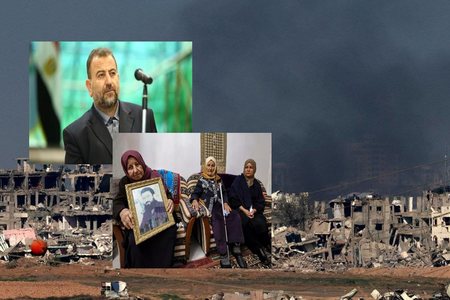
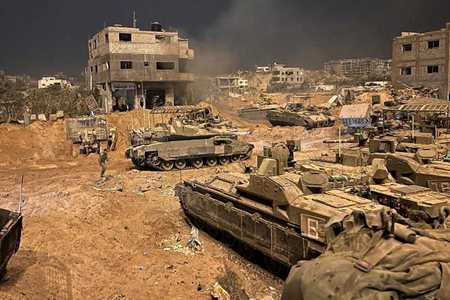
Then there is the war between Israel and Hamas, now in its third month. At some point, the intensity of the war will fade somewhat and give way to an Israeli occupation of Gaza, accompanied by periodic violence.
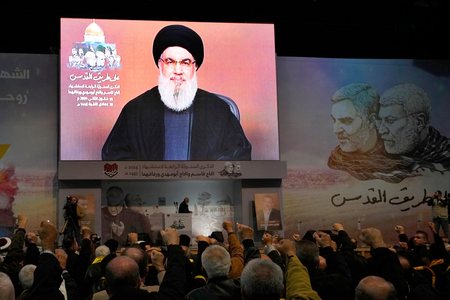
What follows in Gaza and the occupied West Bank will be largely determined by Israeli elections that will almost certainly be held in 2024. If Prime Minister Binyamin Netanyahu and a like-minded government remain in power, the prospects for diplomacy will be gloomy. However, the election of a more centrist government would create diplomatic opportunities for the US and its Arab partners, although any diplomatic prospects could be jeopardized by an expansion of the war into Lebanon or even Iran.
As for China and US-China relations, 2024 is unlikely to be a year of dramatic change. Chinese officials are mostly focused on the economy and are not looking for a confrontation with the US that could lead to more export controls and investment restrictions. Like Russia, China will have one eye focused on US policy, although many in China are less certain that a Trump victory would necessarily be in China's interest.
The biggest event coming up after the US election is likely to be the annual United Nations Climate Change Conference (COP29), which will take place in November in Azerbaijan. It is equally likely that the meeting will not produce results that significantly stem the crisis.
Last but not least is Argentina, where a new president campaigned on a platform of radical change. History suggests that when outsiders become insiders, reality often moderates what they do. Of course, Trump provides evidence that this is not always the case. Such occurrences are one reason why these predictions are so difficult.
Taken with permission from Project Syndicate, 2016.




Lini një Përgjigje