


 Shkruar nga Pamfleti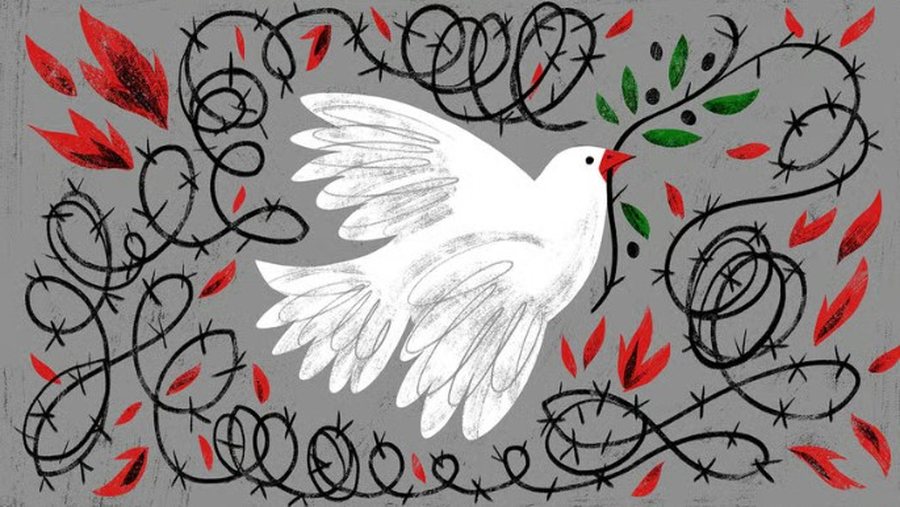
Donald Trump's approach to peace ignores essential lessons from history
Benjamin Franklin once wrote: " In my opinion, there never was a good war, or a bad peace ."
Although his wisdom remains familiar, this saying is seen with more nuance today. War is never “good,” but the use of force can sometimes be justified. Equally important, in today’s world, especially as President Donald Trump presents himself as a peacemaker, there are also “bad” peacees, agreements that do more harm than they solve. This is precisely the concern expressed by 15 leaders from Canada, Europe and Japan in a statement on November 22, calling on Trump to seek “a just and lasting peace” for Ukraine.
The appeal is a mix of moral and practical fears. America’s allies worry that a peace that is too one-sided in favor of Russia would be unacceptable to the Ukrainian people and would damage the country’s fragile democracy. They also fear that a ceasefire negotiated by Trump could reward Vladimir Putin’s aggression and fail to deter Russia from carrying out future attacks.
Trump's positions often change, but they are not random. He prefers demonstrations of force and threats, but as a prelude to a deal, not to war. Trump tends to accept compromises with great powers, as when he says that Ukraine "should not have started the war" and that it should have "made a deal" with Russia, a much larger and more powerful country.
Trump often has difficulty understanding why people fight over values, and according to some of his former aides, he has downplayed the sacrifices of American veterans. His vice president, JD Vance, recently explained that Trump doesn’t understand why Ukrainians and Russians “don’t stop fighting and start trading with each other,” adding that “more peace in the world” is good for the American economy.
Essentially, the principles of “peace according to Trump” seem to rest on the premise that the strongest is right and that war is bad for business. But history shows that these approaches have often produced failed deals.
The most widely cited example is the Treaty of Versailles after World War I. For decades, many historians have called it a harsh treaty against Germany, setting the stage for the rise of Hitler and World War II. But more recent scholarship suggests that the problem was not just the harshness of the treaty, but the fact that the victorious powers did not strictly enforce what they had signed. They turned a blind eye when Germany stopped paying reparations, began rearming, and fed myths that its army had not been defeated on the battlefield but “betrayed.”
Professor Margaret MacMillan, author of the seminal work Paris 1919, argues that what makes agreements sustainable is the will of the great powers to implement them. She cites the example of 1945, when Germany and Japan accepted much harsher terms, but the peace worked because the US remained committed in Europe and Asia, due to the Cold War and the need to contain communism.
History also teaches strong lessons about the price of being soft on aggressors. In 1938, Britain and France agreed to sacrifice Czechoslovakia in the Munich Agreement, thinking they would avoid war. But Hitler didn't want peace, he wanted confrontation.
The economic element is another important parallel. German diplomat Johannes Regenbrecht recalls the Minsk negotiations in 2015, a failed attempt to stop Russian attacks on Ukraine. Germany, led by Chancellor Angela Merkel, considered Ukraine too weak to defend itself and hoped that economic ties with Russia would help stabilize the situation. Although they recognized the dangers of their strategy, they were not prepared to face the consequences.
Today, the major European powers are relying on strong alliances, binding agreements and a slow-moving military buildup. Meanwhile, they fear that the United States may be following a different path, one that does not guarantee lasting peace. / Adapted from “Pamphlet” by “ The Economist ”




Nuk është paqe e gabuar,është pasoja e një provokimi që mizat i bëjnë ariut... Turpi për ju është fjalë e huaj ,sepse ju nuk keni as Zot as Atdhe. Zhytur në perversitet dhe degjenerim në kuptimin e plotë të fjalës Europa ka harruar historinë : Sa francezë vdiqën në fushatën ruse të Napoleonit,sa ushtarë gjermanë u kthyen në shtëpi gjallë nga Rusia më 1956? Rusi ju bën pleh o derëzinj ditën apo natën në daçi,keni 70 vjet që fshiheni poshtë fustanit të Amerikës dhe ju duket vetja se jeni aq të fortë sa të shpërbëni Rusinë !! Edhe kush pa ? Mbretëria e bashkuar e cila nga Çurçill dhe Margaret Thatcher u katandis te Suela dhe Shabana! Franca e De Gauille dhe Jacques Chirac u katandis te ai që e rreh publikisht e shoqja/mamaja... Gjermania që nuk ka ushtri dhe Italia e asaj piçkëllonjës të Ed Ramës? Këta do mundin rusin apo Kaja Kallas ( Qija / Ndizja)? Vrisni rininë që të pasurohet industria e luftës ,atë bëni ju!