


 Shkruar nga Pamfleti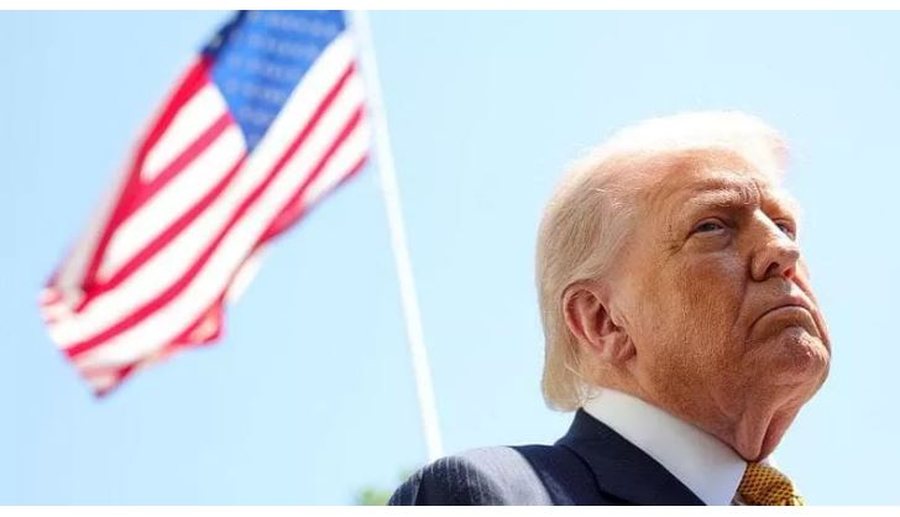
The White House Dilemma: A stalemate that tastes like defeat or an attack with unpredictable consequences
Donald Trump is buying time, hoping to push Iran to accept his peace terms, because he has reached a crossroads. He must choose between continuing the stalemate, which would perhaps help him in the run-up to the midterm elections, but would not allow him to achieve his declared objectives; or risk restarting the war with even greater intensity, which could bring him victory through the fall of the regime, but could also cost him his historical legacy, not to mention the anger of American voters hit by the economic consequences of his decisions. Meanwhile, his allies are holding him back because they have another objective.
According to a poll published yesterday by the New York Times, the popularity of the head of the White House has fallen to 37%, levels already similar to those of Jimmy Carter during the Iran crisis. 64% of Americans consider the intervention a wrong choice, and this figure includes 73% of independent voters and 22% of Republicans. Only 70% of Republican Party supporters side with the president.
As if the majority of Americans' opposition to the war were not enough, since the bombing began the price of gasoline has increased by 56%, from an average of $2.89 per gallon in February to $4,517 today. This has an immediate impact on household budgets and at least a medium-term effect on inflation. In this way, it risks slowing economic growth and employment, making it difficult for the new head of the Federal Reserve, Kevin Warsh, who, according to Trump, must immediately lower interest rates.
The president has stated that the economic effects of the conflict will not influence his decisions, partly because it is a price worth paying to achieve the major objective of preventing Iran from obtaining a nuclear bomb and perhaps even regime change. For the time being, however, he has decided not to resume the bombings, which were already being prepared for today.
One hypothesis has always been to strike a few more blows and then declare victory, so that there would be a way out. But most analysts think that this window of opportunity existed a few weeks ago, not now.
A stalemate, a protracted war along the lines of Ukraine, or perhaps a compromise agreement with the regime that would leave it de facto in control of the Strait of Hormuz, would be very difficult to present as successes, because all the objectives announced during the intervention would be missing, such as removing any nuclear capacity from Tehran, eliminating ballistic missiles, changing the regime or electing a new leader as in Venezuela, taking control of the oil, and perhaps even protecting the population, oppressed and persecuted during the January repression. Trump had promised that help was on the way, but in fact things would remain as before.
All this seems to be pushing the head of the White House to restart the war, or at least threaten it, hoping to convince the ayatollahs to accept his peace terms. Regardless of the damage, according to a logic that Eurasia Group founder Ian Bremmer has summarized as follows: "The midterm elections are lost anyway and are a problem for the Republican Party, because Trump's name is not on the ballot, while he should be worried about his historical legacy." If the gamble proves successful, he will probably then move on to Havana, presenting himself in the elections as the liberator of Venezuela, Iran and Cuba, that is, the declared enemies of the United States. Otherwise, he will later deal with how to justify the failure and perhaps change the narrative.
However, the allies are holding him back because they have another objective. Iran, through Pakistan, is said to have offered Saudi Arabia, Egypt and Turkey a "non-aggression pact in the Middle East", from which Israel and the United Arab Emirates have so far remained out. If this were to become a reality, including the reopening of the Strait of Hormuz, it would be a sufficient result for these countries to end the war. / Adapted from "Pamphlet" by "La Republica"



Lini një Përgjigje