


 Shkruar nga Pamfleti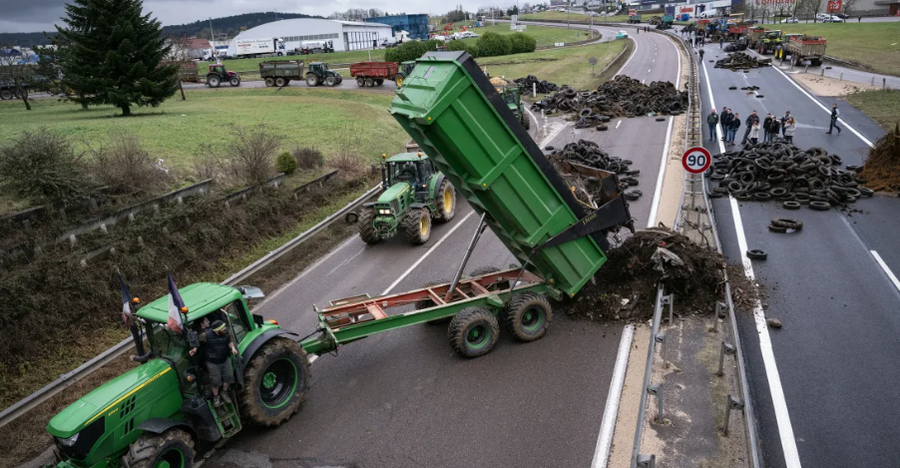
The protests have involved all of Europe. Farmers are holding rallies blocking roads with their tractors and blocking ports. They also did not spare the institutions either, after they hit the European Parliament with eggs. These massive reactions have come after a long list of complaints from environmental regulation to bureaucracy, writes CNN.
During the protests, farmers have raised their concerns, stressing that they are no longer able to make a living from this profession. France has faced the most difficult protests, followed by Italy, Spain, Romania, Poland, Greece, Germany, Portugal and the Netherlands.
Agriculture accounts for just 1.4% of the European Union's GDP, the latest figures show, but protests in Eastern Europe last year over cheap Ukrainian imports, which saw lengthy blockades at border crossings, show how farmers as a group are capable of causing great disruption.
CNN takes a closer look at the factors involved;
This week, farmers' protests struck at the heart of the European Union when they swept into Brussels on Thursday as leaders held a summit on Ukraine.
After setting up outside the parliament building, they threw eggs and set fires.
Belgian farmers targeted the border points with the Netherlands at Zandvliet, Meer and Postel, causing delays.
In France, farmers blocked major highways leading to Paris, as well as the cities of Lyon and Toulouse.
Dozens of farmers pitched tents and lit fires to keep warm as they tried to block roads to the French capital.
At least 91 people were arrested Wednesday for blocking traffic and causing damage near the Rungis market in southern Paris, a major food distribution center, CNN reported.
But other protesters were less hostile: "some farmers distributed chocolates to the police outside Paris".
Also this week, tractors in Greece marched into Greece's second largest city on Thursday, aiming to block major roads within the city.
Images from Portugal showed long lines of trucks parked near the Spanish border.
Last month, cities in Germany were brought to a standstill by thousands of gathered farmers who braved freezing temperatures, heaping misery on Chancellor Olaf Scholz's ruling coalition.
What are the complaints?
While anger over economic, regulatory and green policies unites many of the protests, there are also other grievances for each country.
Farmers across the bloc say energy, fertilizer and transport costs have risen, particularly in light of Russia's war in Ukraine.
Eurostat data shows that the prices farmers receive for their agricultural products peaked in 2022, but has been declining since then, falling by around 9% on average between the third quarter of 2022 and the same period in 2023. .
Anger has also been directed at Brussels over the EU's environmental objectives.
Renaud Foucart, a senior lecturer in economics at Lancaster University in England, points to the European Green Deal as a "big source of tension".
The agreement aims to introduce measures including a carbon tax, a ban on pesticides, limits on nitrogen emissions and restrictions on water and land use.
What is being done to calm the protests?
At EU level, farmers won a compromise from Brussels on January 31 when a delay was announced on rules that would require them to set aside land to encourage soil health and biodiversity.
The European Commission offered an exemption to EU farmers from the requirement to keep a minimum share of their land, allowing them to keep the accompanying support payments.
The commission also said it would extend the suspension of import duties on Ukrainian exports for another year until June 2025.
The protests have also provoked reactions against the EU, especially when we are before the European Parliament elections in June.
European Commission President Ursula von Der Leyen has defended the EU's goal of reaching net zero by 2050.
However, she is facing pressure from her centre-right party to water down green legislation.
European far-right parties hope to make electoral gains and can capitalize on farmers' complaints for their own political gains, CNN continues.



Lini një Përgjigje