


 Shkruar nga Edward Wong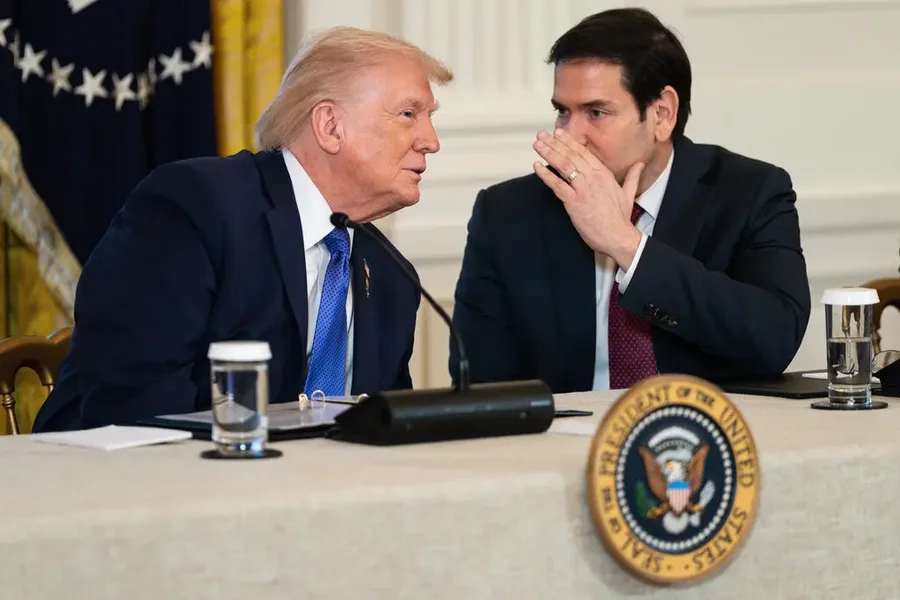
President Trump's approach is presented as a revival of the imperial mission, the appropriation of the territories and resources of sovereign peoples...
President Trump’s foreign policy has moved swiftly around the globe, but it has remained consistent in its aggressive nature and reliance on the use of force. He has captured the leader of Venezuela, claimed the country’s oil, and attacked nearby civilian ships. He has pushed Cuba into a humanitarian crisis through a blockade and asserted the right to control Canada and Greenland. He has also amassed the largest U.S. military force in the Middle East since the 2003 invasion of Iraq, threatening a new war against Iran after last June’s attacks.
Mr. Trump calls his policy “America First,” a declared focus on U.S. interests, as he defines them. But this is not isolationism or withdrawal from the world, as some analysts have argued. Nor has it yet emerged as an attempt to create “spheres of influence,” where the administration would be content to dominate only the Western Hemisphere and leave other regions in the hands of rival powers.
From one perspective, this represents a revival of the mission of empire, the appropriation of the territories and resources of sovereign peoples, that inspired European and other well-armed powers well into the 20th century. It also represents an embrace, even a celebration, of Western imperial histories.
In his inaugural address last year, Trump praised President William McKinley, who transformed the United States into an overseas empire during the Spanish-American War, taking the Philippines, Guam and Puerto Rico.
Trump's form of American primacy was most clearly articulated by Secretary of State Marco Rubio earlier this month in a speech at the Munich Security Conference.
"For five centuries, before the end of World War II, the West was expanding, its missionaries, pilgrims, soldiers and explorers pouring from its shores to cross oceans, settle new continents and build vast empires that spanned the globe," Rubio told an audience of mostly European officials.
Then, after 1945, when World War II ended and Europe was in ruins, “the West” was “in decline,” he said.
He condemned anti-colonial movements for independence, linking them to communist ideology and blaming them for the weakening of Western power. “The great Western empires had entered their final decline, accelerated by godless communist revolutions and anti-colonial uprisings that would transform the world and cover large parts of the map with the red hammer and sickle,” he said.
Rubio added that the Trump administration does not want allies "bound by guilt and shame," using the same language as the Alternative for Germany (AfD), the German far-right party.
"We want allies who are proud of their culture and heritage, who understand that we are heirs to the same great and noble civilization, and who, together with us, are willing and able to defend it," he said.
Later in the speech, he warned of "the erasure of civilization."
Rubio received a standing ovation. His speech, while filled with harsh criticism of European countries, evoked the shared history of the United States and Europe. For some American historians and conservatives, it encapsulated ideas about liberalism and the decline of the West expressed decades earlier by right-wing writers such as James Burnham and Pat Buchanan.
As Trump pushes for war, threatens war against Iran almost daily, and last weekend spoke again about Greenland, some analysts see Rubio's speech as indicative of future developments.
“Rubio accurately reflected where Trump’s foreign policy stands today,” said Stephen Wertheim, a historian of American power at the Carnegie Endowment for International Peace. “Despite widespread fears that Trump might withdraw from the world, he is working to revive American military dominance on all fronts. It is ‘America First’ globalism. Far from abandoning alliances, Trump is turning them into platforms for coercion.”
Celebrating empire would have been normal in Europe at the beginning of the 20th century, “but it is out of place in a world that has been decolonized and democratized,” Wertheim said.
Nader Hashemi, a scholar of Middle East politics at Georgetown University, said that as Trump and Rubio push imperial policies, “the consequences for international relations will be profound, especially in the Global South, where the political identity of most nation-states was formed in the context of a decolonization struggle against Western imperialism.”
“In the Arab-Islamic world,” he added, “extremist forces will exploit this development to attract new recruits.” Meanwhile, Russia and China could benefit, after decades of trying to win other countries to their side by criticizing what they have called American imperialism.
The State Department did not respond to an email with questions.
Duke folur për vendlindjen e tij, Rubio përshkroi me entuziazëm kolonizatorët amerikanë dhe evropianë që punonin së bashku për të marrë territore: “fermerët dhe zejtarët gjermanë që transformuan fusha të zbrazëta në një fuqi globale bujqësore” në Midwest, dhe “tregtarët dhe eksploruesit francezë të lëkurave, emrat e të cilëve, meqë ra fjala, ende zbukurojnë tabelat e rrugëve dhe emrat e qyteteve në të gjithë Luginën e Misisipit”.
“Fushat e zbrazëta”, natyrisht, janë një mit: amerikanët vendas jetuan atje për mijëra vjet përpara se kolonizatorët vendosës t’i vrisnin dhe t’i nënshtronin. Asnjëherë Rubio nuk përmendi miliona të vrarë, të torturuar dhe të burgosur në luftërat e zhvilluara në emër të perandorisë.
Ai nuk iu referua as institucionit perandorak të skllavërisë dhe rolit të afrikanëve të skllavëruar në ndërtimin e Shteteve të Bashkuara, nga epoka koloniale deri në Luftën Civile. Po ashtu shmangu diskutimin për trashëgimitë e gjalla të perandorisë në Perëndim, përfshirë emigrantët nga ish-vendet e kolonizuara dhe pasardhësit e skllevërve që kanë formësuar vendet e tyre.
Disa historianë thanë se Rubio është ndoshta i vetmi zyrtar i lartë amerikan në dekadat e fundit që ka festuar perandorinë në mënyrë kaq të hapur.
“Të festosh SHBA-në si trashëgimtare të qytetërimit perëndimor nuk është diçka e re, por të paktën që nga Franklin D. Roosevelt, presidentët dhe diplomatët e kanë paraqitur SHBA-në si kundërshtare të perandorisë dhe imperializmit”, tha John Delury, historian i politikave të jashtme amerikane dhe të Azisë Lindore.
“Tekstet shkollore janë përditësuar për të pranuar se ‘eksploruesit’ skllavëruan njerëz si fuqi punëtore të trajtuar si mall, se ‘misionarët’ zhdukën kultura dhe fe indigjene dhe se ‘pionierët’ ua morën popujve vendas shtëpitë dhe jetesën”, shtoi ai.
Constanze Stelzenmüller, drejtoreshë e Qendrës për Shtetet e Bashkuara dhe Evropën në Institutin Brookings, tha se lavdërimi i perandorisë ishte veçanërisht goditës për zyrtarët dhe analistët në Mynih që vinin nga vende të dikurshme të kolonizuara. “Ata po thoshin: ‘Kjo është befasuese’”, tha ajo. Në të njëjtën kohë, disa zyrtarë reaguan me qëndrimin: “Në rregull, SHBA po i rikthehet natyrës së saj, dhe të paktën po jeni të sinqertë.”
Stelzenmüller shtoi se festimi i perandorisë nuk ka qenë qendror në diskursin e së djathtës së fortë evropiane, ndaj ishte e paqartë pse Sekretari Rubio përdori këtë retorikë. Sipas saj, qëllimi mund të ketë qenë normalizimi i idesë së një fuqie dhe zgjerimi të pandalshëm amerikan, përfshirë mbi Groenlandën.
“Mendoj se kjo gjuhë mund të jetë pjesë e një përpjekjeje për t’i kushtëzuar evropianët të pranojnë se janë të pafuqishëm për t’i rezistuar çfarëdo projekti zgjerues që administrata mund të ketë”, argumentoi ajo.
Michael Kimmage, drejtor i Institutit Kennan, tha se Rubio po aktivizon një kundër-traditë të politikës së jashtme që u shfaq në të djathtën amerikane gjatë viteve 1950 dhe 1960.
These ideas were most clearly expressed by the magazine National Review and one of its columnists, Burnham, who wrote the book “The Suicide of the West,” a critique of modern liberalism and, according to Kimmage, “a lament for the loss of empire.”
Rubio's mention of a "shrinking" West echoed Burnham's.
“He identified immigration and the loss of civilizational self-confidence as the core problems of a post-imperial West,” Kimmage said. “Rubio is clearly reworking these ideas. The ideas themselves are not new. What is new is that they are being expressed by the State Department and the White House in a way that hasn’t been the case for the past seven decades.”
Andrew Day, a writer at The American Conservative, said he believes Rubio is emphasizing the Trump administration's policy of bolstering pride in Western civilization, a project he considers admirable but poorly implemented, rather than support for empire.
“I sincerely doubt that Rubio was promoting a return to imperialism and colonialism,” he said. “Rather, he was pointing to a certain state of cultural weakness and lack of self-confidence that Westerners suffer from.”
However, Day noted that conservatives who support limiting intervention remain skeptical of Rubio, whom they see as a hard-liner for American global hegemony. The secretary of state has recently pushed for action against Venezuela, Cuba and Iran.
“They believe Rubio is putting a civilizing veneer on a neoconservative policy,” Day said.
This group is also skeptical of Europe and believes that the administration's "Western civilization" framework is grandiose and internationalist, inconsistent with a sharp focus on American national interests. /Adapted from the New York Times /



Lini një Përgjigje