


 Shkruar nga Pamfleti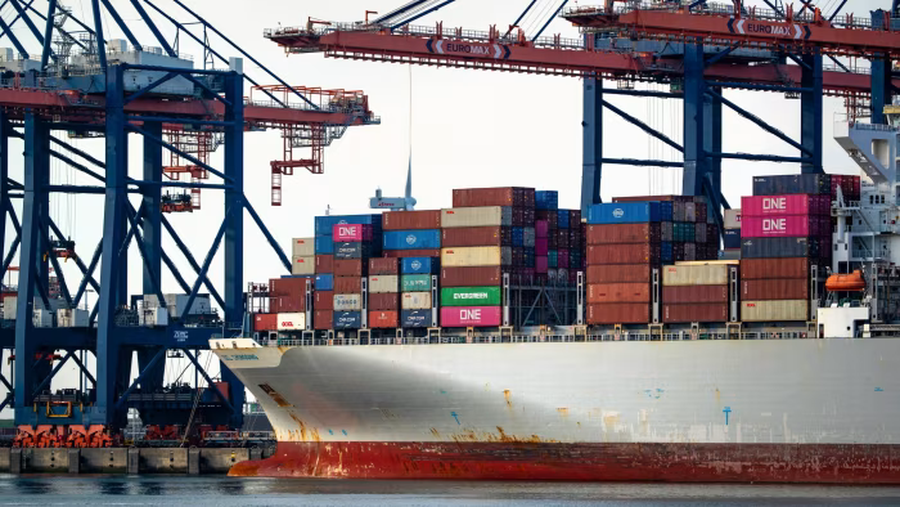
Europe's largest port is preparing for a potential conflict with Russia by reserving space for ships carrying military supplies and planning where to divert cargo if war breaks out, the Financial Times writes .
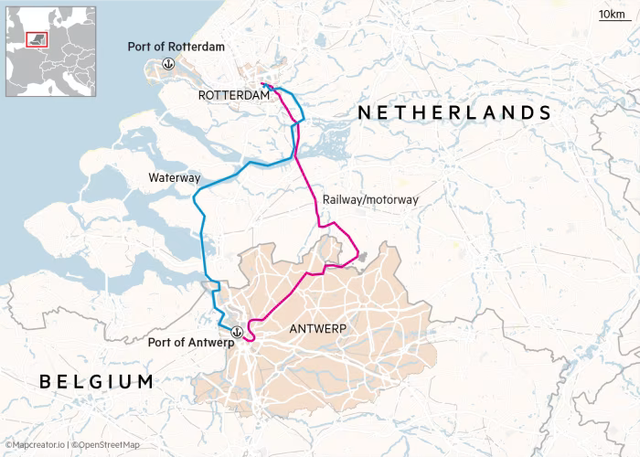
Boudewijn Siemons, executive director of the Port Authority of Rotterdam, said it was coordinating with neighboring Antwerp on how to manage if British, American and Canadian vehicles and supplies arrived.
"Not every terminal is suitable for handling military cargo," he told the Financial Times in an interview.
"If large volumes of military cargo needed to be transported, we would look to Antwerp or other ports to take over some of the capacity and vice versa. We see each other less and less as competitors. And, of course, we compete where we need to, but we work together where we can."
The Rotterdam measures are part of a wave of preparations for war across the continent.
The EU is drawing up a rearmament plan worth up to 800 billion euros as it tries to become more self-sufficient in defense in response to demands from US President Donald Trump, and to deter Russian aggression as Vladimir Putin's full-scale invasion of Ukraine enters its fourth year.
The Netherlands, along with its NATO allies, has pledged to increase defense spending to 5% of GDP. In May, the Dutch defense ministry announced that Rotterdam would have to provide space to accommodate the many ships carrying military cargo at NATO's request.
Siemons said one or more ships would dock at the quay for several weeks, four or five times a year, although the location could change. The Rotterdam container terminal is the only place where the port could safely transfer ammunition from one ship to another.
There will also be amphibious military exercises several times a year.
The port has handled armaments before, with a surge during the 2003 Gulf War, but even at the height of the Cold War, it did not have a dedicated quay.
Antwerp regularly receives supplies for US troops stationed in Europe.
Mark Rutte, NATO’s secretary-general, warned alliance members in June that Russia could attack one of them by 2030.
Rotterdam stretches for 42km along the Meuse River in the Netherlands. It handles about 436 million tonnes of cargo each year, receiving 28,000 seaborne ships and 91,000 riverboats from Germany and inland Europe.
The port lost about 8 percent of its trade, mostly oil, after the EU imposed sanctions on Russia.
Antwerp handles 240 million tons of goods each year, making it the second-largest port in the EU.
Siemons said the two ports were also working together to improve Europe's self-sufficiency. "Our teams are working increasingly closely together on a number of topics, including resilience."
The Covid-19 pandemic, which has left European countries scrambling for protective equipment and medicines, has highlighted their dependence on suppliers such as China and India.
The immediate reduction in Russian oil flows after the invasion of Ukraine was another lesson, Siemons said.
He called on European countries to stockpile more essential supplies, as they do with oil. The EU ordered members to maintain a 90-day strategic supply of oil after the 1973 oil shock, when Arab countries curbed production to pressure the West during their conflict with Israel.
"We need to do the same with things like copper, lithium, graphite and a number of these critical raw materials," Siemons said.
“We have it in oil, we don’t have it yet for gas, and, of course, we have some gas fields in Europe that can handle that, but we need to look at a broader spectrum of strategic resilience, also in pharmaceuticals, and where do you build that? And how resilient are you as a society? And that’s becoming increasingly important as the world becomes increasingly unstable.”
He said that areas around ports, which have good distribution networks, would be suitable for such reserves. Part of the Dutch strategic oil reserve is in Rotterdam.
The EU will unveil a "stockpiling strategy" on Tuesday that will cover medical supplies, critical raw materials, energy equipment, shelter and potentially food and water.


Lini një Përgjigje