


 Shkruar nga Pamfleti
Just five weeks after the start of the Iran war, there is a new attempt to prevent further escalation: as first reported by the American news website Axios, citing sources familiar with the matter, a ceasefire draft, prepared under Pakistani guidance, is currently under consideration. Sources within Pakistani intelligence have indicated that the plan has been presented to the US and Iran.
The plan reportedly involves two phases: the first phase would involve an immediate 45-day ceasefire, including the opening of the Strait of Hormuz. The second phase would then involve a final agreement that would force Iran, among other things, to give up its nuclear weapons development; in return, it would be offered sanctions relief and the release of frozen assets.
Iran rejects compromise
Iran confirmed receipt of the plan and, according to the Foreign Ministry, has already drafted responses to the proposals. However, the regime seems unwavering: "Iran does not hesitate to clearly state what it considers its legitimate demands, and this should not be interpreted as a sign of compromise, but rather as an expression of its confidence in defending its positions," Ismail Baghai declared at a press conference. He called the US demands "excessive and unacceptable." Negotiations are incompatible with ultimatums and threats.
Reuters quoted an Iranian official as saying that, for example, opening the Strait of Hormuz for a temporary ceasefire was non-negotiable. Moreover, Tehran had made it clear that only a final end to the war would be negotiated.
Later that evening, Mehdi Tabatabaei, the head of communications for the Iranian president's office, wrote regarding the Strait of Hormuz that it would only reopen "when, under a new legal order, the damages of the imposed war are fully compensated with a portion of the transit fees."
Trump pushes back on ultimatum
Earlier, US President Donald Trump had threatened to launch large-scale attacks if transit through the Strait of Hormuz was not resumed. "If they do nothing by Tuesday night, there will not be a single power plant or a single bridge left standing," the President told the Wall Street Journal. With this, he extended for the third time the deadline he had set for the ultimatum.
"Open the damn Strait (of Hormuz), you crazy bastards, or you'll end up in hell," Trump wrote in harsh words on his platform, Truth Social.
Pakistani officials said the latest draft of a ceasefire agreement was the last round of efforts before potentially even more severe US bombing of Iran, but they saw little chance of success.
Costa warns against attacks on civilian targets
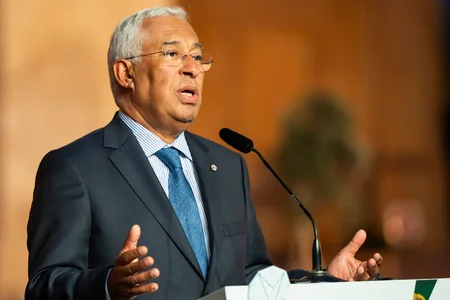
EU Council President António Costa warned against an escalation of the situation. This will not lead to a ceasefire or peace, Costa wrote on the X platform.
Costa condemned Trump's threats to attack civilian targets. "Any attack on civilian infrastructure, especially energy facilities, is illegal and unacceptable. Only negotiations, in particular the continued efforts of regional partners, can achieve this. This applies to Russia's war in Ukraine and applies everywhere ," Costa declared.
Iran's civilian population lives in fear
According to ARD correspondent Katharina Willinger, many civilians in Iran are afraid of what could happen in the coming hours. " The people we spoke to are very scared, they believe this could be the maximum escalation for them as civilians," the ARD correspondent told the news program. Trump's threatened attacks, for example on power plants, would mean that the electricity supply in a city like Tehran could be completely paralyzed. "This has a huge impact on the daily lives of people who have been living in a country with a very weak economy for years."/ DW



Lini një Përgjigje