


 Shkruar nga Pamfleti
Sixty years later, the demands have changed. Today, it is Israeli citizens like that protester who are demanding that Germany boycott Israel.
As Berlin and Tel Aviv mark a diplomatic milestone, the relationship born of pragmatism, guilt and survival faces its toughest questions yet, especially amid war, protests and growing calls for criticism.
This month, Germany and Israel mark the 60th anniversary of diplomatic relations. But who is really in the mood to celebrate? Certainly not the man in his thirties, his eyes filled with tears and anger, who protested last week on Tel Aviv's Ben Gurion Boulevard, just as a small photography exhibition was opening to mark the anniversary.
"It's a shame! Here we are, serving food and drink, while our hostages are dying in Gaza. Our government should be boycotted, including by Germany ," he told me loudly.
The exhibition was entitled “Impossible Friendship?” – and rightly so. Before diplomatic relations were established in 1965, just 20 years after the Holocaust, it was unthinkable that there would be any form of contact between the nation of the perpetrators and that of the survivors.
But Israel needed financial aid and the Federal Republic of Germany sought to emerge from international isolation, despite the heavy burden of war guilt.
“From a pragmatic point of view, after World War II, both sides had reason to find common ground in the name of realpolitik. The moral music of reconciliation and friendship came mainly from the German side. The Israelis, on the other hand, often boycotted the Federal Republic, seeing it as the legitimate successor to the Nazi regime ,” historian Jenny Hestermann wrote two years ago in an essay for the magazine “Aus Politik und Zeitgeschichte.”
From reconciliation to conflict
Sixty years later, the demands have changed. Today, it is Israeli citizens like that protester who are demanding that Germany boycott Israel. The idea of impossibility seems to have always accompanied this relationship. How do you talk to Israel when its government is accused of war crimes in Gaza and is increasingly aggressive towards critics?
To understand what German politicians might be saying today, we need to examine the roots of this relationship. The Holocaust has been at the center of Israeli social and academic reflection for decades. In the 2019 novel “The Monster,” author Yishai Sarid describes a shocking moment: a student who says, “I think we have to be a little like the Nazis to survive.” This shows that the humanistic lessons of the Holocaust are neither guaranteed nor simple.
German literature and reflection
Reconciliation has also had sincere dimensions. The writer Amos Oz recalled how German students worked on kibbutzim to “atone for the crimes of their parents.” He mentions that contact with German literature after normalization – from Günter Grass to Siegfried Lenz – helped him better understand the German experience and ask himself: “What would I have done?”
Today, daily EasyJet flights connect Tel Aviv to Berlin – a route that symbolizes normality, but also contrasts with another reality: at the same time, Israelis in the German media warn of a “possible genocide in Gaza.”
Historian Omer Bartov argues that the trauma of the Holocaust has given Israelis a perception that they are “beyond any moral norms that apply to others.” The tension is real, present in every word, in every statement.
From the German left to the far right
Fania Oz-Salzberger has shown that after 1967, the West German left began to distance itself from Israel. In 1988, a graffiti in Hamburg read: “Boycott Israel! Goods, kibbutz + beaches. Palestine will liberate you.” The name “Israel” was in quotation marks – a symbol of delegitimization.
Meanwhile, in East Germany, the communist regime armed Israel's enemies without reflecting on its own historical anti-Semitism. For the generation born in the East, like the author of this reflection, the sense of responsibility comes not from inherited guilt, but from the upbringing of the Western period.
Interests over emotions
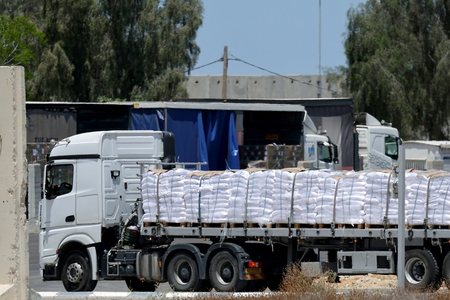
This relationship was not built on emotions, but on shared interests. Today, Germany needs Israel – for missile defense, for security cooperation. For this reason, even the new Chancellor Friedrich Merz seems to be changing his tone: in his first speech he emphasized support for Israel's security, but also called for action to stop the famine in Gaza.
Criticism of Israel is not taboo in Germany. It is part of the debate. And instead of responding with lectures about historical guilt, we can speak with realism and clarity: this is not a one-sided relationship. Both sides need each other. / Adapted from “Pamphlet” by “WorldCrunch”



Lini një Përgjigje