


 Shkruar nga Ralph Schoellhammer
The truth is that the world is a chaotic, very complicated place, and not everyone wants to be your friend. Until America learns this lesson, its foreign policy will remain a tragicomedy of errors that the rest of us are forced to watch, whether we like it or not...
The United States and its foreign policy: a tale as old as time, or at least as old as Woodrow Wilson's Fourteen Points. We are talking about a nation that traverses the globe like a giant, but which with alarming regularity stumbles on its own shoelaces.
The question is not whether America is positive in its foreign policy, but whether it is seriously trying to have such a policy. Let's start the analysis with a fact: America is an empire that denies its status.
Unlike the British, who were at least honest enough to admit that they held the reins of global affairs in their hands, the US prefers to hide its ambitions with the language of democracy, freedom and, of course, cookies. Yes, cookies. Because it treats its opponents like preschoolers, who need a gold star on their chest and a smiling face.
In 2009, Obama's special envoy to Sudan, retired Air Force General J. Scott Gration, believed that the best way to deal with enemies was to treat them like children: "We have to think of giving them cookies. Just like children, countries respond to gold stars, smiling faces, handshakes, conversations, agreements."
Canadian writer Mark Steyn has described this as the “sesamization” of foreign policy (based on the television show Sesame Street): “It bears primary responsibility for what Canadian blogger Binky calls the de-monsterization of childhood. The idea that there are no evil monsters, but just little wild creatures, and why they can sometimes seem so funny.” Another example of this would be US policy towards Afghanistan. Greg Mortensen’s Three Cups of Tea became the “Bible” of US policy in Afghanistan, propagating the charming but deceptive idea that all it takes to turn a war-torn tribal society into a Nordic utopia is a few rounds of tea and a few well-meaning schools.
It's no wonder that 19th-century imperialists, men like Lord Curzon or Cecil Rhodes, would have laughed at such naivety. They understood that cultures are fundamentally different, and that not everyone wants to be like the liberal democrats in the West. But America?
America prefers to believe that the world is full of potential friends who simply haven't been sufficiently supported. This is not a new phenomenon. Roosevelt, in his desire to have good relations with Stalin, practically handed the keys to Eastern Europe to the Soviet Union on a silver platter.
As Sean McMeekin shows in his book “Stalin’s War,” Roosevelt’s administration was filled with Soviet agents, and his policies enabled Stalin to emerge from World War II as a superpower. The American president even considered the Sovietization of India.
The man who hated British imperialism more than Soviet expansionism was full of contradictions. And then there's China. Nixon's opening up to Beijing was supposed to be a masterful scheme of realpolitik. But in retrospect, it's hard to see it as anything other than a huge mistake.
Because the US helped China become the aggressive economic and military power it is today, all the while ignoring the fact that the Chinese Communist Party has no interest in playing by Western rules. The same goes for radical Islam, which America once saw as a useful tool against the Soviets.
And things didn't work out well, did they? The problem, of course, is that America's foreign policy oscillates between isolationism and idealism, with little room for realism in between.
Wilson's dream of "making the world safe for democracy" was noble. But it is also a recipe for disaster. The United States can win wars—ask Saddam or the Taliban—but it has no idea what to do with peace. The belief that elections alone will magically produce liberal democracy is not
simply naive, but dangerous. Yet, for all its flaws, America remains indispensable. Its military power is unmatched, and its alliances - however strained - are still the basis of global stability.
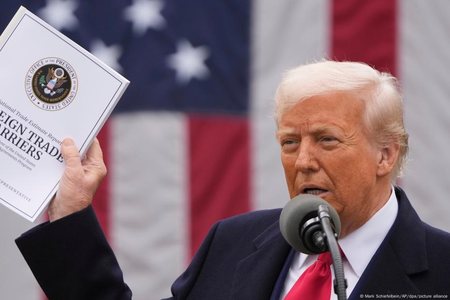
But here’s the problem: friends joke, but they don’t threaten. The Trump administration’s rush to pick a trade war with Europe and Canada is as strange as it is counterproductive. If Washington wants its allies to grow, fine. But it doesn’t do that by talking about annexing Greenland or turning Canada into the 51st U.S. state.
So, is America a bad actor in foreign policy? The answer: sadly yes, but not for lack of power or potential. It is a bad actor because it refuses to accept the realities of the world it inhabits. The British may have created their empire “mindlessly,” but once they had it, they played the game with ruthless efficiency.
In contrast, America seems determined to make its way through history, armed with cookies, tea, and the stubborn belief that the world is simply waiting to be remade in its image.
The truth is that the world is a chaotic, very complicated place, and not everyone wants to be your friend.
Until America learns this lesson, its foreign policy will remain a tragicomedy of errors, which the rest of us are forced to watch, whether we like it or not. / In Albanian: Pamphlet



Lini një Përgjigje