


 Shkruar nga Pamfleti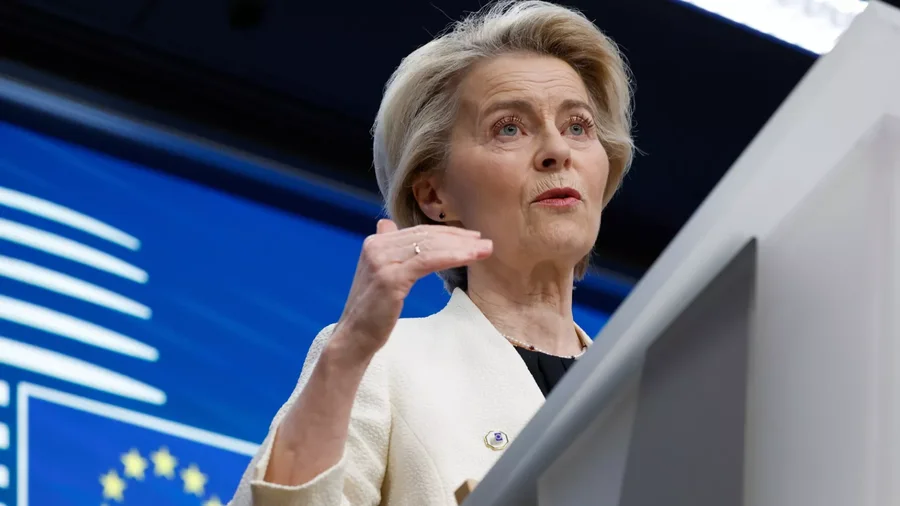
Ursula von der Leyen has called the tariffs a major blow to the global economy.
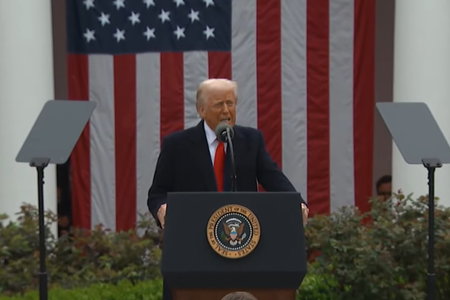
The world is preparing to respond to the tariffs announced by Donald Trump on Wednesday from the White House Rose Garden. The EU's reaction, hit by the 20% tariff, was immediate.
European Commission President Ursula von der Leyen described the tariffs imposed by the US president as a major blow to the global economy. In a statement to the media, she said that tariffs are not the solution, adding that the EU has always been ready to negotiate but at the same time ready to respond.
"Tariffs will hit millions of citizens, bills will rise, the price of medicines will rise. A blow to the global economy. Companies large and small will suffer and the consequences will be catastrophic. We have always been ready to negotiate, at the same time we are ready to respond. I agree with President Trump that others are taking unfair advantage of the current rules, and I am ready to support any effort to adapt the global trading system to the realities of the global economy. But I also want to be clear: using tariffs as a first and last resort will not solve the problem. That is why, from the beginning, we have always been ready to negotiate with the United States to remove the remaining burdens," she said.
Von der Leyen did not rule out the possibility of negotiations with the Americans, while adding that in addition to the first package of countermeasures in response to previously imposed steel tariffs, other countermeasures are being prepared to protect interests and businesses. She said that they will work to reduce tariffs, not increase them.
"We are already finalising the first package of countermeasures in response to the steel tariffs and are now preparing for further countermeasures to protect our interests and businesses if negotiations fail. We will also look carefully at what indirect effects these tariffs could have, because we cannot absorb global overcapacity, nor will we accept dumping in our markets. It is not too late to address concerns through negotiations, which is why our Trade Commissioner, Maros Sefcovic, is continuously engaging with his US counterparts: we will work to reduce barriers, not raise them," says Ursula von der Leyen.
Meanwhile, in Asia, the newly announced tariffs have already had their first effects. The Tokyo Stock Exchange has fallen 5%, while the Nikkei Index stands at -4.7%. As for Chinese markets, Hong Kong's Hang Seng fell 2.09%. In Seoul, the Kospi has gone down by -1.69%. Meanwhile, in Australia, the S&P/ASX 200 has fallen by 1.3%.
China said it firmly opposes the measures and warned it would retaliate to protect its rights and interests. Japanese Trade Minister Yoji Muto also expressed regret over the tariffs, warning that the new tariffs could hurt Japan's investment in the world's largest economy. The Japanese government also noted that the U.S. tariff offensive could violate WTO rules and bilateral agreements between the U.S. and Japan.
Trump has also imposed tariffs on goods imported from Kosovo of 10 percent, on those from Albania of 10 percent, Serbia of 37 percent, Bosnia and Herzegovina of 35 percent, and North Macedonia of 33 percent.
Trump, from the White House, announced that universal tariffs of 10% on all imports into the US would take effect on April 5, while reciprocal tariffs on countries he considered the "biggest offenders" would take effect on April 9. Trump said that imports from China would be subject to a 34% tariff, those from the European Union 20%, the United Kingdom 10%, South Korea 25% and Japan 24%.


Lini një Përgjigje