


 Shkruar nga Pamfleti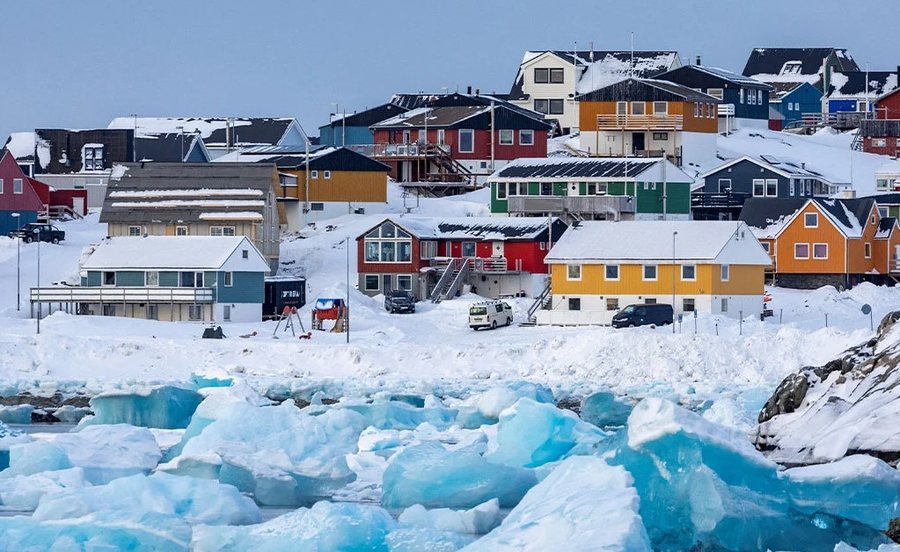
Strong reactions and concerns are being caused in Greenland by statements by United States President Donald Trump, according to whom the island will become "one way or another" part of the United States, without even ruling out the use of military force.
The US government maintains that Greenland, although politically part of the Kingdom of Denmark, is geographically located in North America and is a key area for US security. Observers, however, point out that Washington's interest is primarily linked to the island's considerable mineral wealth.
In the Arctic town of Ilulissat, in western Greenland, residents express fears of a possible American intervention. Fisherman Joel Hansen, half Inuit and half Danish, told Al Jazeera that he does not want any change in the region's status, expressing concern about the impact that a possible integration with the US would have on the daily lives of the Inuit. "I'm afraid of becoming an American," he said. "I've seen how the Inuit live in Alaska - how difficult their life is."
Despite the historically difficult relations between Greenland and Denmark, which began with the colonization of the island in 1721, he argued that remaining in the current status offers residents greater autonomy in how they live and work.
Mineral wealth and geopolitical interest
Greenland gained autonomy in 1979, and the Local Government Act of 2009 further strengthened the powers of local authorities. However, it remains part of Denmark and, as a result, politically linked to Europe.
The island has significant reserves of zinc, iron, uranium, and graphite, which remain largely untapped due to its geographical isolation and extreme weather conditions. Greenland is also estimated to have the eighth largest reserves of rare earth metals in the world.
Rare earths are critical to the production of modern technologies, such as wind turbines, electric vehicles, "smart" devices, as well as military equipment, including missile systems and fighter jets. The issue is of particular importance to the United States, as China controls about 60% of the world's reserves and processes 90% of the rare earth metals internationally.
Today, only two mines operate in Greenland, however, local residents believe that the island can autonomously develop its capabilities in the field of mineral extraction and processing, without economic dependence on abroad.
The possibility of American involvement has raised concerns among Inuit communities around Ilulissat, which only saw the sun again this week after nearly two months of continuous darkness due to the polar night.
Representatives of local communities express fears about the impact such development would have on the traditional way of life of the Inuit, emphasizing that the area has been ancestral land for thousands of years and not simply a place for the exploitation of natural resources...


Why they have to fill up their quiet humble country with Afro-Asia-Latino-Gipsy- Scams? The don't have drugs, Trump Casinos, Brothels and any kind of shit of "Civilised World".