


 Shkruar nga Cully Stimson & Patrick McDonald
George is very good at understanding systems and he understood that DA races are relatively “cheap” and “easy” to win. That is true, but we knew this...
If no one supports crime, why do activists fund candidates for office who, once elected, implement policies that enable it? If anyone knew the answer, it would be Treasury Secretary Scott Bessent, who, early in his impressive career, worked closely with George Soros, the notorious financier of the rogue prosecutors movement.
In recent weeks, the nation's eyes have turned to North Carolina, where Iryna Zarutska, a Ukrainian refugee, was stabbed to death while traveling on a train. Zarutska's killer, Decarlos Brown Jr., suffered from mental health issues and claimed he stabbed her "because she was reading his mind."
Many people have cited Brown, who has had more than a dozen interactions with the state's criminal justice system, as a clear example of the failure of soft-on-crime policies.
For example, Chris Swecker, former chairman of the North Carolina Governor's Commission on Crime, told Fox News that "parole, no bail, decriminalized drug offenses, and discussions about defunding the police" are policies that have contributed to rising crime rates. However, he added, progressive activists "don't make the connection" between their "pro-crime, anti-victim" policies and attacks like Zarutska's stabbing.
Fortunately, normal people see a direct correlation.
Swecker's argument illuminates a troubling dilemma for reformers who treat crime with caution. On the one hand, empirical research has consistently shown that "progressive" measures like eliminating parole and not prosecuting felonies are directly related to increased criminal activity. On the other hand, of course, no one is truly "pro-crime."
So how did we get here? What continues to motivate decriminalization and deincarceration activists and donors?
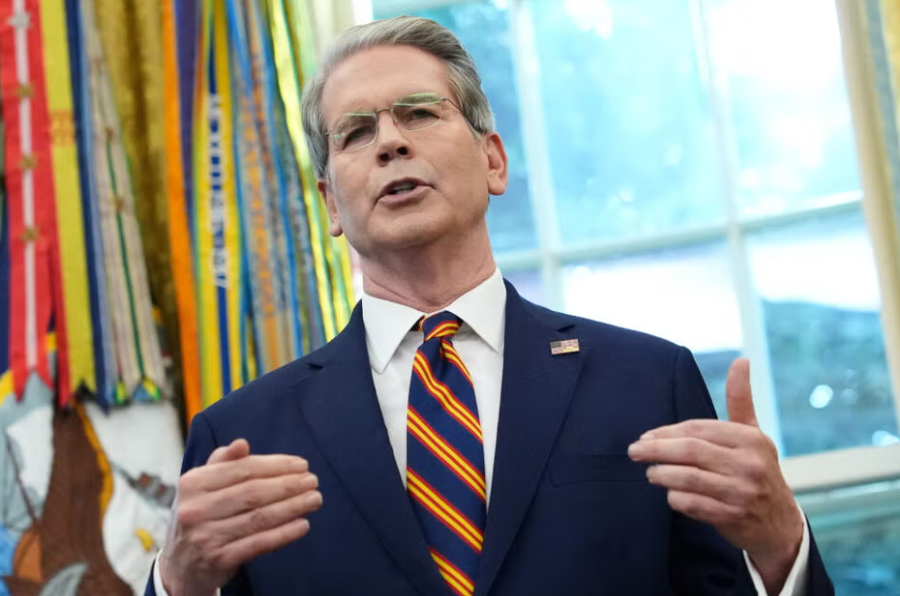
In June, these questions were raised when Bessent, the Treasury Secretary, sat down to listen to Miranda Devine’s new podcast. Halfway through the episode, the discussion turned to Hungarian-American billionaire Soros.
After Bessent highlighted that Soros has consistently funded prosecutors who have not handled the crime with care, Devine asked the million-dollar question: Why?
"Why district attorneys? Why would he do this?" she asked, adding, "This has been extremely destructive to the country, law and order, so why would he want that chaos?"
The Heritage Foundation has been asking the same question for years.
Since 2015, Soros has poured tens of millions of dollars into district attorney races across the country, positioning himself as a decisive figure in electoral contests that otherwise receive relatively little funding or media attention.
In a race in Arlington, Virginia in 2019, Soros's support accounted for 78% of his candidate's funds, independently eclipsing the incumbent's entire election budget.
Soros’s donations bore fruit quickly; he successfully installed dozens of rogue prosecutors in the nation’s largest cities, including George Gascon in Los Angeles, Kim Foxx in Chicago, and Larry Krasner in Philadelphia. His candidates, once elected, have exercised a de facto veto over state legislative power simply by choosing not to prosecute entire categories of crimes.
In July 2022, Soros wrote an editorial explaining the value he saw in the DA’s election. But the article raises more questions than it answers: Soros claims that the rogue prosecutors’ movement is based on “sound logic” (as if rejecting the concept of deterrence were self-explanatory) and “evidence” (which he does not cite).
The drumbeat of this article is about “restoring trust between the police and those policed,” yet Soros never satisfactorily explains how not prosecuting criminals can build public trust in the criminal justice system.
Which brings us back to the Bessent-Devine conversation. How could Bessent, Trump's Treasury Secretary nominee, have any knowledge of Soros, whom Devine rightly portrayed as the "bête noire" of the MAGA movement?
As it turns out, Bessent and Soros have a very long history. CBS News, Politico, and Forbes have each described Bessent as a former "protégé" of Soros.
Perhaps surprisingly, Bessent worked for the infamous Soros Fund Management company, running its London office and the team that made a billion dollars by driving down the British pound.
But, despite being a man who has known Soros for decades and an extremely talented person, Bessent's response was far from satisfactory.
"I don't know what happened," he said, adding, "I've never been able to understand it. The country has been wonderful to him."
Devine pushed him, asking, “Why district attorneys?” But Bessent again gave no direct answer, confirming instead what we already know: “George is very good at understanding systems” and he understood that DA races are relatively “cheap” and “easy” to win. That’s true, but we knew that.
Our conclusion? Bessent doesn't know why. Maybe no one knows why, except Soros.
Bessent could only say that Soros has a “very different vision” for America than conservatives. Beyond this obvious observation, the billionaire’s motivations remain a mystery.
What is clear from Bessent's conversation with Devine is that he too understands that the Soros rogue prosecutor experiment has been a complete failure. In every city where a Soros rogue prosecutor has been elected, crime levels have exploded in most categories.
Progressives in big cities, who were initially intrigued by the rhetoric of Soros' candidates, voted for these radical wolves in sheep's clothing, only to discover later that public safety in their cities had collapsed, murders had increased significantly, stores had been looted, and victims had piled up due to soft-on-crime policies.
Over time, those same progressives put their inherent desire for public safety over empty promises and voted to remove from office several of those rogue prosecutors, including Chesa Boudin in San Francisco, Gascon in Los Angeles, and Marilyn Mosby in Baltimore.
We may never know why Soros decided to fund rogue prosecutors, but we do know the results of this complete disaster of a social experiment in American cities.
The number of victims says it all. /Adapted from Daily Signal/





Lini një Përgjigje