


 Shkruar nga Francis Dearnley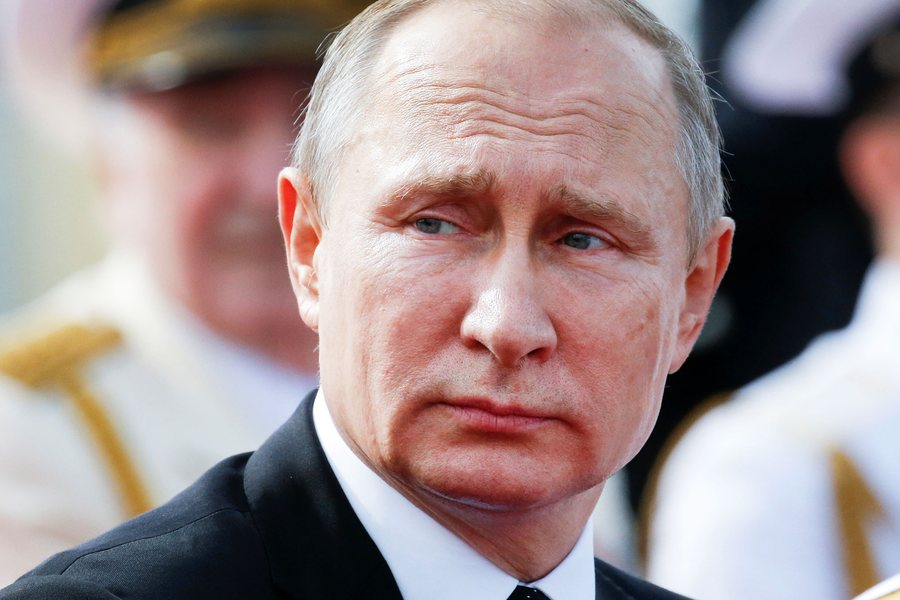
The current war has highlighted the fact that the size of the army is only part of the equation. In fact, many of the vital elements needed to win wars—such as military adaptability and modern technology—are working in Kiev's favor.
Lies, damned lies and statistics. If there is anyone who knows how to falsify numbers, to strengthen even the weakest possible causes, then it is the Kremlin. From Stalin's manipulation of Soviet productivity statistics during his Five Year Plans to Khrushchev's exaggeration of the number of missiles his military had during the Cold War, no body has been more effective in fabricating facts to demoralize, worry and outmaneuver opponents.
Similarly, today Vladimir Putin boasts of Russia's 144 million citizens and argues, through his propaganda mouthpieces, that it is "impossible" for Kiev to win its war, given that Ukraine's population is only 37 million. .
According to this logic, figures released by Britain's secret service earlier this week - according to which Russia has lost more than 70,000 troops in the last 2 months alone, an average of 1,262 and 1,163 on each day of the conflict, in May and June - become really irrelevant.
"Russia can always find more men to send to the front," people are heard saying, thus justifying the West's inaction. But the truth is that he can't do that.
Raised on documentaries about the Russian "unstoppable bear" - capable of tearing its way through Eastern Europe, as it did in World War II - we forget that this is no longer possible in modern Russia. It is not even desirable for Moscow itself.
First, while the Russian president has so far conducted several large-scale military mobilizations, he remains very cautious about both the number of men he recruits and the area they come from, prioritizing recruitment in poorer communities. , far from the power centers of Moscow and St. Petersburg; and mainly among ethnic minorities who are often marginalized.
Already, some of these communities have given all they can. There have been quite a few reports of entire generations of men disappearing in some towns and villages, prompting widespread protests from their families, although for now they remain localized.
Moscow's caution in this regard means that it is forced to empty prisons, exonerating murderers and rapists, so that they can serve in the Russian army or in mercenary groups, such as the infamous Wagner Group.
However, even this source is not inexhaustible. Their numbers are said to be currently so low that Moscow is turning to women's prisons for new recruits. Considering that, according to official data, women make up only 4 percent of the Russian military, this maneuver is extremely visible.
However, even these still remain relatively minor obstacles when the broader trends are taken into account. At only 14 million, Russia's war-age population cannot be considered gigantic. And if it is considered that many of them are unqualified or undesirable for recruitment for geographical reasons, then this figure is reduced still further.
Many of Russia's young people fled the country after the full-scale invasion of Ukraine began. About 300,000 by mid-March 2022, 500,000 by the end of August and another 400,000 by the beginning of October of the same year.
According to estimates, the actual number of those displaced is over 1 million. Then there is the fact that the full-scale invasion of the neighboring country has greatly deepened Russia's demographic crisis. Since 2000, deaths have exceeded the number of births in the country. This and the fact that more than 2 and a half years after the start of the full occupation of Ukraine, up to 350,000 Russian troops have been killed or wounded, is indicative of the scale of the demographic catastrophe.
I could go on much longer with the analysis of the numbers. Russia is not as powerful as the Soviet Union: roughly half of the Soviet population came from what are now non-Russian countries. And even then, twice as powerful in terms of numbers, it lost its war in Afghanistan in the 1980s.
The current war has highlighted the fact that the size of the army is only part of the equation. In fact, many of the vital elements needed to win wars—such as military adaptability and modern technology—are working in Kiev's favor.
These must be borne in mind before one considers Ukraine's will to survive as a free nation. And for the latter, a figure cannot be determined./ Adapted "Pamphlet" from " Daily Telegraph "





Lini një Përgjigje