


 Shkruar nga Hamish De Bretton-Gordon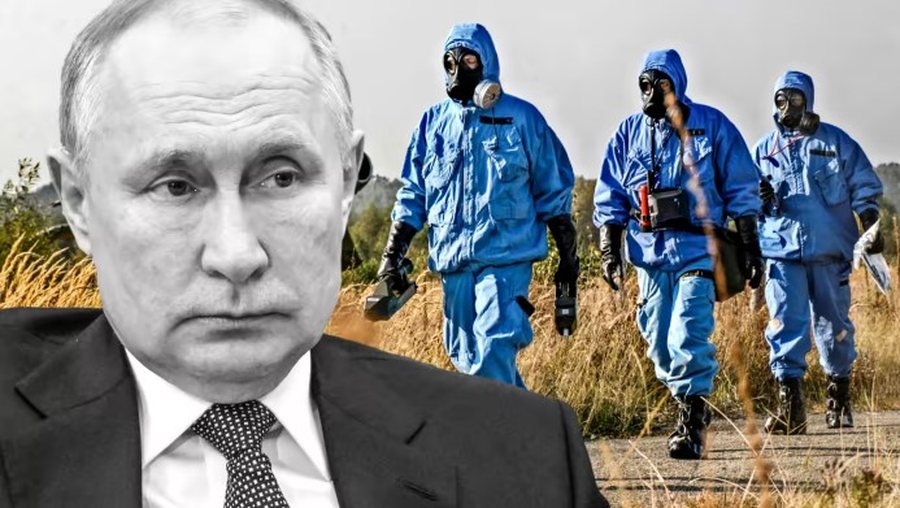
The doctrine applied by Russian troops is systematic: first fire conventional weapons to force Ukrainian troops to take shelter deep in the trench system, and then release CS gas or other chemical weapons to trap enemy troops at the bottom of their trenches.
The news that Britain intends to increase its defense spending in this period of unprecedented risk is welcome and necessary. Because it signals to our Western partners that we are still a major player in the defense of Europe.
And this at a time when other nations - including France and Germany - have not shown the practical or even moral leadership that many hoped for when we are in the midst of the bloodiest war the continent has seen since the 1940s.
However, I am still concerned about this issue. Increasing spending to 2.5 percent of GDP by 2030 sends an important message indeed. But is it enough given the seriousness of the risk? 2030 is 6 years away, as it only took the Russians 2 years to sow chaos and terrible suffering on the European continent.
Then an additional problem is the very nature of the Russian war machine, which seems to be taking on an increasingly terrifying character the longer this war drags on. As recently revealed in the Telegraph, chemical warfare is now being actively used by Russian forces to attack Ukrainian defensive positions.
Of course, this constitutes another war crime. Things are so serious that the Ukrainian government has sent a report to the United Nations and the Organization for the Prohibition of Chemical Weapons (OPCW) in The Hague, detailing the presence of toxic chemicals in its troops.
According to them, this has happened over 1000 times during the war, with an increasing intensity and frequency during the last weeks. In the madness of these attacks, there is a method that suggests these are not the actions of individual young Russian commanders, but a well-coordinated operation.
We know from the Russian chemical warfare doctrine that their use is controlled by the highest leadership level of the military. The doctrine applied by Russian troops is systematic: first fire conventional weapons to force Ukrainian troops to take shelter deep in the trench system, and then release CS gas or other chemical weapons to trap enemy troops at the bottom of their trenches.
Also, it is intended to hit with conventional weapons those who try to avoid the gas. The final phase also involves an advance through armored vehicles to take control of the enemy's trenches, which we have seen recently near Avdiivka.
According to interviews with many Ukrainian soldiers, Russian chemical weapons attacks are usually carried out by drones that drop grenades directly on Ukrainian combat positions. The strikes are intended to force Ukrainian defenders from their positions, after which they will be attacked by more drones that drop conventional munitions at them.
This is a copy of similar attacks carried out in Syria, albeit in a more modern form. I have seen with my own eyes how devastating toxic chemicals can be to a vulnerable population. Syria and Russia attacked the city of Aleppo for 4 years in a row conventionally but without any success.
However, after 17 days of barrel bombs filled with chlorine gas in December 2016, the siege was broken and 400,000 people surrendered to the dual tyranny of Assad and Putin. The gas, heavier than air, seeped underground, killing people there or forcing them out.
If this sounds like it reminds us of a much more horrific era of war, then you're right. Many of the Ukrainian positions are trenches reminiscent of the First World War. As in that terrible conflict, gas can be too influential on the battlefield to make it possible to move fixed positions.
Tragically, it appears that part of the reason why the Russian gas attacks have been so effective is that we have not prepared ourselves, and by extension Ukraine, properly for the return of such weapons. Ukrainian troops apparently have very old, poor-quality Soviet-era gas masks that offer little protection.
For this reason, we should not only prioritize investing in conventional weapons, vital as they are, but also preventive measures against chemical weapons. And this includes gas masks, in which we should invest more and give to our allies.
As Bob Seely, chairman of the All-Party Parliamentary Group on Ukraine, told me: "The question is, do we have masks in stock that we can send to those who will offer us protection?" When I pointed this out to Ben Wallace, the former Defense Secretary, he told me that "for decades Britain has produced gas masks for many countries, and we should be able to meet this challenge with a substantial donation from our factories".
It cannot be beyond Britain's ability to produce high quality masks for those fighting on the front line in Ukraine. And it cannot be difficult for us to recognize the danger posed by an increasingly violent Russia, and to adjust our strategies accordingly. In this regard, I fear that 2.5 percent of GDP spending on defense will not be enough.
Note: Retired Colonel Hamish de Bretton-Gordon is a former Special Forces Commander in Great Britain and NATO. /Adapted Pamphlet, taken from "Daily Telegraph"







Lini një Përgjigje