


 Shkruar nga Pamfleti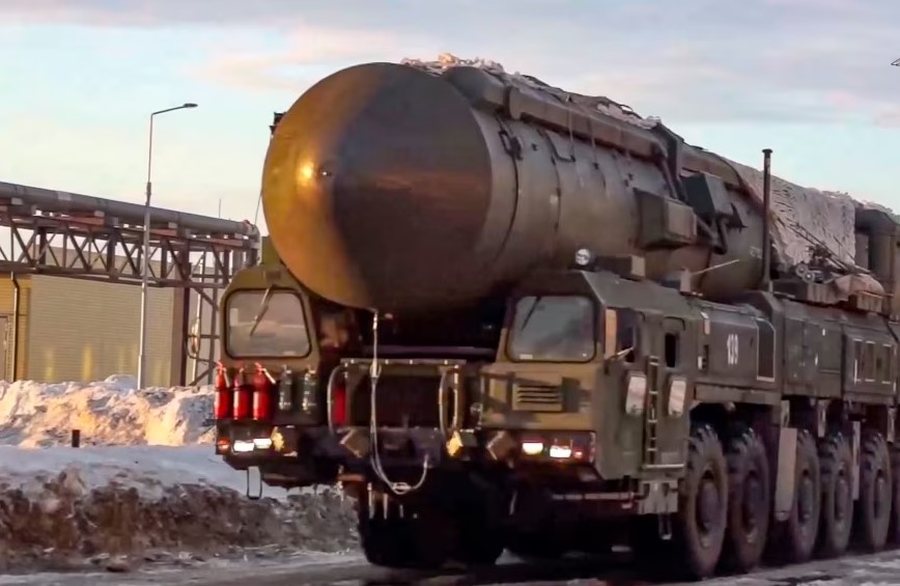
Russia's heavy losses during the aggression against Ukraine mean that Moscow now sees tactical nuclear weapons as increasingly important to deter and defeat NATO, says a new report from the International Institute for Strategic Studies, IISS, with headquarters in London, which warns that the West must wake up to the growing nuclear threat.
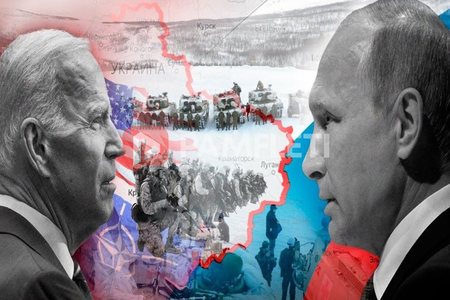
On February 24, 2022, as the first Russian tanks crossed the Ukrainian border marking the start of the offensive, President Vladimir Putin gave a televised address warning the world of "consequences you have never faced in your history" if anyone tried to restrained Russia, a threat widely seen as a show of nuclear force by the Kremlin.
The report by the International Institute for Strategic Studies, IISS, says that fear of escalation with Russia has made the West reluctant to supply Kiev with weapons.
But nearly two years later, a US intelligence report declassified last month estimates that Russia has lost about 315,000 troops in Ukraine since the offensive began, or nearly 90% of its pre-war forces, most of weapons donated by the West.
" Russia now has less confidence in its conventional capabilities because of everything it has lost in the war with Ukraine," says William Alberque, author of the report and Director of Strategy, Technology and Arms Control at IISS.
That means Moscow's shorter-range nuclear weapons, known as non-strategic nuclear warheads, or NSNWs - produced for use on the battlefield - are becoming increasingly important to the Kremlin, according to Mr Alberque.
"Russia has short- and medium-range air-, land- and sea-launched missiles capable of striking the region with nuclear warheads and capable of endangering all of NATO. "The alliance lacks the ability to balance the Russian threat ," he says.
Preventive efforts
Russia has deployed non-strategic nuclear weapons on the territory of its ally Belarus, which neighbors several NATO countries. Last week, Belarus announced that it had adopted a new military doctrine.
"The deployment of tactical nuclear weapons on the territory of Belarus is an important component of deterring potential adversaries from an armed aggression against Belarus," Belarusian Defense Minister Viktor Khrenin said on January 20.
The International Institute for Strategic Studies report also cites analysis published in June by noted Russian political and military analyst Sergei Karaganov, head of the Moscow-based Foreign and Defense Policy Council, in which he recommends striking with a tactical nuclear weapon. of a European country that supports Ukraine, in order to restore the policy of deterrence against NATO.
In the analysis entitled "A difficult but necessary decision", the analyst Karaganov writes that: "It is necessary to awaken the instinct of self-restraint that the West has lost and to be convinced that efforts to weaken Russia by arming the Ukrainians are counterproductive for the West itself. We will have to make nuclear deterrence a compelling argument again, lowering the threshold for the use of nuclear weapons."
“Morally, this is a terrible choice, as we will be using God's weapon, thus condemning ourselves to severe spiritual losses. But if we do not do this, not only may Russia die, but most likely, the entire civilized world will cease to exist. By breaking the West's will to continue aggression, we will not only save ourselves and eventually free the world from the five-century Western yoke, but we will also save humanity ," wrote analyst Karaganov.
William Alberque points out that after the publication of Mr. Karaganov's analysis, several other well-known Russian political scientists have been involved in the nuclear debate. Even the Russian president has given his consent for the analysis.
In October last year, during an annual political conference in Valdai, a lakeside town between Moscow and St. Petersburg, Putin himself addressed analyst Karaganov, who was present in the room.
"I have read all your writings," President Putin told analyst Karaganov. "I think we don't need to hit NATO, but I think I need additional alternatives when it comes to escalation with the United States and NATO to maintain the policy of containment ," says Mr. Alberque, adding that these alternatives include increasingly non-strategic nuclear weapons.
"They're constantly thinking about what kind of dose of nuclear weapons they would need to get us to agree, to get us to basically seek peace, without escalating the conflict out of their control, where we actually start hitting targets deep within Russia. So basically, how do they stop us from hitting Moscow? How to keep the conflict in a certain area?"
"I think they believe that the use of small nuclear weapons can be controlled and they can be useful to Russia. So that's what we would consider using nuclear weapons to win the battle, to keep the United States out of the fighting, for example, by not allowing us to get United States reinforcements from across the ocean." , Mr. Alberque tells VOA.
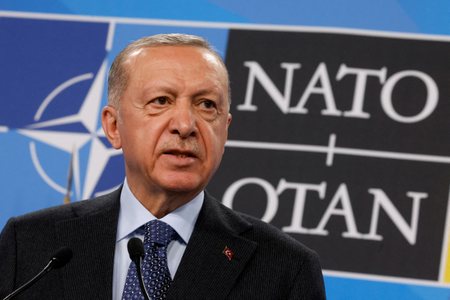
Following the Russian aggression against Ukraine, NATO Secretary General Jens Stoltenberg said that the use of any type of nuclear weapon by Russia in Ukraine would "fundamentally change the nature of the conflict" and would have "consequences".
Russia believes NATO lacks the resolve to respond with its own nuclear weapons, according to a report by the IISS, which says it is vital the West recalibrates its nuclear deterrence strategy.
"Should we have the same non-strategic nuclear weapons systems ready? Or will we make it impossible for Russia to use them through a better and integrated air and missile defense system? These are the ones we have to solve. This is a new dilemma, or perhaps a dilemma that we have ignored for so long ," Mr. Alberque told VOA. /VOA




Lini një Përgjigje