


 Shkruar nga Pamfleti
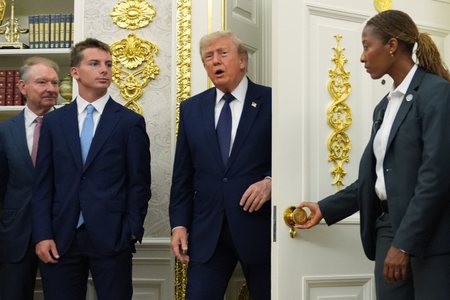
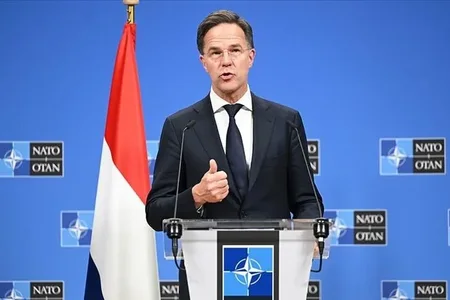
The war in Ukraine and the fallout from the conflict with Iran are at the top of the agenda at this week's NATO summit. But long before Secretary General Mark Rutte took the stage on Tuesday, NATO's most powerful individual had already set the tone.
" It's ridiculous that the US continues on this one-sided path when the relationship is not reciprocal. They were not there for us!!! " wrote US President Donald Trump late last week.
As 32 leaders of the transatlantic body gather in Ankara for their two-day summit starting Tuesday, the frosty relationship between members of the military alliance and the United States has emerged as the biggest challenge clouding its future.
NATO says the summit will focus on three priorities: increasing defense investment, expanding Europe's defense industrial base, and ensuring long-term military support for Ukraine. The meeting comes after allies pledged last year to spend the equivalent of five percent of GDP on defense, with European allies and Canada increasing defense investment by $139 billion in nominal terms by 2025 alone.
But the talks will be overshadowed by Trump's threats to withdraw the US from NATO and his plan to move troops and weapons out of Europe. On May 1, the Pentagon announced the withdrawal of about 5,000 troops from Germany, following a "comprehensive review of the Department's force posture in Europe."
" I don't think the alliance is at a crisis point. But it is entering a period of profound adjustment ," said Ian Lesser, a distinguished fellow at the German Marshall Fund of the United States.
Trump's skepticism of NATO is not new, but the recent conflict with Iran has deepened tensions within the alliance. He has repeatedly criticized European allies for refusing Washington's military support, particularly by refusing to participate in efforts to reopen the Strait of Hormuz.
Another major source of friction is military spending. On Thursday, Trump again criticized the defense alliance, saying it was "ridiculous" that Washington spends more money on NATO than any other country to defend them "without benefiting from it."
Experts say that while the US has changed its stance on NATO, a US withdrawal from it is unlikely given the legal and political challenges that come with it, especially as the country prepares for key midterm elections that will determine who will retain control of Congress.
To formally withdraw, Trump would need a two-thirds majority in the U.S. Senate or an act of Congress, scenarios that are unlikely to be approved anytime soon, with NATO still enjoying broad support among many lawmakers in both major parties in Washington.
" It is in the U.S. interest to remain engaged in European security and maintain a key role in NATO, and that is a bipartisan view in Washington ," Lesser said.
Europeans have given up on restoring the alliance-based trust of decades past, but they hope this summit will be an occasion for some planning, said Sophia Besch, a senior fellow in the Europe Program at the Carnegie Endowment for International Peace.
“ The only thing they still dare to hope for is greater predictability. They have accepted that the American commitment to Europe is changing; what they want is a more orderly version of the transition. The fear behind this is well-founded: A failed handover of power from a US-led NATO to a European-led NATO opens a gap in deterrence and defense ,” Besch said.
Despite concerns about the potential reduction in American support, European allies would not be left without protection. Russia's invasion of Ukraine highlighted both the fragility of Europe's defense industrial base and the extent to which many NATO members depend on Washington for their critical military capabilities.
At the same time, recurring tensions in transatlantic relations, from disagreements within NATO to Trump’s threats to invade Greenland, have reinforced the push for greater European strategic autonomy. As a result, defense spending among European allies rose by 62 percent between 2020 and 2025.
However, major gaps in capabilities remain. According to the International Institute for Security Studies (IISS), European countries continue to rely heavily on the US for long-range strike capabilities, intelligence, surveillance and reconnaissance, satellite-based assets, logistics, and integrated air and missile defense.
Closing these gaps will be a long-term challenge. The IISS estimates that replacing the most critical US conventional military capabilities would require approximately $1 trillion and could take a decade or more. Europe’s defense industry also faces difficulties in expanding production quickly enough, while many armed forces continue to struggle with recruiting and retaining personnel.



Lini një Përgjigje