


 Shkruar nga Pamfleti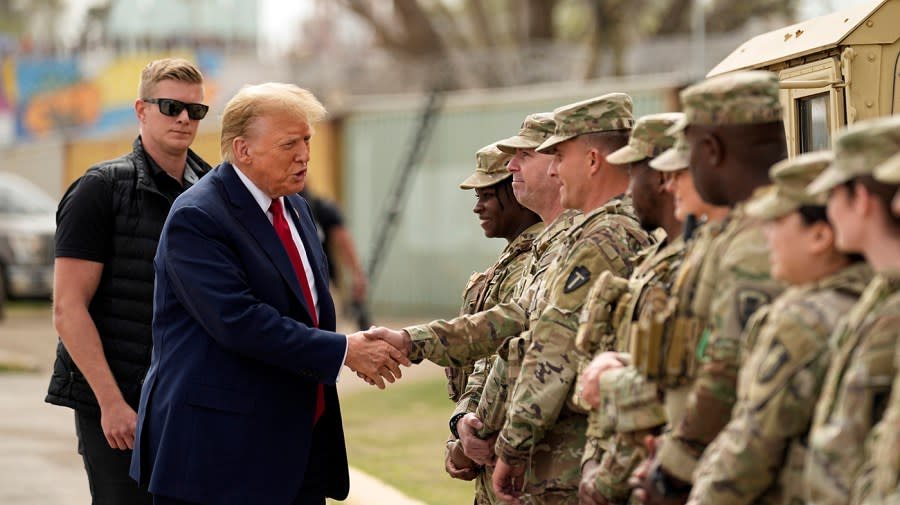
Will Donald Trump abandon Europe?
The Trump administration is reportedly ready to reduce the US military presence in Europe, in line with the strategic (and budgetary) priorities outlined by Secretary of Defense Pete Hegseth.
This is suggested, pending official decisions and related announcements, by recent Congressional hearings with Defense Department officials, which have hinted at an imminent review of the global posture of the US armed forces, particularly on the Old Continent. According to an analysis by Responsible Statecraft, in fact, the administration's moves indicate a clear change of direction.
Trump administration priorities
US President Donald Trump's national security team has set clear goals: to end the war in Ukraine, strengthen homeland security and reduce the cost of military operations abroad to focus on Asia, especially competition with China. These goals require a reduction in spending and the military, with particular attention to the US military, which looks set to undergo significant cuts.
Secretary Hegseth ordered, in a February 18 memo, an 8 percent annual reduction over five years in the budgets of the military departments, with the aim of reallocating resources to priorities such as southern border security with Mexico, munitions programs, missile defense, and operations in Asia. And the military is a prime candidate to bear the brunt of the cuts that Trump and Hegseth are making. In this regard, a simulation by the American Enterprise Institute confirmed that, following Hegseth’s instructions, the military would absorb much of the cuts.
Impact on presence in Europe
Currently, about 100,000 U.S. military personnel are stationed in Europe, but that number could fall dramatically. The strategic needs described by Hegseth, along with the growing demand for personnel for the border security mission with Mexico, make a reduction in numbers inevitable. Approximately 6,600 active-duty personnel, mostly from the Army, and more than 2,000 National Guard members are already deployed to the border, with projections showing up to 40,000 military personnel deployed over the next four years. These units, often drawn from high-readiness units, are not available for overseas missions during their deployment and require periods of rest and retraining upon return.
As a result, the Army’s presence in Europe could be reduced by 10,000-20,000 personnel, with cuts to permanent forces in countries such as Germany and Poland, according to analysis by Responsible Statecraft. The reduction is seen as necessary to balance the military’s limited resources, especially if the overall number of active units is reduced. / Adapted “Pamphlet” from “Inside Over”



Lini një Përgjigje