


 Shkruar nga Pamfleti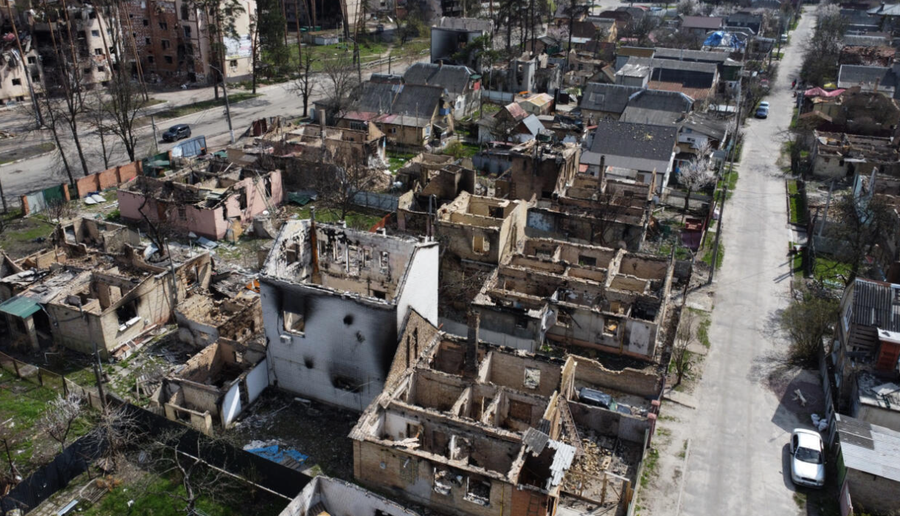
Russia may agree to use $300 billion of its frozen assets in Europe for reconstruction in Ukraine, but on the condition that some of the money is spent in the one-fifth of the country controlled by Moscow's forces, three sources told Reuters.
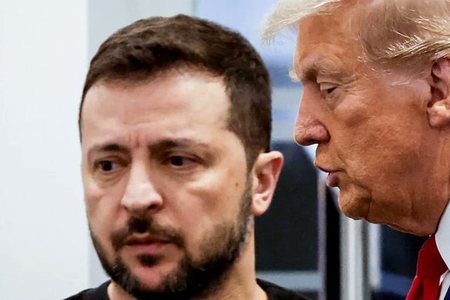
Russia and the United States held their first face-to-face talks on ending the war in Ukraine on February 18 in Saudi Arabia, and both US President Donald Trump and Russian President Vladimir Putin have said they hope to meet soon.
After Putin sent troops into Ukraine in 2022, the United States and its allies banned transactions with Russia's central bank and finance ministry, blocking $300-350 billion in Russian sovereign assets, mostly European, US and British government bonds held in a European securities depository.
While discussions between Russia and the United States are at a very early stage, one idea circulating in Moscow is that Russia could propose using a large portion of its frozen reserves for Ukraine's reconstruction as part of a possible peace deal, according to three sources with knowledge of the matter.
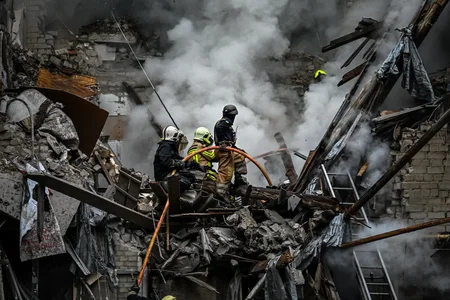
Parts of eastern Ukraine have been devastated by war, with hundreds of thousands of soldiers killed or wounded on both sides, while millions of Ukrainians have fled to European countries or Russia. A year ago, the World Bank estimated that reconstruction and recovery would cost $486 billion.
The sources spoke to Reuters on condition of anonymity because of the sensitivity of the discussions and because they are only preliminary. The Kremlin declined to comment.
The idea that Russia might agree to use frozen money to help rebuild Ukraine has not been previously reported and could provide insight into what Russia is willing to compromise on as Moscow and Washington seek to end the war, at a time when Trump is pushing for U.S. access to Ukrainian minerals to repay Washington's support.
Russia's main demands for a halt to the fighting include a withdrawal of Kiev's troops from Ukrainian territory that Moscow claims and an end to Ukraine's ambitions to join NATO. Ukraine says Russia must withdraw from its territory and is seeking security guarantees from the West. The Trump administration says Ukraine has unrealistic and "illusionary" goals.
Reuters could not determine whether the idea of using frozen funds was discussed between Russian and US counterparts at the Saudi meeting.
The G7 group declared in 2023 that Russian sovereign assets would remain frozen until Russia pays for the damage it caused in Ukraine. Trump has said he would like Russia to return to the G7, a grouping of wealthy nations.
Russian Central Bank Governor Elvira Nabiullina said Thursday that the bank was not part of any talks about lifting sanctions or freezing Russia's reserves. Russia has previously said plans to use the funds in Ukraine amounted to robbery.
Ukraine's Foreign Ministry and the White House did not immediately respond to requests for comment.
Two-thirds split?
Russia's frozen sovereign assets have been the subject of intense debate in the West with some proposing to essentially give them to Ukraine through a complex "repatriation loan."
A source with knowledge of the discussions in Moscow said Russia could accept up to two-thirds of the reserves going to Ukraine's restoration under a peace deal, provided there are guarantees of accountability.
The rest could go to Russian-controlled territories in eastern Ukraine that Russia now considers part of Russia, the source said.
Another source with knowledge of the discussions said Moscow would agree to use the money to rebuild Ukraine, but that it was too early to say what the potential split might be. Two sources stressed that it was important to discuss which companies would receive future reconstruction contracts.
Another source, close to the Kremlin but not directly involved in the discussions, said Russia would still seek the lifting of the asset freeze as part of the gradual easing of sanctions.
Some Western officials, particularly in the German government and the European Central Bank, have been hesitant to simply confiscate sovereign reserves, warning that such a move could face legal challenges and damage the euro as a reserve currency.
Russian officials have repeatedly warned that state confiscation of assets runs counter to free-market principles, undermines banking safety and erodes confidence in reserve currencies. In retaliation, Russia has drafted legislation to seize funds from companies and investors in so-called unfriendly states, those that have hit it with sanctions. The bill has yet to be voted on in Russia’s lower house, the State Duma.
European Freezes
At the time the assets were frozen, Russia's central bank said it held about $207 billion in assets in euros, $67 billion in assets in U.S. dollars and $37 billion in assets in British pounds.
It also had holdings that included $36 billion in Japanese yen, $19 billion in Canadian dollars, $6 billion in Australian dollars and $1.8 billion in Singapore dollars. Its Swiss franc holdings were about $1 billion.
Russia reports its total gold and foreign exchange reserves at about $627 billion, including frozen funds. The value of Russia's frozen assets fluctuates with bond prices and currency movements.
The bank's largest bond holdings were in sovereign bonds of China, Germany, France, Britain, Austria and Canada. Russia's gold reserves were held in Russia.
About 159 billion euros of assets were managed by Belgian clearing house Euroclear Bank at the beginning of last year, Euroclear said.
While the freezing of funds has angered Moscow, some of Russia's most outspoken war hawks have previously acknowledged that Russia could eventually part with the frozen reserves, provided the controlled territories remain within Russia.
" I propose a solution. They pay this money for our purchase of those territories, those lands that they want to be with us ," said Margarita Simonyan, head of Russian state broadcaster RT, in 2023.
The Russian-controlled territories of Ukraine account for about 1% of Russia's gross domestic product, but some economists believe their share could grow rapidly if they remain with Russia when the war ends. The regions already provide about 5% of Russia's grain harvest./ Adapted from "Pamphlet" by "Reuters"



Lini një Përgjigje