


 Shkruar nga Pamfleti
Netanyahu's insistence on continuing attacks in southern Lebanon also seems arrogant, given that Israel's stated intention to create a new security zone brings it into direct conflict with Hezbollah, which has proven itself to be particularly capable of fighting on its own soil.
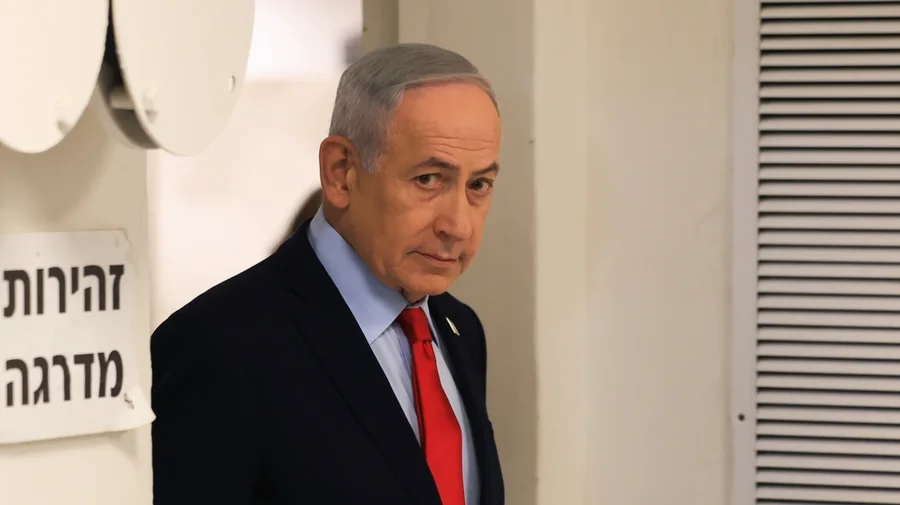
"In a war where there are no winners, the Israeli prime minister looks set to be the biggest loser as he enters a fragile and uncertain ceasefire with Iran," writes the British newspaper The Guardian about Benjamin Netanyahu, following the reactions within Israel after the ceasefire announced by the US and Iran in the early hours of Wednesday.
As the British newspaper notes, “the assessment of American intelligence services that Israeli predictions of regime change and revolution in Iran were ‘ridiculous’ turned out to be correct. The Israeli assessment that the war would last, at best, a few days and at worst a few weeks, turned out to be tragically wrong.”
It is also noted that "even two days before the ceasefire was announced, according to Israel's Channel 12, Netanyahu was pressuring Donald Trump not to agree."
The opposition's nails
“There has never been such a political catastrophe in our entire history. Israel was not even close to the negotiating table when decisions were made that concerned the core of our national security. The military did everything it was asked to do and the public showed tremendous resistance, but Netanyahu failed politically, failed strategically, and achieved none of the goals he set for himself. It will take years to repair the damage he caused, due to arrogance, negligence, and lack of strategic planning,” wrote Israeli opposition leader Yair Lapid in X.
The head of the left-wing Democratic Party, Yair Golan, echoed this sentiment, calling the ceasefire a "strategic failure" by Netanyahu.
"We were promised a historic victory and security for generations, and in reality we got one of the most serious strategic failures Israel has ever experienced. This is a complete failure that jeopardizes Israel's security for years to come," he said.
He risked everything and failed.
According to the Guardian, “the reality is that Netanyahu risked everything in the war and, by failing to secure the fall of the theocratic regime, the seizure of Tehran’s highly enriched uranium reserves or a significant weakening of the state, he has damaged Israel’s international standing, which was already severely damaged by his actions in Gaza.”
On the other hand, according to the report, in the security field, despite Trump's claims, the strength of the Revolutionary Guard has been strengthened, as Tehran has achieved, at least for the time being, its main objective: surviving a month-long assault by two of the most powerful militaries in the world. The attacks have left a wounded but still intact regime with significant military assets, which is likely to require rapid rearmament as it seeks opportunities for revenge.
Netanyahu's insistence on continuing attacks in southern Lebanon also seems arrogant, given that Israel's stated intention to create a new security zone brings it into direct conflict with Hezbollah, which has proven itself to be particularly capable of fighting on its own soil.
Loss of confidence in the US
The public and diplomatic consequences could be even more serious. In the US, in particular, the political consensus that has existed since the 1960s appears to be collapsing. Israel’s role in pushing Trump into war with Iran has been criticized by both progressives and the far-right Maga movement, while overall support for Israel is at an all-time low even among Jewish voters.
There are also domestic political consequences for Netanyahu, in an election year in Israel. Instead of transforming the country's security situation, he is emerging from the war without achieving any of his main goals.
Iran's Supreme Leader, Ali Khamenei, may be dead, but he has been succeeded by his hardline son. Rather than closing the nuclear issue, Tehran's 10-point plan that Trump has outlined as a basis for negotiations appears to include accepting Iran's right to enrich uranium, something he himself has denied.
For now, the US-Iran talks look more like the framework of Barack Obama's nuclear deal that Netanyahu sought to undermine and from which Trump withdrew - than a new reality.
"What is his role now?"
For some, like Haaretz military analyst Amos Harel, the failure was built into Netanyahu’s plans. “Many of the weaknesses of both the current American administration and the Israeli system under Netanyahu became apparent: the propensity to take risks based on unfounded expectations, dubious plans, contempt for experts, and aggressive pressure to align with the political leadership,” he said.
It did not go unnoticed that, having secured the war he sought and seen it fail, Netanyahu is unlikely to have such an opportunity again with American support.
“Given that this has been a staple of his political narrative for years, the question arises: what is his role now? It is the fourth time in a row, in Gaza, once in Lebanon and twice in Iran, that his promises of absolute victory and the elimination of existential threats have proven hollow.”



Lini një Përgjigje