


 Shkruar nga Pamfleti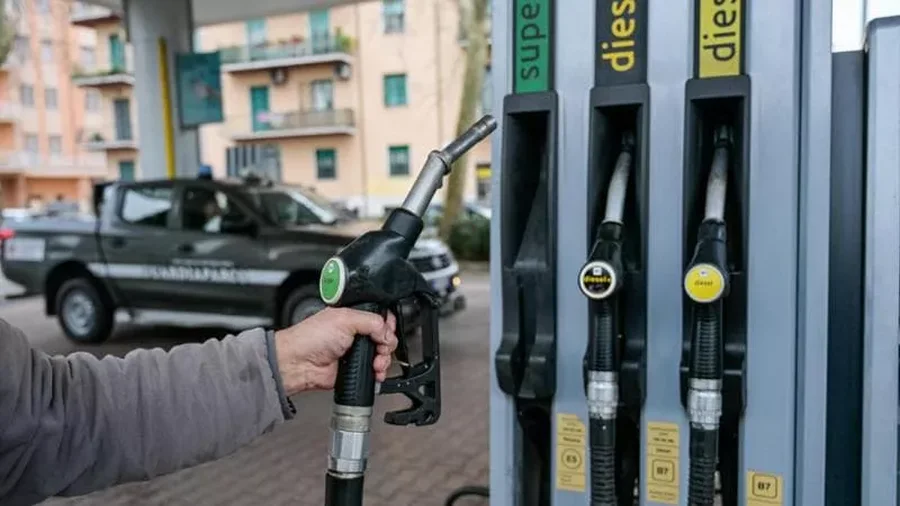
The Italian government has approved a package of measures to cope with the increase in gasoline and diesel prices, aiming to curb speculation in the fuel market. The decisions were taken at a meeting of the Council of Ministers and are included in the new fuel decree.
According to the draft measure, which has been seen by the newspaper La Repubblica, the Guardia di Finanza's checks along the entire supply chain, from manufacturers to distributors, could be forwarded to the judicial authorities to verify the existence of the criminal offense of "speculative maneuvers on goods".
The government has set up a special monitoring regime for so-called "distortionary phenomena", which will last two months. In the event of an abnormal or sudden increase in prices or international reference quotations being detected, the Price Surveillance Authority will communicate to the Guardia di Finanza the data on the operators and companies involved. The investigations will analyse the accounting documentation to identify any anomalies in the costs and daily prices of fuel purchases, tracing the chain back to the purchase of crude oil and refined products.
The results of the investigations will be immediately transmitted to the Price Supervision Authority and the Antitrust Authority for the possible initiation of sanctioning procedures. The latter may also refer the cases to the judicial authorities within two days, in accordance with Article 501-bis of the Criminal Code.
The package also includes support for the road transport sector. The government has foreseen a 28% tax credit for operators, to mitigate the economic effects of the increase in oil prices. The measure applies to vehicles of the Euro 6 category or higher and covers documented fuel purchases, excluding VAT. The total fund amounts to 608.5 million euros.
Another intervention is related to the reduction of excise duties, one of the main components of the final price at the pump. The measure was announced by Deputy Prime Minister Matteo Salvini after a meeting with representatives of the oil industry. He announced that, in collaboration with Economy Minister Giancarlo Giorgetti, work is being done on an immediate and significant reduction of excise duties.
According to Salvini, the aim is to bring the price of oil below 2 euros per liter, with a potential target of even below 1.90 euros. He stressed that the intervention will be experimental for a month and will cost several hundred million euros, while the price reduction at the pump is expected to be around 4-5 cents per liter.


Lini një Përgjigje