


 Shkruar nga Pamfleti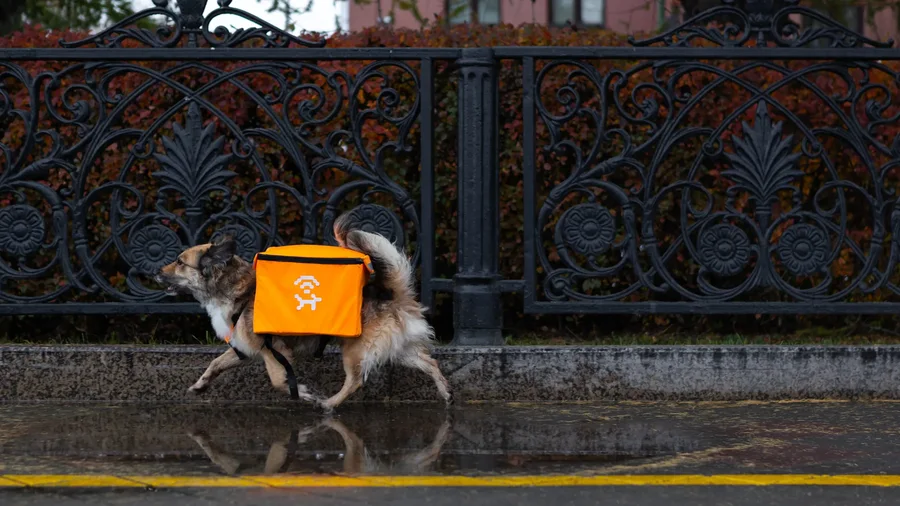
If you walk around the Russian city of Yekaterinburg, you might come across several dogs wearing orange harnesses...
Stray dogs roam the streets carrying devices that act as Wi-Fi hotspots to provide internet access in the event of a power outage. This method, targeted lockdowns and new control rules are pushing Russia towards an unprecedented digital isolation.
If you walk around the Russian city of Yekaterinburg, you might come across several dogs wearing orange harnesses. As strange as it may seem, they were put on by people to ensure the internet works in Russia.
The stray dogs are part of the Lai-Fi project, a startup that has equipped street animals with Wi-Fi hotspots installed on their backs. The goal is to create a mobile and resilient network capable of providing internet connectivity in Russia even during power outages, which are increasingly common in the Russian Federation.
This is giving stray dogs a useful social role (and perhaps a family). For days, several cities in Russia have been experiencing increasingly frequent internet outages. And while Yekaterinburg's strays receive food and a few cuddles from passersby looking for a signal, residents are grappling with the inconvenience of increasingly unstable network connections.
Russian authorities have begun restricting or blocking internet access, especially on mobile phones, to counter Ukrainian drone attacks, which rely on mobile networks to operate. The result is a series of power outages that are slowing communications, services and some sectors of the economy in several Russian cities.
5,000 WhatsApp outages in one day
On the evening of December 2, the governor of the Leningrad region, Alexander Drozdenko, sounded the alarm about a Ukrainian drone attack, noting that “mobile internet speeds may decrease.” Although the emergency had ended early in the morning, residents reported problems throughout the rest of the day.
And this is not the first time it has happened. As Moscow and Washington try unsuccessfully to revive negotiations over Ukraine - with NATO considering the possibility of launching "preemptive cyber attacks" and the Kremlin claiming to have captured Pokrovsk, a claim quickly denied by Kiev - thousands of reports are being received daily on the internet monitoring website sboj.rf.
The WhatsApp platform was blocked over 5,000 times in a single day. And while the messaging system had so far escaped Russian bans imposed on other Meta products like Instagram and Facebook, its days will now be numbered.
Roskomnadzor, the Federal Service for Supervision of Communications, has declared that WhatsApp will be completely blocked in Russia. The reason: it is being used to organize “terrorist actions.” Among other reasons behind this blockade, explained Anton Gorelkin, First Deputy Chairman of the State Duma Committee for Information Policy, was the leak of diplomatic data.
He was referring to wiretapped phone calls between Trump’s special envoy, Steve Witkoff, and Putin’s diplomatic adviser, Yuri Ushakov, and then with the head of Russia’s sovereign wealth fund, Kirill Dmitriev. In late November, Bloomberg transcribed and published the conversations, which raised suspicions that the US president’s inner circle was collaborating with the Russians, and that the initial peace plan was a product of Moscow.
In short, the war is also being waged over telecommunications. Or rather, over their control. And as power outages become more frequent, the Russian population is beginning to wonder whether it will have to get used to a return to the pre-internet era.
Internet restrictions
Russian authorities had imposed internet restrictions since February 2022, shortly after the invasion of Ukraine. Initially, this was military censorship, which later extended to the independent press. Almost simultaneously, the European Union banned the two most prominent pro-government Russian media outlets abroad: the state-run television channel RT (Russia Today) and the online newspaper Sputnik, which Brussels considered to be disinformation outlets.
In March 2022, a Russian court declared Meta an extremist organization, blocking access to Facebook and Instagram in Russia. Google News has also been blocked, while YouTube has recently experienced a major slowdown. On December 4, Roskomnadzor announced the blocking of FaceTime, the video calling service on Apple devices, because it said it was being used “to recruit criminals and commit fraud.”
According to the Setevye Svobody project, which is listed as a “foreign agent” by Russian authorities, 637,000 cases of interference with online freedom have been recorded in Russia since 2022, a 40 percent increase compared to the previous year. Most of the cases involved blocking websites and IP addresses. Then came the shutdown of VPNs, the service that allows access to blocked websites. And in July 2023, as part of an exercise, Russia disconnected its national network (RuNet) from the global internet for several hours.
This test, described as "a success", was designed to test the viability of a sovereign network that would allow the country to disconnect from the global internet at any time, thus strengthening its control over online information, similar to the Chinese and North Korean models.
Ushtrime të ngjashme u kryen 3 herë në vitin 2023. Për t’i kundërshtuar këto masa, Ministria Ruse e Zhvillimit Dixhital, ka publikuar të ashtuquajturat “lista të bardha”, një regjistër i faqeve të internetit dhe shërbimeve online që duhet të funksionojë edhe gjatë ndërprerjeve të energjisë. Lista përfshin portalin e shërbimeve shtetërore Gosuslugi, rrjetet sociale ruse VK dhe Odnoklassniki, motorin e kërkimit Yandex dhe disa tregje lokale. Zhvillimet e fundit ndodhën në shtator.
I pari është një ligj që ndalon kërkimin dhe shikimin e të ashtuquajturave “materiale ekstremiste” në internet; ndërsa tjetri është futja e shërbimit shtetëror të mesazheve Maks - shpesh i krahasuar me shërbimin kinez WeChat - i cili supozohet të instalohet automatikisht në të gjitha pajisjet e reja mobile dhe supozohet të përdoret në shkolla dhe kompani të mëdha në vend.
Liria online në rrezik, jo vetëm në Rusi
Gati 4 vjet pas fillimit të luftës në Ukrainë, liria dhe siguria janë gjithnjë e më shumë në rrezik, madje edhe në internet. Sipas një raporti të ri nga Freedom House, liria globale e internetit ka rënë për vitin e 15-të radhazi.
Ndërsa Kina dhe Mianmari mbeten vendet më të këqija në botë për lirinë në internet, rënie kanë pësuar edhe shumë nga vendet e klasifikuara si “të lira”. Përkeqësimi më i ndjeshëm në grupin e vendeve të “lira”, ka të bëjë me Gjeorgjinë, e ndjekur nga Gjermania dhe Shtetet e Bashkuara.
Në Gjermani, thekson Freedom House, “autoritetet kanë nisur procedura penale kundër njerëzve që kritikuan politikanët, dhe kërcënimet nga grupet e ekstremit të djathtë e kanë inkurajuar më tej autocensurën online”. Edhe në Shtetet e Bashkuara, kufizimet në rritje në hapësirën qytetare, kërcënojnë të kufizojnë aktivizmin dixhital, siç dëshmohet nga arrestimi i disa qytetarëve të huaj për shprehje online jo të dhunshme.
Një sistem për një kontroll të hekurt
Ndërsa masat e miratuara në Rusi, ndërprerjet e energjisë, ndalimet, futja e shërbimeve të reja shtetërore - mund të duken si një reagim kaotik ndaj kërcënimeve dhe sanksioneve perëndimore, ekspertët thonë se ato në fakt janë pjesë e një plani specifik: ndërtimi i një modeli të ri dixhital, në të cilin shteti jo vetëm monitoron përdoruesit, por kontrollon vetë qasjen tek informacioni.
Dhe infrastruktura teknike për të shtrënguar masat e rrepta ekziston aktualisht. Siç shpjegon media e pavarur ruse, është ndërtuar gradualisht një sistem që lejon kontrollin e rrjedhës së të dhënave, shpejtësisë dhe qasjes tek shërbimet individuale.
Një sistem i projektuar fillimisht si një mjet mbikëqyrjeje, pastaj si një filtër dhe tani si një çelës kryesor. Në zemër të këtij sistemi, janë dy mjete kryesore: SORM, një platformë përmes së cilës shërbimet e sigurisë mund të marrin të dhëna dhe informacione nga operatorët; dhe DPI (Deep Packet Inspection), një teknologji që e lejon shtetin të menaxhojë trafikun: të ngadalësojë YouTube, të bllokojë thirrjet në WhatsApp dhe Telegram dhe të pengojë VPN-të.
Starting January 1, 2026, mobile operators in Russia will be required to store users' message data for 3 years instead of 1. In addition, starting March 1, Roskomnadzor will have the exclusive authority to disconnect RuNet from the rest of the global Internet./ Adapted from "Pamphlet" by "Wired"







Nuk e di se kush ua pershtat, por nuk ka qytet me emer Jekaterinburg por Ekaterinburg