


 Shkruar nga Lucio Luca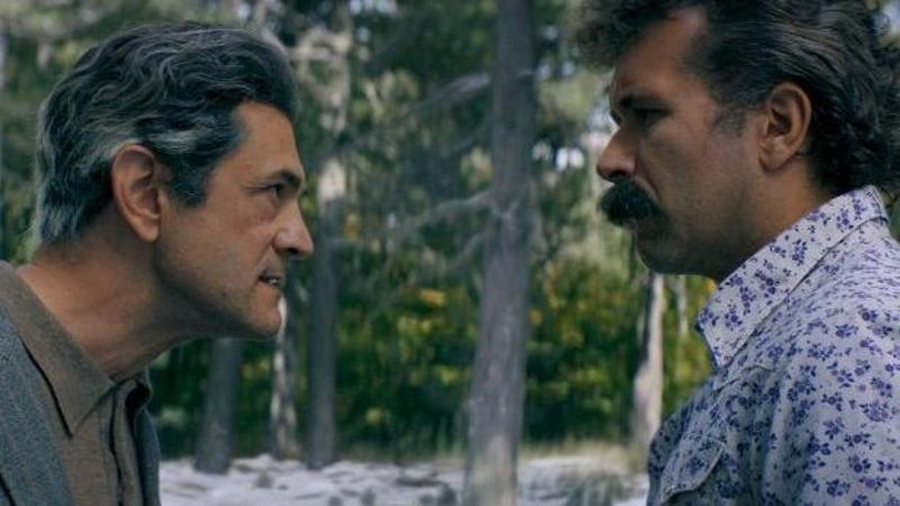
Son of the 'Ndrangheta, a ruthless, remorseless killer who ultimately dies under suspicious circumstances. Now, Antonio Zagari's life has been made into a film by Daniele Vicar, "Murder is tiring."
In Calabrian mafia jargon, to kill means "to cunningly" or to eliminate.
During his years as a soldier of the 'Ndrangheta, Antonio Zagari "spoiled" the lives of many people. Many, even for someone like him, linked to the San Ferdinando mafia family since the day he was baptized, when his father Giacomo spat on his backside and placed a knife and a book next to him.
If Antonio had stretched his fingers towards the blade of the knife, he would have become a mafioso; otherwise, he would have been destined to become a "cop."
The newborn did not disappoint anyone: he almost touched the knife. This showed that when he grew up, he would be a murderer serving his family.
Everyone raised a toast: another son following in his father's footsteps; one day the 'Ndrangheta could count on him too. After all, what do they say in these parts? "The world is divided into Calabria and what Calabria will become."
And thanks to Giacomo Zagari, his son Antonio, his younger brother Enzo and many others who emigrated to northern Italy in the 1970s, a piece of Calabria occupied a rich area of the Varese area, between Buguggiates and Moracone, a land of "small factories" and "restaurants" frequented by rich people, by guys who drove around in "Porsche" cars, who could be kidnapped and released in exchange for large sums, which would be very useful for the organization.
Antonio worked 12 hours a day, had a Fiat 124 and ate bread with onions. Then in the evenings he robbed jewelry stores, collected money from fines against clubs
of night businesses in exchange for protection and kills when ordered by his father, Giacomo.
Never any sudden outbursts of anger in front of him or rejection. And above all,
no display of the wealth he had amassed through violence. "Let us never draw attention to ourselves. We are poor people. That is what the neighbors and the police should think," the father-patron instructed.
The last kidnapping
But then something happens that changes things forever. The family decides to kidnap the son of a businessman, Antonio's brother's best friend. Everything goes wrong. The boy is killed, his body is never found, perhaps the body was given to pigs to eat.
Enco, the younger brother, is involved in a brutal drug trafficking ring. Antonio rebels against his father and begins to collaborate with a young Carabinieri colonel. After ending up in prison for a robbery, he reflects on his life as a man constantly pursued by the police, living on the run in the woods, with a young wife and a newborn son he will not see again for who knows how long.
He asks for a notebook, a pen and starts writing. It's like a liberation. He confesses to murders and kidnappings, revenge and punishment. It's a long list of murders that disgust him. He also reveals his hemophobia, his fear of blood. A murderer who felt very bad when a drop of blood stained his clothes.
Antonio writes nonstop. “He had a perfect handwriting, almost like an old scribe,” says Gianni Sparta, the journalist to whom Zagari handed the manuscript. These confessions fuel one of the most important trials against the ‘Ndrangheta, involving around 100 defendants, with a total of 520 years in prison and 7 life sentences, including that of his father, Giacomo.
Antonio became a 'pentito', a repentant one, one of the few in the history of Calabrian organized crime. "In reality, he is simply a collaborator of justice, because he has never repented of anything. His was a family rebellion. Then, in 2004, he died in a strange car accident.
He lived in a secret place, they had given him a new identity, and even changed his features with some plastic surgery. Who knows, maybe someone recognized him and made him pay for his betrayal. But these are speculations. Officially, Antonio Zagari died of accidental causes," Sparta explains.
A long story
In 1992, the manuscript became a book titled “Ammazzare stanca” (Killing the tired), recently reprinted by Aliberti Editore. And from December 4th, the film by Daniele Vicar, produced by “Mompracem” in collaboration with “Rai Cinema”, has been released in cinemas.
The film stars Gabriel Montezi, Vinicio Marchioni, Selene Caramaca, Piergiorgio Bellocchio and Rocco Papaleo. “I’m not a big fan of mafia stories, but this one immediately impressed me. The book is not just a novel, but a story. Antonio rebels when he realizes that he is not a free man, but someone who kills himself every time he shoots others.
Every time this happens, and it has happened to him many times, he gives up a piece of his life. Until one day, sitting in front of a notebook, he finds the courage to look inside himself and get out of the crisis he was immersed in. So, Antonio's story is that of a man who, with his crisis, manages to defeat an entire military organization," says the Vicar.
A mafioso who betrays his father is something unthinkable in some criminal circles. "He does this when he realizes that Giacomo had never considered him as his son, but more as an accomplice. As a subordinate who simply had to follow orders. At that point, his only form of rebellion becomes writing. And for the first time, he feels free," the film's director continues.
Gabriel Montezi, one of the film's stars, known from the films "Io Sono L'abisso" and "Esterno Notte", and already acclaimed for his role as Cassano in the television series "Speravo de morì prima", plays the role of Antonio Zagari in the film The Vicar.
His performance is intense and compelling. "I knew right away that I had to develop this character from the inside out, and reading his memoirs inspired me to create a real psychological journey," he explains.
" While preparing for the role, I wrote and rewrote his words several times on paper, trying to relive his experience, to find in them the right voice to describe a character who, through his pen, finds himself and discovers new truths, " the actor underlines.
In the film, as in the script, Antonio realizes that he is not really a murderer, but a young man born in the wrong place. “Of course this is not an excuse. After all, Zagari never tried to justify himself, and he admitted all his mistakes. However, sometimes it can happen that we are forced to do something that kills us from the inside, something for which we are absolutely unfit. At that point, we have to rebel. And Antonio did this” - says Montezi./ Adapted from "Pamphlet", taken from "La Repubblica"



E kujt i vlejne keto historira o mjerane të medias. Sa qejf keni të shkruani histori të pa vlera. Pse hyni ne hallet e të tjereve, qofshin të mira ose të liga. Keshtu ndodh kur nuk ke me se te merresh.