


 Shkruar nga Pamfleti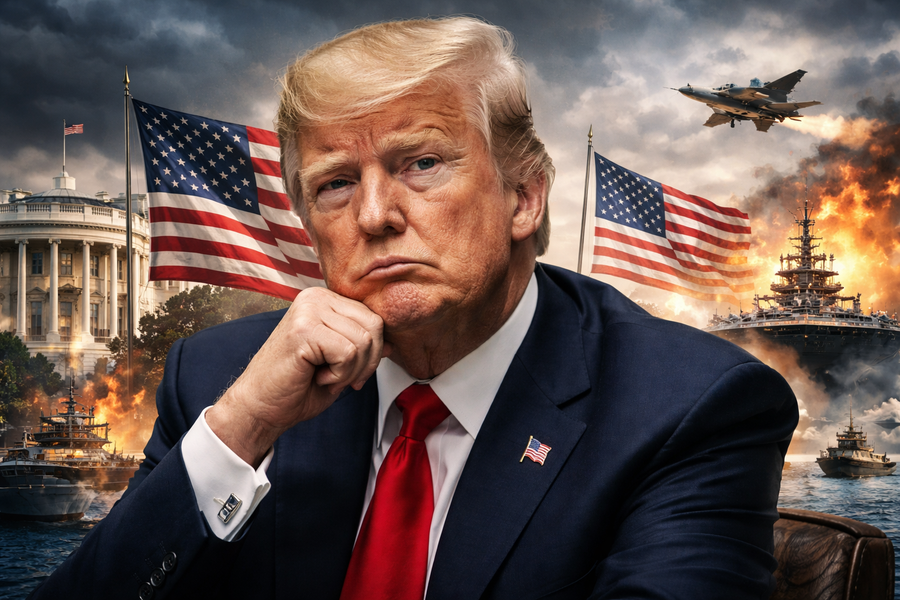
Trump has been hit by the Supreme Court's rejection of the tariffs, but American democracy has proven to be healthy and signs that America has never been stronger are arriving from other parts of the world...
Recent developments highlight a paradox. A Washington Post poll shows that 60 percent of respondents have a negative assessment of the president. The Supreme Court's decision, which overturned the tariffs he imposed, constitutes a political defeat, damages his image in domestic opinion and undermines his credibility with foreign governments.
British historian Niall Ferguson has called the phenomenon that has weakened almost all American presidents midway through their second term the “sixth-year itch.” In this case, the situation looks more like a deepening political crisis.
However, the international power of the United States remains considerable. Signals from various regions confirm this trend.
In Venezuela, polls show that the majority of the population expresses a positive assessment of the operation against Maduro. Although it did not bring democracy, some citizens consider the American intervention a step towards a political alternative.
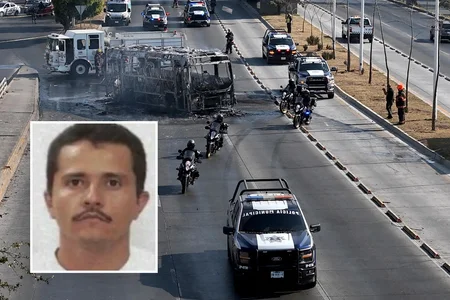
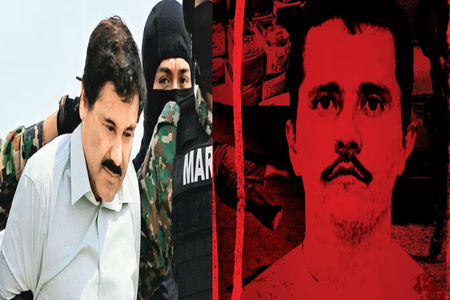
In Mexico, the elimination of one of the main leaders of the drug cartels is linked to a new strategy of the socialist president, which has taken into account pressure from Washington. Throughout Latin America, geopolitical balances are adjusting to a reality where American influence is growing, to the detriment of actors such as Russia, Cuba and China.
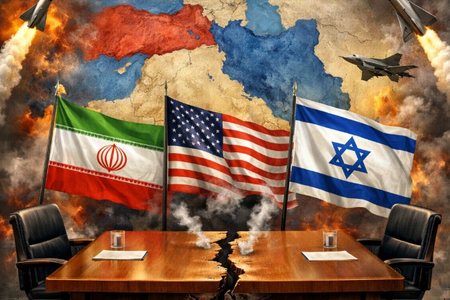
In Iran, tensions remain high amid threats of US military intervention and pressure for a diplomatic agreement that would force the ayatollahs' regime to give up its nuclear program. Protests in universities have resumed. Meanwhile, China and Russia, considered Tehran's main supporters, have maintained a reserved stance. The recent joint Russian-Iranian military maneuvers highlighted the limitations of their capabilities compared to the US military presence in the region. All options remain open, from a limited military operation to a protracted conflict or a diplomatic agreement, but the center of decision-making remains Washington, while Beijing and Moscow appear to have more limited influence in an area they once considered strategic.
On the domestic front, the president was weakened by the Supreme Court’s recent ruling, but the American institutional system proved resilient. The courts, including those appointed by the president himself, voted against him, reaffirming the independence of the judiciary. This development underscores the resilience of American democracy, which has faced similar challenges throughout its 250-year history.
However, European observers are cautioned not to interpret this decision as the end of economic protectionism in the US. Josh Lipsky of the Atlantic Council told the Wall Street Journal that high US tariffs are expected to remain in place, despite the political changes.
Analyst Greg Ip, in the same newspaper, argues that no future president will easily give up the significant revenue that tariffs generate each year. He points out that tariffs can create jobs and new investment in strategic sectors such as steel and the auto industry, especially in crucial states such as Michigan and Pennsylvania. This creates an electoral base that supports them.
Within the Republican Party, support for free trade has waned compared to the past. In 2018, Senator Pat Toomey managed to mobilize a majority of colleagues to limit the president's tariffs; in October of last year, only four Republican senators voted for a similar initiative.
According to Greg Ip, traditional Republicans envision a less impulsive trade policy than Trump's, but one that will maintain an emphasis on reciprocity and state intervention for strategic sectors like semiconductors.
Democrats have also moved away from the free trade paradigm. President Joe Biden maintained tariffs on China and promoted subsidies for domestic production of green technologies, which caused discontent in Europe and Japan.
Within the Democratic Party, the neoliberal wing of the Clinton-Obama era has lost ground, while the left has gained influence. At the Munich Security Conference, Congresswoman Alexandria Ocasio-Cortez called the North American Free Trade Agreement a failed policy and argued that the benefits of trade have been concentrated in the hands of the wealthiest classes.
These developments explain why many countries do not expect immediate changes in American policy, but are adapting to the new reality. German Chancellor Friedrich Merz stated that a great power like China or the US uses the dependencies of others in its own interests. “That is why we are reducing our dependencies and our vulnerability,” he emphasized during a visit to Beijing. / Adapted from “Corriere Della Sera”



Lini një Përgjigje