


 Shkruar nga Pamfleti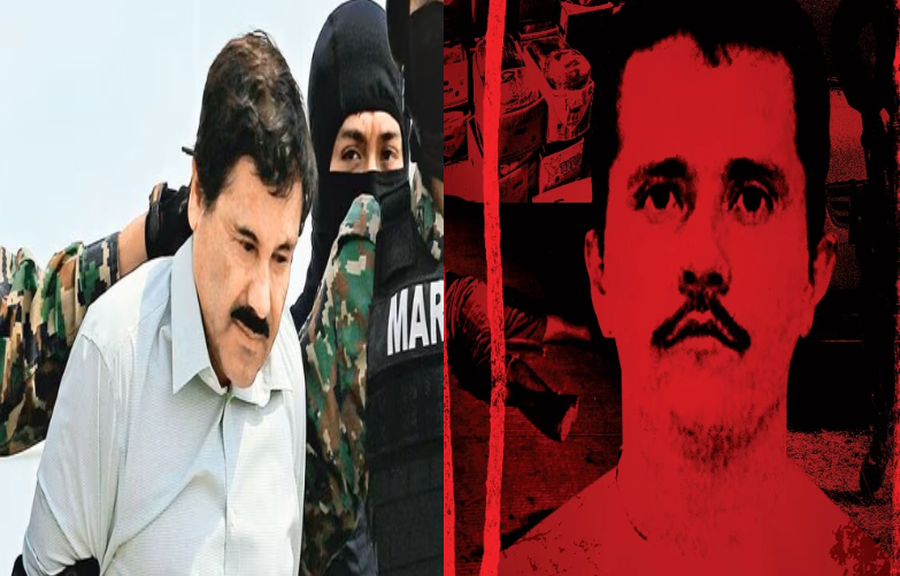
The downfall of two key figures in organized crime, years apart but on the same date...
February 22nd seems to have taken on a special symbolism in the history of the war against Mexican drug cartels. With a difference of years, this date is associated with two of the most powerful names in organized crime in Mexico: Joaquín “El Chapo” Guzmán and Nemesio Oseguera Cervantes, known as “El Mencho.”
On February 22, 2026, Mexican federal authorities announced that “El Mencho,” leader of the Jalisco Nueva Generación Cartel (CJNG), was killed during an operation in the state of Jalisco. He was considered one of the most wanted traffickers in the world, with a key role in supplying the US market with fentanyl, methamphetamine and cocaine. The operation that led to his elimination took place after a multi-year pursuit and, according to authorities, was also supported by international intelligence cooperation.
The date is not unknown to the history of cartels. On February 22, 2014, Mexican forces arrested Joaquín “El Chapo” Guzmán in Mazatlán, Sinaloa. His arrest was considered a major success for the government at the time, as the leader of the Sinaloa Cartel had been on the most wanted list for years, especially after his escape from prison in 2001.
However, “El Chapo’s” story took a dramatic turn in 2015, when he managed to escape again, this time from a maximum-security prison through a 1.5-kilometer-long tunnel built under his cell. The escape exposed serious weaknesses in Mexico’s penitentiary system and sparked international outrage. He was arrested again in 2016 and later extradited to the United States, where he is currently serving a life sentence in a maximum-security facility in Colorado.
In contrast to “El Chapo’s” journey, which ended in courtrooms and prison, “El Mencho’s” end came in a gunfight. He was killed in the field during a security operation, immediately ending the leadership of one of the most violent and fastest-growing organizations in the last decade. The CJNG was noted for its militarized structure, direct attacks on law enforcement, and rapid territorial expansion inside and outside Mexico.
Thus, the same date marks two key moments in the state's confrontation with the most powerful figures in drug trafficking: for "El Chapo", February 22 was the beginning of the decline that led to extradition and permanent isolation; for "El Mencho", it was the last day of a criminal career that had defied the authorities for years.
The symbolism of this date reflects the ongoing cycle of confrontation between the state and criminal organizations in Mexico. However, beyond the symbolism, developments show that the history of organized crime does not end with the overthrow of a leader. Each blow to a cartel opens a new phase, where internal balances, rivalries and the state's response determine whether the country will experience stabilization or a new wave of clashes. /Pamphlet






Lini një Përgjigje