


 Shkruar nga Pamfleti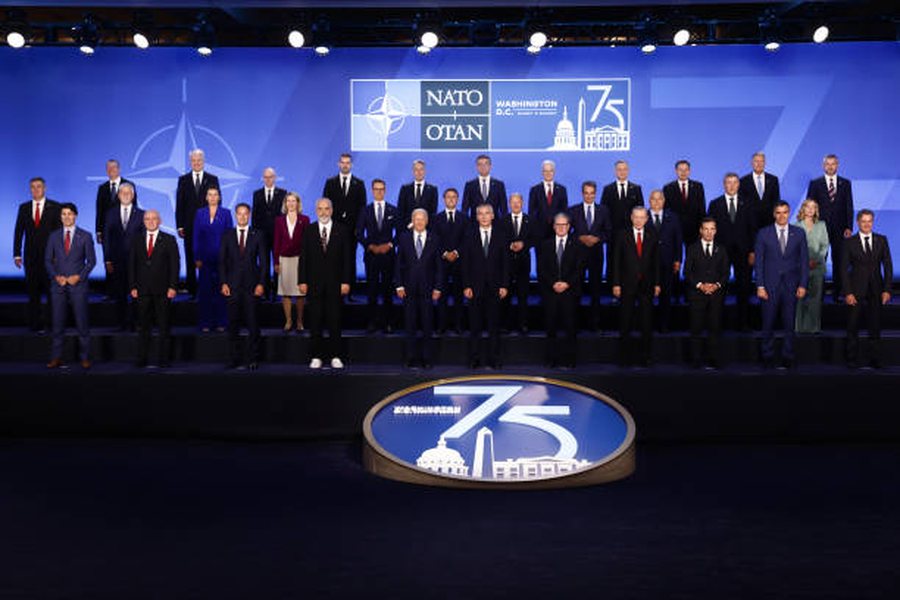
"We remain committed to NATO's continued engagement in the Western Balkans, including the NATO-led Kosovo Force (KFOR)"
The United States will begin deploying longer-range missiles in Germany in 2026, the two countries announced during a meeting of NATO countries on Tuesday. This is a major step aimed at protecting Europe in the face of growing Russian threats.
The most powerful US weapons to be deployed in Germany constitute the most significant military deployment on the European continent since the Cold War, a clear warning to President Vladimir Putin.
The American-German statement says that the "staged deployment" is a preparation for the long-term stationing in Europe of combat capabilities that will include Tomahawk missiles and hypersonic weapons with a wider range of action.
"We cannot rule out the possibility of an attack against the sovereignty and territorial integrity of the allies," the allies said in a statement released on Wednesday.
In the communique issued by the heads of state and government participating in the NATO meeting in the American capital, the Alliance has given special importance to the Balkan region.
NATO warns Russia to stay out of the region involving disinformation, hybrid and cyber threats, as the alliance is on alert to maintain regional peace and security against Russian malign influence.
The regions of the Western Balkans and the Black Sea are of strategic importance for the Alliance. We remain strongly committed to their safety and stability. We will continue to enhance our political dialogue and practical cooperation with the Western Balkans to support reforms, regional peace and security, and counter malign influence, including disinformation, hybrid and cyber threats, posed by state and non-state actors. Democratic values, the rule of law, internal reforms and good neighborly relations are vital to regional cooperation and Euro-Atlantic integration, and we expect continued progress in this direction.
We remain committed to NATO's continued engagement in the Western Balkans, including the NATO-led Kosovo Force (KFOR). We reaffirm our continued support to Allied regional efforts aimed at maintaining safety, security, stability and freedom of navigation in the Black Sea region, including, as appropriate, through the Montreux Convention of 1936. We welcome activation by the three coastal allies of the Black Sea Mine Countermeasures Working Group. We will continue to monitor and assess developments in the region and increase our situational awareness, with a particular focus on threats to our security and potential opportunities for closer cooperation with our partners in the region, as appropriate. NATO supports the Euro-Atlantic aspirations of the countries interested in this region.', NATO's statement on the region says.






Lini një Përgjigje