


 Shkruar nga Paolo Mauri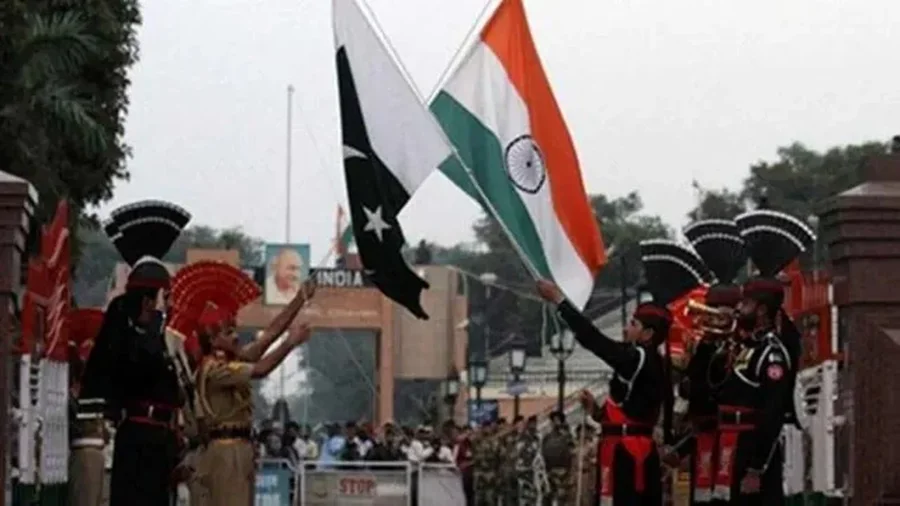
The balance of power is different with regard to the nuclear arsenal and its delivery systems, although there are profound differences between India and Pakistan with regard to their typology...
India and Pakistan are two neighboring countries with a historical rivalry that has led them to 4 conflicts and countless border clashes since 1947. Given what is happening in the disputed region of Kashmir and the general escalation of relations between New Delhi and Islamabad, it is interesting to analyze the combat potential of the two Asian rivals.
The Indian Army has a personnel strength of 2,148,000, of whom 1,248,000 are on active duty and 900,000 are in reserve. The Pakistani Army, on the other hand, has a personnel strength of 1,295,000, of whom 560,000 are on active duty and 735,000 are in reserve.
New Delhi has no fixed-wing aircraft, while Islamabad has 249, mostly (214) of the single-engine, propeller-driven MFI-17 model. As for helicopters, Pakistan has 92 attack helicopters (AH-1, Mi-35, Z-10, Fennec), while India has 80 attack helicopters, Rudra and Prachand.
As for transport aircraft, the Indian army has 258 in its inventory, while the Pakistani army has 222. New Delhi somewhat dominates in the number of drones, with 355 of various types, but mainly for surveillance and reconnaissance.
On the other hand, the Pakistani army has 300 of them, including several attack drones. Overall, India has a better-equipped army than its rival. New Delhi has 3,854 tanks, 4,326 armored personnel carriers, 219 MLRS (multiple launch rocket systems), 1,200 support vehicles and 10,000 logistics vehicles, 4,875 artillery pieces towed by other vehicles and only 100 self-propelled artillery.
Meanwhile, Pakistan possesses 2,617 tanks of various types, 3,025 armored personnel carriers, 520 MLRS missile systems, 2,629 towed artillery pieces, 662 self-propelled guns, 1,000 support vehicles, and 8,000 logistics vehicles.
India is also ahead of Pakistan in terms of its navy. The Indian Navy has a personnel strength of 142,000, of which 67,252 are on active duty and 75,000 are in reserve. The Indian naval forces consist of 2 aircraft carriers, 3 nuclear submarines, 17 conventional submarines, 13 amphibious assault ships, 13 destroyers, 14 frigates, 18 corvettes, 10 offshore patrol vessels and 114 coastal patrol vessels, 3 minesweepers, 4 guided missile boats and 95 auxiliary vessels.
Meanwhile, the Pakistani navy, with a personnel of 40,000 troops (30,000 in service and 10,000 in reserve), has no aircraft carriers, destroyers or nuclear submarines, but only 5 conventional submarines, 3 amphibious combat ships, 9 frigates, 9 corvettes and 65 coastal patrol vessels.
Indian aviation is also more structured, with about 40 aircraft stationed at all times on two aircraft carriers (MiG-29), 20 attack helicopters and 85 transport helicopters. It also possesses dozens of other aircraft for surveillance and patrol.
The Pakistan Air Force does not have any aircraft stationed on any ship, but only 6 attack helicopters plus 30 transport helicopters. It has only 11 patrol boats, 60 drones and 4 fixed-wing aircraft for other purposes.
The numerical but also qualitative gap between the two rival countries is also felt in combat aviation. The Indian Air Force has more than 310,000 personnel, of whom 170,000 are in active service (140,000 in reserve).
New Delhi owns 440 multi-role aircraft, the most modern of which are 36 French Rafales and 259 Russian Su-30MKIs. It also has 63 attack helicopters, 447 transport helicopters, 14 electronic warfare aircraft, 6 surveillance aircraft, 276 transport aircraft, as well as 10 special mission aircraft and about 150 drones.
India also surpasses Pakistan in air defense systems. It has 48 long-range systems, 144 medium-range systems, 341 short-range systems, and 2,000 anti-aircraft artillery units of various types.
For comparison, Pakistan has 60, 78, 136 and 1,000 respectively.
However, the balance of power is different with respect to the nuclear arsenal and its delivery systems, although there are profound differences between India and Pakistan with respect to their typology.
In fact, New Delhi is the only one to have intercontinental ballistic missiles (ICBM) (12) and intercontinental ballistic missiles (IRBM) (20) in service, but Islamabad surpasses it in medium- and short-range missile launchers.
India's Gross Domestic Product is about $4.2 trillion, while Pakistan's is $340 billion. But India's industrial potential is considered strong, while Pakistan's is weak. India has moderate reserves of uranium, chromium, and copper, while it has large reserves of iron, aluminum, and coal.
Pakistan, on the other hand, has small reserves of uranium, iron, aluminum, and coal. Chromium reserves are moderate while copper reserves are large. India's cyber warfare capabilities are good and efficient, while Pakistan's are still in the process of being structured and dependent on Chinese support.
Similarly, India's space capabilities are strong with 50 autonomous military satellites, while Pakistan's are almost non-existent and dependent on Chinese assistance. Indian intelligence capabilities are considered good (network and technology), while Pakistan's are good at hybrid warfare but not in technology.
Since winning a war requires 3 main elements: logistics, logistics, and logistics, the Indian network is much more complex and widespread than the Pakistani one and, above all, can rely on a much larger number of transport aircraft.
Estimated fuel reserves can guarantee India up to 100 days of fighting without external supplies, while Pakistan only 20. In general, it is estimated that India has the ability to withstand intensive combat operations for 2-6 months, while Pakistan for 14 days to 2 months.
After all, India has unlimited water resources that allow it to be agriculturally self-sufficient, while Pakistan depends on India for its water supply, and as a result, some agricultural sectors could suffer considerably.
Finally, India has about 470 million people of military age, while Pakistan only 60 million, and above all has a faster mobilization speed than its rival: 4 to 6 weeks compared to Islamabad's 8-12 weeks. / Adapted "Pamphlet" from "Inside Over"






Lini një Përgjigje