


 Shkruar nga Pamfleti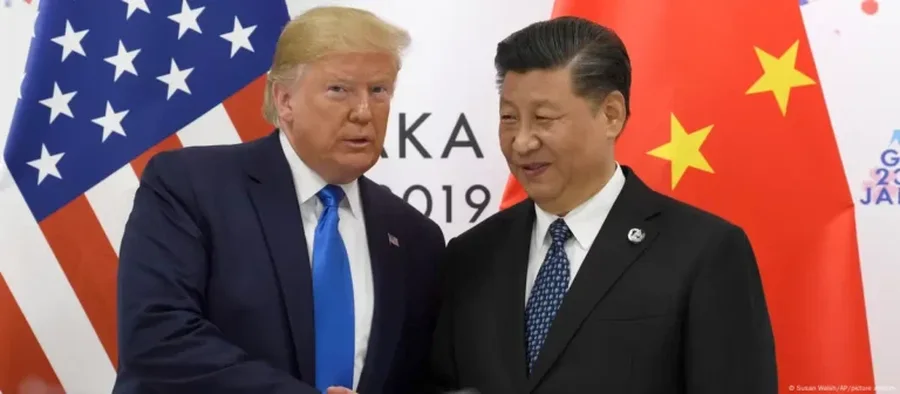
According to information from both sides, China and the United States have agreed to lift some trade restrictions. US Commerce Secretary Howard Lutnick confirmed in an interview with financial news agency Bloomberg that the agreement with China had been signed. According to him, China will supply the United States with rare earth metals and the United States will end its countermeasures.
According to the Ministry of Commerce in Beijing, China will review export applications for “controlled products” and approve those that comply with regulations. In exchange, the US will reportedly lift a series of “restrictive measures” against China.
Trump doesn't mention details
Shortly before Lutnick's confirmation, US President Donald Trump had claimed that a deal had been signed with China, but left many questions unanswered. "We just signed with China yesterday," the Republican said at a White House event. He did not offer further details. The remark came as Trump spoke of "deals" with other countries. He also hinted that "maybe" there could be a "big deal" with India.
The protracted trade conflict between the world's two largest economies, the United States and China, is keeping the global economy on edge. Meanwhile, Trump has raised punitive tariffs on Chinese imports to the US in several stages to as much as 145%. Beijing, for its part, has responded with tariffs of 125% and imposed export controls on industrially important rare earth metals and magnets made from them. China has a near monopoly on these raw materials.
The US, on the other hand, imposed export restrictions on key technologies, such as computer semiconductor software and aviation components, for which China continues to rely on foreign manufacturers.
Rare metals versus high-tech products
Due to China's export restrictions on rare metals, industry outside the People's Republic has recently come under severe pressure. Beijing's measures have affected all countries, not just the US. Even in Germany, companies in the automotive and mechanical engineering sectors, for example, are concerned about the supply of important metals, which are used, among other things, in sensors and electric motors.
China justified the controls by claiming that the raw materials are goods for civilian use, but also for military use. Companies complained that the Chinese Ministry of Commerce was taking too long to process applications, with no guarantee that they would be approved. Concerns grew that production disruptions could result.
China's Ministry of Commerce has repeatedly stressed that it had already approved applications, for example, for EU companies, and that it wanted to speed up the process./ DW






Lini një Përgjigje