


 Shkruar nga Antonio Bultrini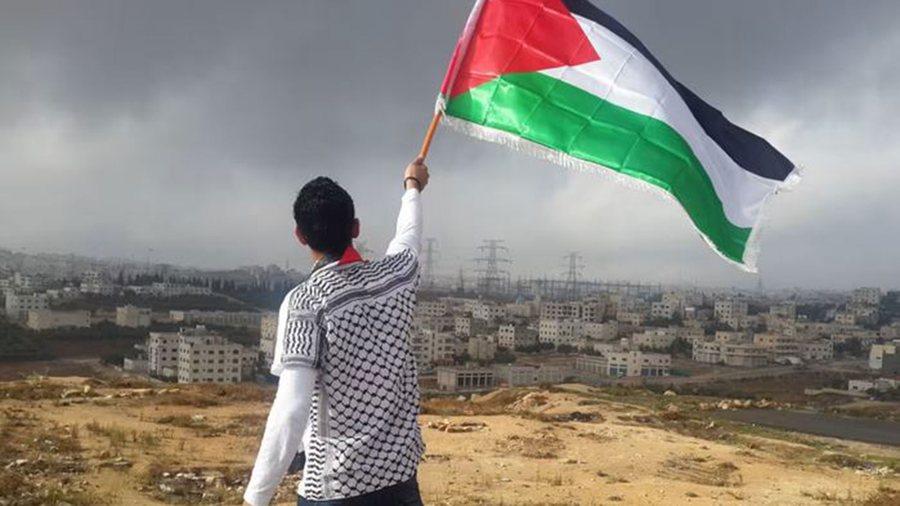
The second paradox is that, on the other hand, a state has been recognized that in reality does not exist...
There are at least two paradoxical aspects that characterize the debate on the recognition of the Palestinian state, after several Western countries announced their intention to proceed soon, during the 80th session of the United Nations General Assembly.
The first is that the Palestinian state, from the point of view of international law, has already been recognized, not only (individually) by approximately 75% of countries (including 12 member states of the European Union and the Holy See), but above all by the General Assembly on November 29, 2012, when it granted the Palestinian state the status of a non-member state (the United States has always vetoed admission as a member) with observer status (exactly the same status enjoyed by the Holy See).
This recognition not only gave the Palestinian delegation the right to participate in the General Assembly, but also had concrete (and important) legal consequences. When the Palestinian Authority had previously attempted to accede to the Statute of the International Criminal Court (ICC), it was told that it lacked formal proof of statehood. After 2012, this formal obstacle no longer existed, and the State of Palestine, which had now been formed, was able to become a party to the ICC Statute. If the ICC now has jurisdiction over the Palestinian territories (with the well-known arrest warrants that have resulted), it is precisely because of the 2012 recognition. This recognition also allowed the State of Palestine to ratify around a hundred treaties.
It should also be clarified that Hamas has nothing to do with any of this, nor can it have any formal role (also due to its terrorist origins): the official relations of the State of Palestine are managed by the only legal entity, namely the Palestinian Authority (despite the lack of democracy).
The second paradox is that, on the other hand, a state that does not exist in reality has been recognized: the Palestinian Authority based in Ramallah, in practice an imitation of a Palestinian government, administers only part of the territory that should belong to the State of Palestine, has no control over airspace or border crossings, and this (to put it simply) is partly due to the Israeli occupation and partly due to the huge problem of illegal Israeli settlements in the occupied territories, which not only constitute a violation of the Palestinians' right to self-determination in the territories that belong to them (i.e. those occupied by Israel in 1967), but to make matters worse, have destroyed the territorial continuity of the West Bank and East Jerusalem (the Gaza Strip is another story).
The most authoritative experts on the Israeli-Palestinian issue (even in the United States) are shocked every time they hear the ritual phrase of the two-state solution repeated, which is as far removed from the real situation on the ground as possible (well described by Andrea Nicastro in Corriere della Sera on July 17), which was stigmatized years ago as a "protracted annexation". And it is an appropriate phrase, like the recent announcements of recognition, because both allow for the avoidance of other necessary but much more inconvenient steps. And that is precisely the point. However, before we get there, a clarification.
What was and is the point of recognizing as a state an entity that is only virtually such, while failing in reality to meet the essential requirements that international law normally assumes for it to be considered a state? The difference is that the issue of a Palestinian state is not an ordinary case because it involves the right of the Palestinians to self-determination, which they won, under international law, in the territories occupied by Israel at the end of the Six-Day War (and only in those territories), namely the West Bank, East Jerusalem and the Gaza Strip. In other words, it is the right of self-determination that makes the difference and allows, entirely legally, the recognition of a state that in reality has no reality. In a sense, it is as if someone were recognizing, and thus contributing to the determination, that the Palestinians have the right to have their own state.
So what does it mean now for France and others to recognize the State of Palestine individually, apart from the possible opening of an embassy and other bilateral effects? It is a symbolic but significant step, certainly unwelcome for the current Israeli government, and it seems to have two basic (intertwined) purposes: to increase pressure on Israel (in a truly desperate situation where the priority is to stop the ongoing destructive and annexation processes), but to limit it to a measure, recognition that comes at a modest cost to the state implementing it, which can also show (even to its own public opinion) that it is doing something, avoiding much more painful measures that the situation would otherwise require.
Moreover, simply accepting the risks can be counterproductive: as early as August 14 last year, on the website of the new (illegal) settlement project in the West Bank, which has since been approved, extremist Minister Smotrich declared that the project, which, if implemented, would separate Ramallah from Bethlehem and the West Bank from East Jerusalem, “will forever bury the idea of a Palestinian state, because there is nothing to recognize and no one to recognize.” He added that “anyone in the world who tries to recognize the Palestinian state will receive a response from us on the ground,” a response that has in fact been ongoing for many years, only that after October 7 it has accelerated dramatically.
In short, recognition itself seems to be a powerful weapon that will serve no purpose other than to postpone the difficult and painful moment when it will become inevitable to move towards targeted and harsh measures (sanctions), which will impose a considerable price on the Israeli government, far beyond the simple annoyance of additional recognition, even by major states that have not yet done so. This is intended to slow down at least temporarily the annexationist spiral (the path to a more definitive solution would be long, complex and would require sacrifices on both sides), but also to stop the starvation in the Gaza Strip. And it is already too late, without forgetting that it is also a matter of helping the most authentically democratic segment of Israeli civil society to prevent Israel from falling into a legal and moral abyss, as well as to preserve our credibility as Europeans and Westerners: do we want to continue to be accused of using double standards? /Adapted from "Pamphlet" by "Corriere Della Sera"








Lini një Përgjigje