


 Shkruar nga Minouche Shafik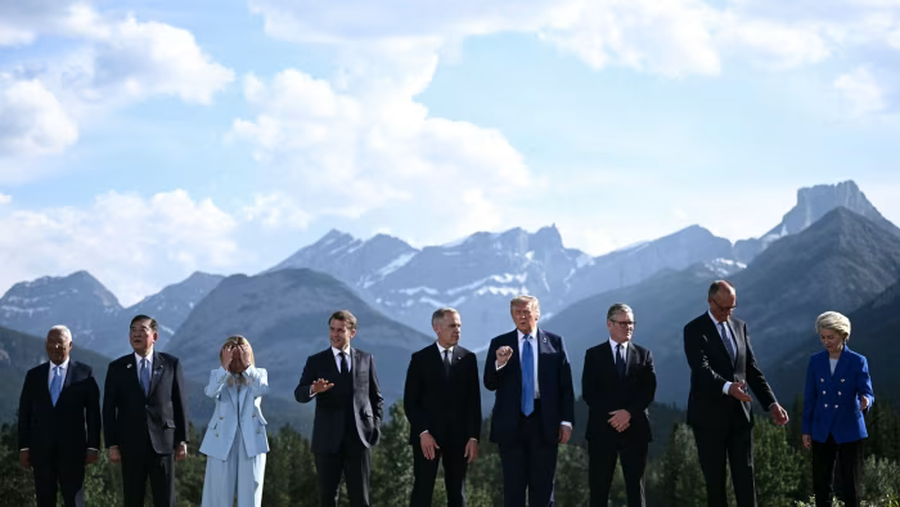
In an imperfect world, cooperation (G minus one) is better than no cooperation at all...
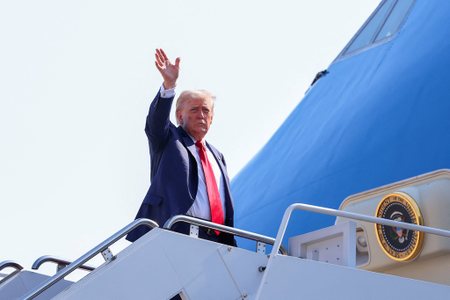
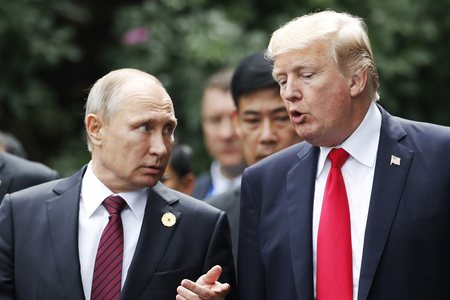
Under the Trump administration, the United States is retreating from the global leadership role it has played since the end of World War II. The world is filled with challenges, and there is a desperate need for stability and coordinated solutions to global problems. Where will the leadership to solve them come from?
Some have argued that we are now in a “G zero” world in which no one is in charge. There is great uncertainty and the powerful dictate solutions to the smaller players. Others say we are moving towards a regional divide, a G3 where the US, Russia and China have spheres of influence in a modern version of the League of Three Emperors.
A version of a new multipolar order may be taking shape. But it also seems clear that a G minus one world is beginning to fill the gap in some areas, with countries coming together to find solutions to global problems without the US. Consider the reaction to the uncertainty created by Trump’s tariff policy. As countries try to negotiate with the US, they are also trying to diversify their trade to reduce dependence on the US market. China is shifting key imports such as soybeans, semiconductors and energy to suppliers in Argentina, Brazil, Russia and Asia. Europe has accelerated negotiations with Canada, Japan, Australia and the South American Mercosur countries.
Asian economies are building regional supply chains under the Trans-Pacific Partnership, which the United States has decided not to join. Such trade diversion means higher prices, but it diversifies risk in an uncertain world.
This is not the first attempt to circumvent America’s withdrawal from global engagement.
Since 2017, the US has refused to appoint judges to arbitration panels at the World Trade Organization in 88 cases, blocking the enforcement of trade rules. In response, 57 countries representing about 58 percent of global trade have created the Interim Multilateral Dispute Settlement Understanding to resolve disputes among themselves.
Elsewhere, from pandemic preparedness to ocean protection and mobilizing development finance, governments around the world are collaborating to develop solutions to international issues where they can. In the wake of Covid-19, countries realized that better mechanisms were needed to identify, isolate and treat infectious outbreaks to avoid the millions of lives lost and trillions of dollars in lost output from the failure to manage the last pandemic in a cooperative manner. In May, 124 countries ratified a treaty to manage future pandemics, including equitable access to vaccines, diagnostics and treatments. The US did not participate.
Similarly, 51 countries have already ratified the ocean treaty to create protected areas in international waters to preserve biodiversity. The Trump administration did not send delegates to recent meetings, signaling that its priority is national security and commercial exploitation, such as deep-sea mining. But once 60 countries have ratified it, the treaty will go into effect, protecting 30 percent of the world’s oceans by 2030.
G minus one solutions do not work in all areas. But neither did the old post-war order. The G7 and then the G20 brought together key players, built consensus, and assigned tasks to the international machinery founded on the UN, the Bretton Woods institutions, and a vast network of alliances, treaties, and institutions. But while they provided a degree of stability and public goods, they were imperfect, often akin to a tea bag that only works in hot water.
The major challenges for a (G minus one) world are already apparent. National security is an example of where progress has not been possible without truly multilateral cooperation. Conflicts have proliferated, with 61 state conflicts as of 2024, most of which have lasted for years. Europe is struggling to protect vital trade routes through the Red Sea. And even with active US involvement, conflicts in Ukraine and the Middle East continue.
The shift is also more difficult in financial markets given the role of the dollar, the importance of US Treasuries as a safe haven asset, and the US’s centrality in the international payments system. But the international monetary system is also undergoing a shift. The US dollar’s share of central bank reserves fell from 71% in 1999 to 58% in 2024. China has encouraged the use of the renminbi for trade with some success, supported by its central bank offering swap lines to over 40 countries.
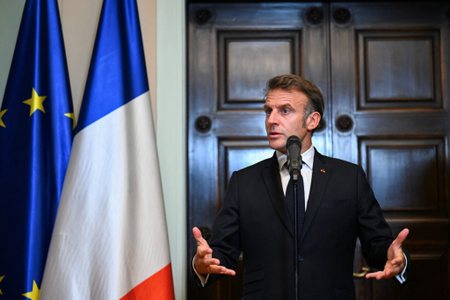
But making payments in a currency is very different from using it as a reserve asset. The latter requires deep and open capital markets and national institutions that inspire confidence in international investors. In Europe, there is much discussion about the possible role of the euro as an alternative, but there needs to be significant progress on a common fiscal backstop and integrated capital markets.
Given all these challenges, solutions would be easier to achieve with US engagement. Solving the world's problems without the world's military superpower, a quarter of the world's economy and a reserve currency is difficult. But in an imperfect world, cooperation (G minus one) is better than no cooperation at all./ Adapted from "Pamphlet" by "Financial Times"



Lini një Përgjigje