


 Shkruar nga Pamfleti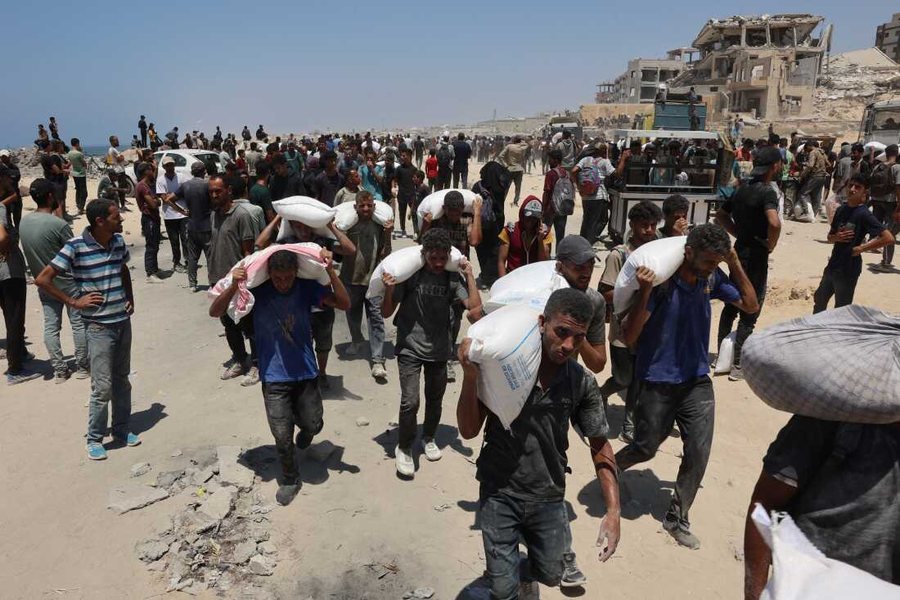
Gaza negotiations fail again, US warns of "alternative solutions"; fears grow for further escalation...
The recent failure of the Gaza negotiations has been more alarming than ever, due to the statements of Donald Trump's envoy, Steve Witkoff, who attributed all the blame to Hamas and added that, at this point, "we will seek alternative solutions to return the hostages home and create a more stable environment for the people of Gaza."
Beyond the tragic irony of this conclusion, given the US's compliance with Israeli military operations in Gaza, including the failed management of humanitarian aid, the mention of "alternative options" raises concern, as it warns of the US abandoning the negotiation process, leaving everything to the warring parties, even though it is known that Netanyahu has no intention of reaching an agreement.
Witkoff's statements also overturn the narrative so far about responsibility for the blockade, helping Netanyahu in the face of domestic and international criticism over the continuation of the war. Hamas reacted by expressing "surprise" by the accusations, noting that this is the first time the US has publicly accused it of being an obstacle to the agreement, despite the history of negotiations.
Bishara Bahbah himself, one of Witkoff’s associates, had declared on social media that Hamas’s response to the Israeli proposal for troop redistribution and prisoner exchange was “concrete and positive,” demanding that Israel begin serious and rapid ceasefire negotiations. This makes Witkoff’s sudden turn even more ambiguous.
Negotiations under mysterious conditions
Even the postponement of the planned meeting between Witkoff, Netanyahu adviser Ron Dermer and Qatari Prime Minister Mohammed bin Abdulrahman Al-Thani remains enigmatic: instead of being held in Rome, it took place unexpectedly in Sardinia, on a yacht anchored in the Costa Smeralda, under strict security measures, even with the presence of a US aircraft carrier in the Sardinian Channel. This fact adds to the suspicions of pressures and threats that contributed to the failure of the talks.
There are currently no reliable details from Western or Israeli media on the exact causes of the collapse, while even mainstream Arab media outlets have been silent. According to Axios, one of the points of conflict was Hamas's demand for the release of a larger number of Palestinian prisoners in exchange for Israeli hostages, but this seems insufficient to explain the complete failure, given that much more complex issues, such as a long-term ceasefire, troop withdrawal and the distribution of humanitarian aid, were still unresolved.
In particular, the issue of the Gaza Humanitarian Foundation's monopolization of aid, which critics say has served as an instrument of political control, remains open. Its request for cooperation with UN agencies has been rejected, raising fears that any involvement would make it part of a process that de facto favors the policy of destruction of Gaza.
Israel's real goals
The failure of the negotiations was followed by a new Israeli offensive in the center of Gaza, an area that had been spared until now due to the presence of hostages. This action shows that for the Netanyahu government, the issue of the hostages is not a priority, as their families have accused, but the objective is to make Gaza uninhabitable and take full control of it.
Israeli ministers Bezalel Smotrich, Miri Regev, and Amichai Eliyahu have openly stated that the goal is to "wipe Gaza off the map," while hunger and lack of aid are being used as weapons of war.
When asked why Hamas does not release the hostages to stop the war, Israeli academic Omer Bartov, in an interview with the New York Times, said that this approach is a product of Israeli propaganda: "If Hamas hands over the hostages and surrenders, do you think Israel and the IDF will withdraw? No. The only thing that prevents the IDF from completely destroying Gaza today is the fact that the Israeli hostages are there. Netanyahu himself has said this: his objective is 'absolute victory,' which means complete control over the Gaza Strip."
The statements of the ministers and the actions on the ground show that this is not just rhetoric, but a strategy of the Israeli government. /Adapted from "Pamphlet" by "Inside Over"








Lini një Përgjigje