


 Shkruar nga Pamfleti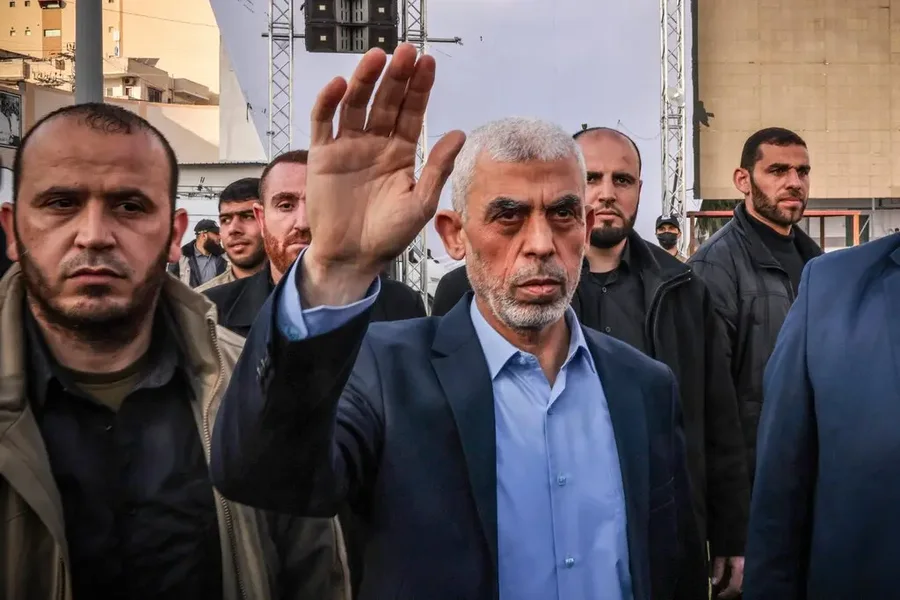
For Israeli and Western officials, Sinwar has emerged during these negotiations, which stalled again in Cairo last week, as a brutal adversary and a deft political operator, capable of analyzing Israeli society and appearing to adapt the policies of him according to the circumstances.
After Hamas attacked Israel in October, sparking war in Gaza, Israeli leaders described the group's top official in the territory, Yahya Sinwar, as a "dead man walking". Considering him an architect of the raid, Israel has portrayed Sinwar's assassination as a primary goal of its devastating counterattack.
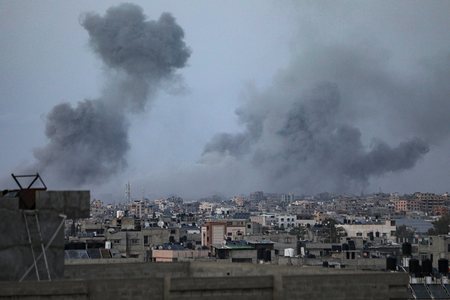
Seven months later, Sinwar's survival is emblematic of the failures of Israel's war, which has devastated much of Gaza but left Hamas' top leadership intact and failed to free most of the prisoners taken during the October attack.
Although Israeli officials seek to kill him, they have been forced to negotiate with him, albeit indirectly, to release the remaining hostages. According to officials from Hamas, Israel and the United States, Sinwar has emerged not only as a strong-willed commander but also as a shrewd negotiator who has prevented an Israeli victory on the battlefield while engaging Israeli envoys in the negotiating table. Several spoke on condition of anonymity to discuss sensitive intelligence assessments about Sinwar and diplomatic negotiations.
While talks are brokered in Egypt and Qatar, it is Sinwar — believed to be hiding in a network of tunnels beneath Gaza — whose consent is sought by Hamas negotiators before any concessions are agreed to, according to some of those officials.
Hamas officials insist that Sinwar does not have the final say in the group's decisions. But while Sinwar does not technically have authority over the entire Hamas movement, his leadership role in Gaza and his forceful personality have given him great importance in the way Hamas operates, according to allies and enemies alike.
Sinwar has rarely been heard from since the start of the war, unlike Hamas officials based outside Gaza, including Ismail Haniyeh, the movement's top civilian official. Although he is nominally smaller than Mr. Haniyeh, but has been central to Hamas' behind-the-scenes decision to seek a permanent ceasefire, US and Israeli officials say.
The wait for Sinwar's approval has often slowed negotiations, according to officials and analysts. Israeli strikes have damaged much of Gaza's communications infrastructure, and according to US officials and Hamas members, it sometimes took a day to deliver a message to Sinwar and a day to receive a response.
For Israeli and Western officials, Sinwar has emerged during these negotiations, which stalled again in Cairo last week, as a brutal adversary and a deft political operator, capable of analyzing Israeli society and appearing to adapt the policies of him according to the circumstances.
As the architect of the October 7 attacks, Sinwar devised a strategy that he knew would provoke a ferocious Israeli response. But in Hamas's calculation, the deaths of many Palestinian civilians — who do not have access to Hamas' underground tunnels — were the necessary cost of changing the status quo with Israel.
US and Israeli intelligence agencies have spent months assessing Sinwar's motivations, according to people briefed on the intelligence. Analysts in both the United States and Israel believe that Sinwar is motivated primarily by a desire to retaliate against Israel and weaken it. The well-being of the Palestinian people or the creation of a Palestinian state, intelligence analysts say, appear to be secondary.
An understanding of Israeli society
Sinwar was born in Gaza in 1962 to a family that had fled its home, along with several hundred thousand other Palestinian Arabs who fled or were forced to flee during the wars surrounding the creation of the state of Israel. Sinwar joined Hamas in the 1980s. He was later jailed for killing Palestinians he accused of apostasy or collaboration with Israel, according to Israeli court records from 1989. Sinwar spent more than two decades in Israeli custody before to be released in 2011, along with more than 1,000 other Palestinians in exchange for an Israeli soldier captured by Hamas. Six years later, Sinwar was elected leader of Hamas in Gaza.
While in prison, Sinwar learned Hebrew and developed an understanding of Israeli culture and society, according to former prisoners and Israeli officials who monitored him in prison. Sinwar now appears to be using that knowledge to sow discord in Israeli society and increase pressure on Benjamin Netanyahu, the Israeli prime minister, according to Israeli and US officials.
They believe that Sinwar has timed the release of videos of several Israeli hostages in order to stoke public anger at Netanyahu during crucial stages of the ceasefire talks.
If Netanyahu has been accused of dragging out the fighting for personal gain, so has his main enemy, Sinwar.
Israeli and US intelligence officers say Sinwar's strategy is to continue the war long enough to tarnish Israel's international reputation and damage its relationship with its main ally, the United States. As Israel faced intense pressure to avoid launching an operation in Rafah, Hamas fired rockets last Sunday from Rafah at a nearby border crossing, killing four Israeli soldiers.
If this was a game by Hamas, it seemed to pay off: Israel launched an operation last week on the outskirts of Rafah, and against this background, President Biden delivered his strongest criticism of Israeli policy since the beginning of the war. Mr. Biden said he would freeze some future arms shipments if the Israeli military launched a full-scale occupation of the city's urban core.
Projecting an image of unity
Hamas and its allies deny that either Sinwar or the movement is trying to foment further Palestinian suffering.
"Hamas' strategy is to stop the war now ," said Ahmed Yousef, a Rafah-based Hamas veteran. "To stop the genocide and killing of the Palestinian people."
American officials say that Mr. Sinwar has shown disdain for his colleagues outside Gaza who were not informed of the exact plans for the October 7 Hamas attack. A senior Western official familiar with the ceasefire negotiations believes that Sinwar appears to make decisions in collaboration with his brother, Mohammed, a senior Hamas military leader, and that throughout the war he has at times disagreed with Hamas leaders outside Gaza. . While foreign leadership has sometimes been more willing to compromise, Sinwar is less willing to give ground to Israeli negotiators, in part, because he knows he is likely to be killed whether or not the war ends.
Even if negotiators sign a cease-fire agreement, Israel will likely pursue Sinwar for the rest of his life, the official said.
Hamas members have projected an image of unity, downplaying Sinwar's personal role in decision-making and asserting that the elected leadership of Hamas collectively determines the movement's trajectory.
Some say that if Sinwar has played a larger role during this war, it is largely because of his position: As the leader of Hamas in Gaza. But Haniyeh has the "final say" on key decisions, Mr. Abu Marzouk, adding that all the political leaders of Hamas were of "one mind. However, there is something unusual in the strength of Sinwar's personality. / Adapted "Pamphlet" from "The New York Times"



Lini një Përgjigje