


 Shkruar nga Pamfleti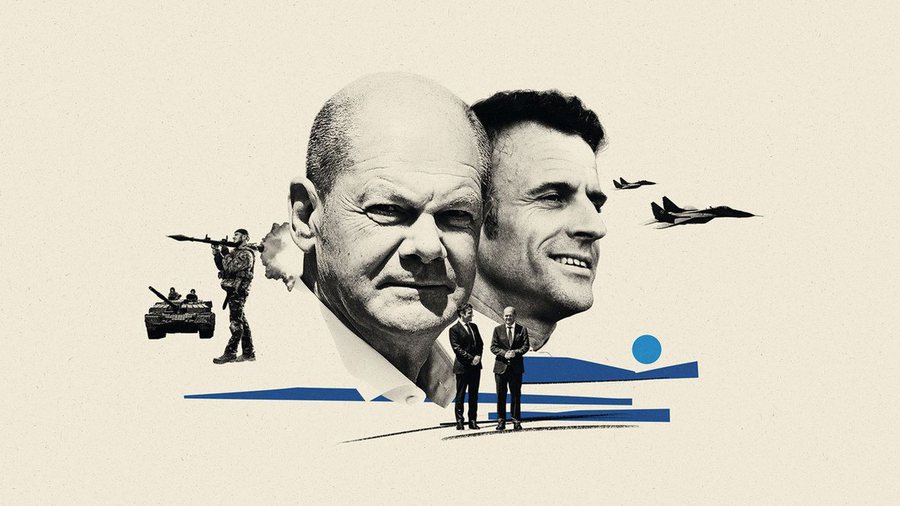
The contours of a new Europe have begun to emerge, due to Russia's cruel war against Ukraine. At the eastern and northern ends of the continent, Finland and Sweden are joining NATO.
The European Union has given Ukraine and Moldova "candidate status" for membership in the club of 27 members.
Deep changes are also taking place in the couple that has historically been the core of Europe. After a series of complications, the leaders of France and Germany are finally trying to understand what all this means for their countries and the ability to overcome the differences between each other, writes The Economist.
A Franco-German renewal is taking place, at least symbolically. In June, Olaf Scholz welcomed the president of France, Emmanuel Macron, to Potsdam, the city where the German chancellor lives.
The two walked together in the beautiful town and ate dinner for about three hours. This is part of an effort to put past differences between them.
Relations had hit a low point last fall when France canceled a joint cabinet meeting. Now that meeting has been held. And the Germans have invited Mr Macron for a full state visit in July, the first for a French president in 23 years.
Each of the countries is facing a challenge to its fundamental principles. For Germany, the war has upended the foundations of its post-war economic model, reliant on cheap Russian energy and exports to China.
The country is cut off from Russian gas. For decades, Germany has shied away from the idea of military power, while now it is giving Ukraine generous military supplies. It is spending an additional 100 billion euros ($107 billion) on rearmament. It may take time for the Zeitenwende (“historical turning point”) to take effect; but Germany is changing.
For France, the change is less visible, but no less profound. The biggest change is not in the country's economic model, which is not as dependent on exports as Germany's. The change is not related to nuclear energy either, because France has not been very dependent on Russian gas anyway.
Rather, France's change lies in the fact that it is rethinking European borders, alliances and security. Historically, France has not been enthusiastic about EU enlargement. It treated the states of Central and Eastern Europe as inferior countries.
In 2003, when countries from Eastern Europe aspiring to join the EU supported America's invasion of Iraq (which France opposed), the then French president, Jacques Chirac, declared that these countries had "missed an opportunity to shut up". In 2019, France blocked with a veto the opening of negotiations for the membership of Albania and North Macedonia in the EU.
The changes that the war brought
The Russian war hastened some structural changes in France. One of them is the new French support for EU enlargement. On a trip to Kiev last June, Macron supported Ukraine and Moldova in candidate status for the EU. France also lifted its veto against the membership candidacy of Albania and North Macedonia.
Më 31 maj, në një fjalim në Sllovaki, Macron deklaroi (duke shkaktuar habinë e shumë vetave), se zgjerimi i BE-së duhet të ndodhë “sa më shpejt të jetë e mundur”.
“Pyetja nuk është nëse duhet të zgjerohemi, por si duhet ta bëjmë këtë. Duke hedhur fjalën tek Chirac-u, Macron u shpreh përpara një publiku të Europës Qendrore dhe Lindore, se: “Ndonjëherë ne kemi humbur një mundësi për të dëgjuar”.
Deklarata të tilla i kanë qetësuar ata që kishin frikë se ideja e Macron-it për të krijuar një Komunitet Politik Europian më të gjerë, mund të ishte gjithashtu një taktikë për të ndaluar zgjerimin e BE-së. Ky komunitet që bashkon dy herë në vit 44 shtete, nga BE-ja dhe vendet fqinje, u takua për herë të dytë më 1 qershor në Moldavi, vetëm 20 km (13 milje) larg nga kufiri ukrainas.
Me presidentin e Ukrainës, Volodymyr Zelensky të pranishëm, Samiti ishte një shfaqje e unitetit për vendin e tij të goditur nga lufta, si dhe një nxitje për vendin mikpritës, Moldavinë.
Franca tani e përfytyron zgjerimin e kufijve të BE-së drejt lindjes. Revizionizmi territorial rus, shkroi kohët e fundit Alexandre Adam, ish-këshilltar i Macron-it për Europën, e ka bërë zgjerimin “domosdoshmëri gjeopolitike… nuk ka më një zonë gri të qëndrueshme midis BE-së dhe Rusisë”.
Ndryshimi i dytë francez lidhet me sigurinë. Zoti Macron dëshiron që Europa të bëjë më shumë për të mbrojtur veten dhe të mbështetet më pak tek Amerika, veçanërisht përpara zgjedhjeve të atjeshme në vitin 2024.
Disa vende të tjera europiane ende kanë frikë se një bisedë e tillë do të ulë angazhimin e Amerikës për sigurinë europiane.
Sidoqoftë, gjeopolitika e re e kontinentit, duket se po e bën Francën më agresive. Në Bratislavë, Macron bëri thirrje që Ukrainës t’i jepet një “rrugë drejt anëtarësimit në NATO” në samitin e aleancës në Vilnius, në korrik.
Kjo është një kthesë mjaft e madhe për një udhëheqës, i cili në vitin 2019, tha për The Economist se NATO ishte “në prag të vdekjes” dhe se shqetësohej nga ideja e angazhimit të aleancës jashtë Europës.
Tani po zhvillohen biseda serioze në Francë se si mund t’i jepen Ukrainës garanci të forta dhe të besueshme sigurie. Më 19 qershor, ministrat e mbrojtjes do të takohen në Paris për të diskutuar mbi mbrojtjen ajrore europiane dhe aftësinë për “goditje të thellë”. Macron madje ka ofruar të zhvillojë një dialog për arsenalin bërthamor francez.
Ndërsa Gjermania dhe Franca punojnë për t’u përshtatur me një Europë të re, diskutimet e tyre do të jenë mjaft të vështira. Dy udhëheqësit, njëri i heshtur dhe i kujdesshëm, tjetri i krekosur dhe rrezikues, përpiqen të lexojnë njëri-tjetrin.
Dyshja tani pajtohet për zgjerimin, por po zhvillohen diskutime të ashpra mbi rregullat e reja për funksionimin e brendshëm të BE-së, një përgatitje për zgjerimin e mëtejshëm.
Qëndrimet e ndryshme mbi energjinë bërthamore, prokurimin e mbrojtjes dhe rregullat fiskale, vazhdojnë të mbeten. Gjermania, ashtu si Amerika, mbetet e kujdesshme në lidhje me Ukrainën dhe NATO-n. Ajo është e shqetësuar nga sinqeriteti i hapur i zotit Macron. Franca është e frustruar nga konfuzioni dhe ngadalësia e koalicionit qeverisës të Scholz-it.
Russia's war against Ukraine has taught Europeans that the organization of their continent is much wider than the connection between Paris and Berlin. Now Germany seems to be no longer worrying about disagreements with France. France is more inclined than before to connect with other countries within the EU.
However, the truth is that nothing much can be achieved within the bloc unless France and Germany agree. In theory, they disagree on most issues, but both countries have the will to overcome those differences.
Their ability to do this will be decisive in determining the shape of this new Europe./ Monitor


Lini një Përgjigje