


 Shkruar nga Ross Douthat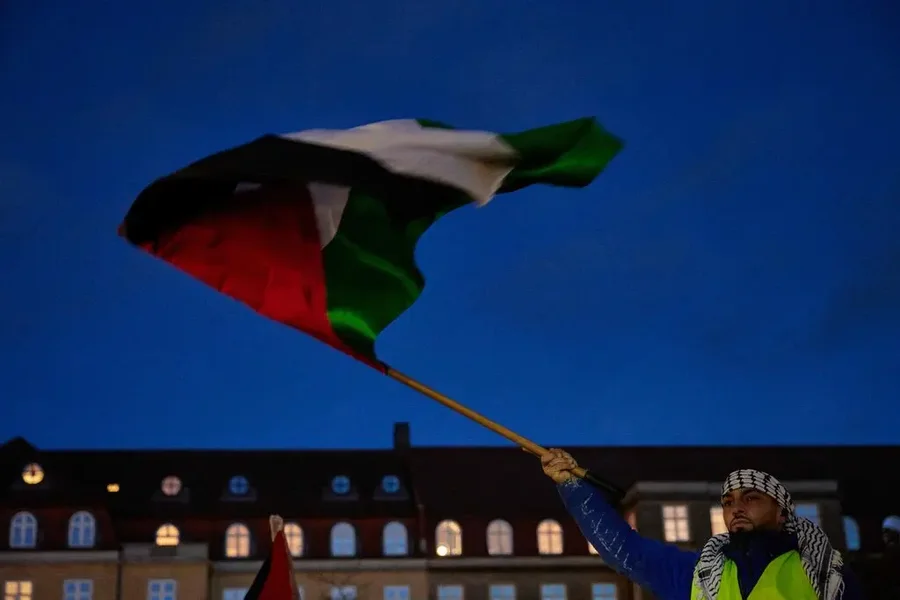
In the post-9/11 era, we were used to thinking of popular discontent within Arab and Muslim countries as an important geopolitical force in its own right. But the year 2023 may be remembered as the moment when Arab and Muslim discontent began to really matter even within Western countries...
It has been a long time since the conflict between Israel and the Palestinians has taken such a central place in Western political attention and debate – certainly not since the Israeli occupation of Gaza in 2009, perhaps not since the end of the second intifada in 2005.
In that fairly distant past, politics between Israel and Palestine split along lines familiar for decades. On the pro-Israel side in the US were three broad factions: Zionist Democrats, centrists, and liberals; neoconservative hawks; and evangelical Christians. As you move left, sympathy for the Palestinians grew, with American progressives and European conventional wisdom finding common ground in their criticism of the Israeli occupation.
Finally, there was also a right-wing form of anti-Israel sentiment, held by Arab realists and Pat Buchanan populists and European reactionaries – but after 9/11, with the rise of neoconservatism, this felt increasingly marginal.
These broad groupings still exist, but in the current crisis you can see a more complex alignment taking shape, with implications that extend beyond the Israeli-Palestinian issue. Here, very tentatively, are some ideological trends worth looking at.
The radicalization of progressivism and the emergence of an "Arab street" within the West.
No one who has experienced the Great Awakening of the last decade should be surprised that Western progressivism now takes a more radical line on Israel than it did 10 or 15 years ago, especially given Israel's own shift to the right at the same time.
In the post-9/11 era, we were used to thinking of popular discontent within Arab and Muslim countries as an important geopolitical force in its own right. But the year 2023 may be remembered as the moment when Arab and Muslim discontent began to really matter even within Western countries.
The recent protests in European capitals, in particular, are less an extension of a radicalized progressivism than a direct expression of ethnic and religious solidarity with the Palestinians on the part of Middle Eastern immigrants and their descendants. And the tacit alliance between this diaspora and a secular, feminist, gay-affirming Western progressivism—"Islamo-gauchisme" in the French phrase—raises big questions for both progressives and conservative Muslims about who is using whom and how the left Western and Western Islam may eventually co-evolve.
Unstable European relations with Israel.
In a sense, mass movements protesting on behalf of Palestine in European streets seem to ratify the pre-existing anti-Israel bias of many European leaders. But if Europe is moving broadly to the right, becoming more suspicious of mass immigration, more fearful of Islamization and terrorism, and more protective of its native culture as it slides into old age—well, then, you can easily imagine that sympathy European concern about the Israeli position is growing, but with the fear of an external Islamic enemy within its own territory.
And indeed signs of this are already visible: the British writer Aris Roussinos recently observed that comments in Britain now seem even slightly more friendly to Israel than American comments, while across the Channel, Emmanuel Macron's efforts to assemble a coalition the great anti-Hamas and his government's ban on pro-Palestinian demonstrations belong to a very different landscape than the world of 2005.
Dilemmas of Progressive Jews and Zionist Democrats.
If the pressures on European elites come from multiple directions, the pressures on American Jews and Zionists within the democratic coalition push only one way: to the right. Progressive Jews who used to think of themselves as pro-peace, pro-Palestinian and anti-Likud will have a lot of trouble feeling at home within a progressive movement that seems conflicted or paralyzed when asked to condemn Hamas.
At what point, where can the Zionist democrats go, if not to actual conservatism?
A reconstructed neoconservatism, a resilient Christian Zionism. This is not the version of the George W. Bush era, with its great world confidence in American power and its aggressive grand strategy. Rather, it's a more odd alliance against whatever progressivism is being made.
The other thing right-wing Zionists will find is the resilient evangelical support for Israel that has persisted throughout the anti-idealism of Trump-era foreign policy.
One thing that has kept many Jews from moving right until now, of course, is fear of right-wing anti-Semitism, the kind of xenophobia that Donald Trump's 2016 campaign seemed to consciously stoke.
Among my conservative Catholic friends, for example, there is long-standing anger at George W. Bush for invading Iraq and allowing Middle Eastern Christianity to be destroyed by the wars that followed, and a sense that Israel was complicit in that project of mindless.
My guess is that despite these right-wing spectacles, in the long run you have to bet on more rightward movement among American Jews, perhaps accelerated by the higher birth rates of the already more right-wing Orthodox. But mostly you have to agree with the idea that the Israel-Palestine debate showed that the Western world has changed and that there is a lot of change ahead. / Adapted "Pamphlet" from "The New York Times"







Lini një Përgjigje