


 Shkruar nga Samuel Greene & Christopher Walker “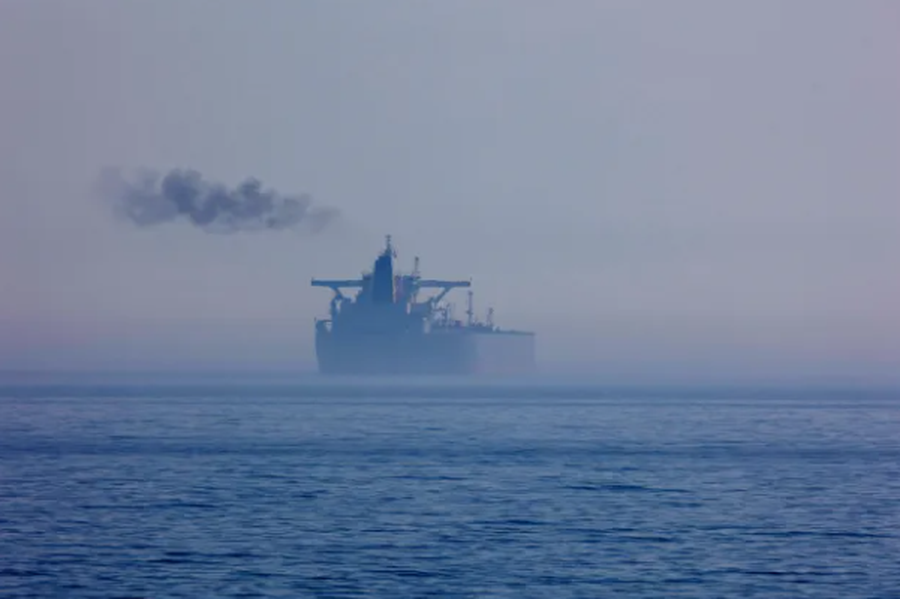
Russia is waging a conflict that knows neither geographical borders nor international rules.
Faced with a Russian strategy that aims to cripple Europe's critical infrastructure without launching a direct war, the West must embrace the principle of "escalation to de-escalate" as the only means to restore the power of military deterrence.
Russia is waging a conflict that knows neither geographical borders nor international rules. While the world's attention is focused on the open front in Ukraine, another, equally dangerous battle is taking place inside NATO territory.
This is the “shadow war”: a carefully thought-out campaign, filled with sabotage, assassinations and physical attacks, designed to weaken Europe but without forcing it to react through open conflict.
Moscow's objective: More than Ukraine
For Vladimir Putin, the invasion of Ukraine is not an isolated episode. He sees himself in an existential struggle against the Western order itself. His goal is to break the coalition supporting Kiev, neutralize the Russian opposition in exile, and destroy Europe's will to resist.
To achieve this, the Kremlin has moved from traditional hybrid operations - such as disinformation or cyberattacks - to overt and tangible actions. The list of Russian shadowy acts is expanding at an alarming rate: drones that paralyze airports
in Norway and Germany, "ghost" ships damaging vital energy and internet cables in the Baltic Sea, explosive devices creating chaos in logistics warehouses in Poland and Britain.
And even the attempt to eliminate the leaders of the European defense industry. For the Kremlin, there is no difference between a battlefield in the Donbas and an internet cable under the waters of the North Sea; both are part of the same front.
The failure of “light reprimands”
To date, Europe's response has been lukewarm, often reduced to symbolic measures.
Any sabotage is treated as a police or criminal matter, not as an act of war by a state. Harsh rhetoric, diplomatic expulsions, or light sanctions only send Moscow a message of weakness.
This reluctance to react stems from a fear of escalation. Europe aims to avoid open conflict, but this very prudence is making war more likely. Without real consequences, the Kremlin is increasing its tolerance for risk.
If today a Russian drone closes an airport with impunity, tomorrow it could “accidentally” shoot down a passenger plane. The statistics are clear: during 2024-2025, shadow war incidents have tripled. Without a strong deterrent mechanism, Moscow’s miscalculations are only a matter of time.
A new strategy: escalation to de-escalate
NATO must change its approach. The policy of legalistic reaction has failed. To stop Moscow, it must feel that the cost of the shadow war is higher than any benefits. And this requires a “controlled escalation.”
First, NATO’s Article 4 activation should become the norm for any act of sabotage. Alliance consultations cannot remain rare events; they should be an automatic response. When a submarine cable is severed by a Russian ship, NATO should meet immediately to coordinate a response, not simply to express “deep concern.”
Second, the menu of countermeasures must be harsh and predictable: cyber operations against GRU or FSB servers, naval interventions to stop Russian ships suspected of espionage, and when human lives are at risk, controlled-scale kinetic strikes against Russian assets.
Political challenges and the role of the US
This strategic shift is even more urgent in the face of political uncertainty in Washington. A possible withdrawal of the Trump administration from European initiatives against hybrid threats would leave the continent vulnerable.
Europe can no longer expect America to solve every security problem. European states, within NATO and the EU, must take on the burden of protecting their own infrastructure.
Intelligence sharing must be done without delay, and the response must be led by the security apparatuses, the armies and the secret services, and not by the public order organs. The shadow war is not simply a police problem; it is a military challenge to the sovereignty of our nations.
Ultimately, Europe's success against Russia will not be measured by the strength of our statements on Twitter or at diplomatic summits. It will be measured by the ability to prevent the next attack.
Moscow must understand that the “shadow” in which it operates is no longer a safe zone. Any aggressive action must be met with a response that shakes the very foundations of the regime. Only when Putin is more afraid of the consequences than he is willing to attack will the shadow war end. The time for soft criticism is over; the time for active defense has come./ Taken from “Foreign Affairs” , adapted by “Pamphlet”




Lini një Përgjigje