


 Shkruar nga Pamfleti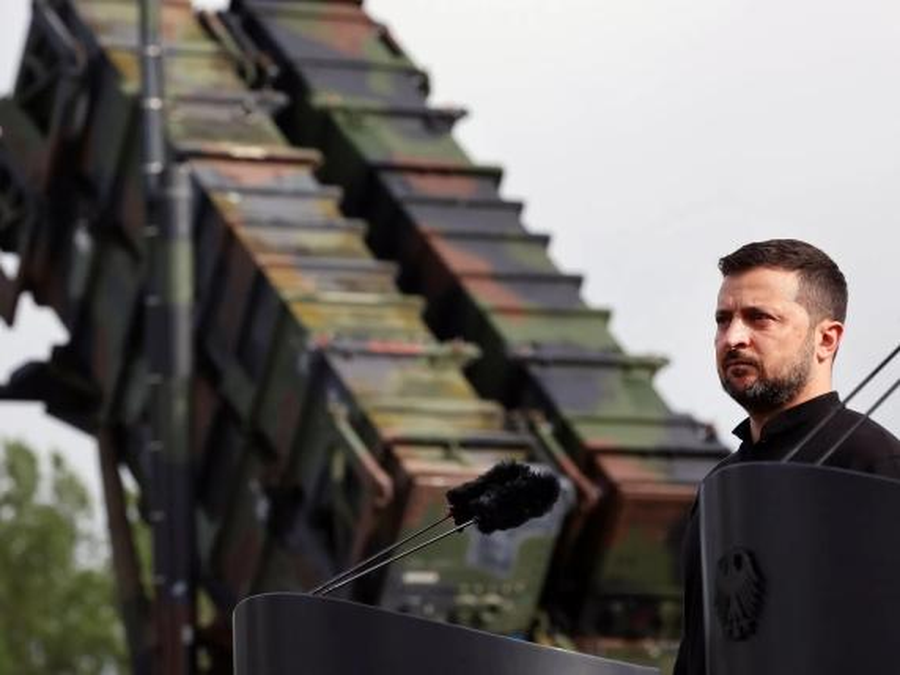
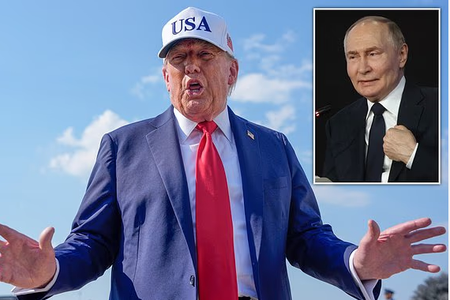
During his term, former US President Donald Trump has repeatedly rejected Zelensky's requests for more Patriot systems, even calling the Ukrainian president "missile-obsessed."
Early last year, during the World Economic Forum in Davos, Ukrainian President Volodymyr Zelensky made a poignant statement that reflected the difficult situation in his country:
"I want to thank the creators of the Patriot system from the bottom of my heart. There is no other system that can stop Russian missiles, whether conventional or ballistic," he said. And according to military experts, this statement is more than accurate: currently, Patriot remains the most advanced surface-to-air system in the world in terms of power and accuracy.
Currently, Ukraine has eight Patriot systems, of which only six are operational, while two others are under repair. Most of them are deployed in the capital to protect not only the civilian population, but also state institutions. Each system requires PAC-3 and PAC-2 missiles to counter threats such as Russia's Iskander and Khinzal missiles. About 90 specialized military personnel are needed to operate a single battery.
These systems are few and far between. According to the International Institute for Strategic Studies in London, there are only 186 operational Patriot systems worldwide, and only 16 countries own them. About a third are owned by the United States, which has deployed many of them in Europe, Asia and the Middle East to protect its allies.
Several dozen are in the Indo-Pacific region to counter threats from China and North Korea, while one system has recently been deployed to the Middle East to protect Israel. European allies have about 40 units, including eight currently in Ukraine. A ninth, from Israel and undergoing maintenance for Ukraine, is an older and less effective model.
The Patriot system was conceived in the late 1960s by the American aerospace and defense company Raytheon. Its name is an acronym for the English phrase “Phased Array Tracking Radar to Intercept On Target”. Patriot was first used in 1990 during Operation Desert Storm in Iraq, to protect Israel and Saudi Arabia from Scud missiles of Saddam Hussein's army.
During his term, former US President Donald Trump has repeatedly rejected Zelensky’s requests for more Patriot systems, even calling the Ukrainian president “missile-obsessed.” One of the main obstacles remains the high cost: according to the Center for Strategic and International Studies (CSIS), a single Patriot battery costs about $1.1 billion, $400 million for the base system and $690 million for the missiles.
A single missile is estimated to cost over $4 million. The biggest challenge for Ukraine is securing enough interceptor missiles, for which Lockheed Martin and Raytheon are ramping up production, but current capacities still fall short of Kiev's growing needs.
Replacing the Patriot system is difficult. In the last decade, France and Italy have jointly developed the SAMP/T surface-to-air system, capable of intercepting ballistic missiles, drones and fighter jets. However, many European countries prefer the Patriot because of its higher reliability. The German IRIS-T system is also an alternative, but it has a shorter range compared to the Patriot.
In this context, Zelensky's recent statement: "We rely on the continued assistance of the US, because they have tools that Europe does not possess, such as Patriots," is not a new call for Washington. But a reminder that without these systems, millions of human lives in Ukraine are at risk. And without them, Russian President Vladimir Putin will find it much easier to win this war./Corriere Della Sera




Lini një Përgjigje