


 Shkruar nga Pamfleti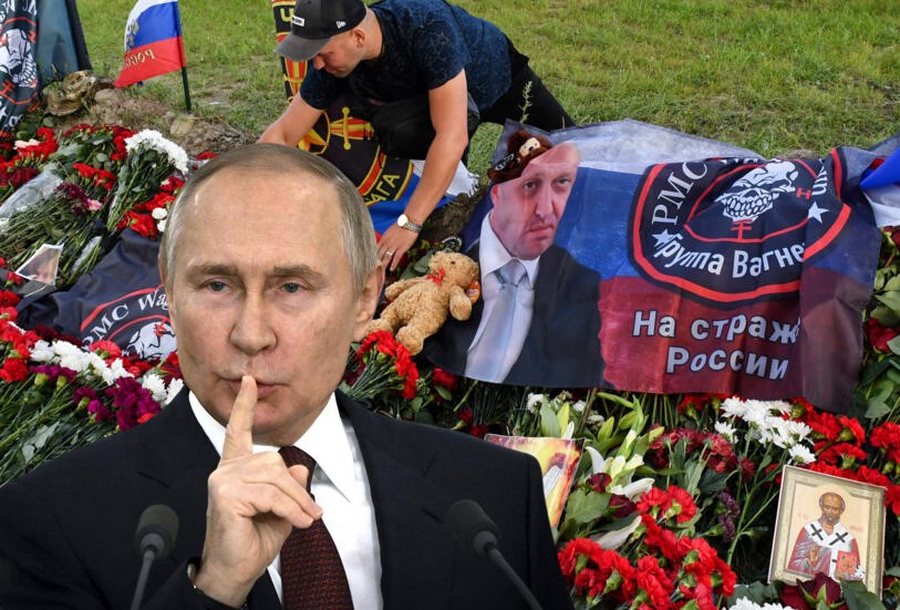
Despite President Putin surviving the biggest challenge to his authority to date, Prigozhin defied expectations and survived the immediate post-coup purge. However, the countdown for Yevgeny Prigozhin had begun.
Has the fall of Prigozhin strengthened Putin's grip on power, or has the beast Putin created left a legacy that could yet prove a fatal blow to his former master?
President Putin has relied heavily on mercenaries, both in the war in Ukraine, but also to exert influence and generate revenue, in Africa and beyond.
When Putin's war in Ukraine was faltering, he turned to his former chef to use the Wagner mercenaries to deliver a rare battlefield success for Russian forces in Bakhmut.
Putin knew that the urban battle for Bakhmut would be very unpleasant, but reinforced by thousands of convicted conscripts, under the brutal leadership of Prigozhin, the mercenaries succeeded.
Putin was able to channel significant government resources into the Wagner contracts—for mutual benefit—knowing that the Russian populace would be grateful that they were convicted mercenaries (not conscripts) on the brutal front lines.
At its peak, Wagner had over 50,000 fighters under contract.
Although Prigozhin was a wealthy oligarch, he was an "outsider" to the Moscow elite, but the Wagner group offered him a unique platform to increase influence.
When he voiced criticism of the poor performance of the Russian army on the battlefield, his account greatly affected the Russian recruits, giving Prigozhin courage. But he was not necessary. Russian mercenaries had achieved success on the Ukrainian battlefields, but their lack of professionalism and complete disregard for the Law of Armed Conflict led directly to the indictment of Putin by the International Criminal Court (ICC).
Then, when the monster Putin had created turned on him in a failed rebellion, Putin knew it was time to act.
But first, Putin had to be careful not to make Prigozhin a martyr. He was still a powerful and influential figure and Putin could take no chances. Instead—despite the risk of appearing weak—Putin began to erode Prigozhin's two pillars of power: his business interests and his mercenary group.
Prigozhin's business success was inextricably linked to Putin - without the president's patronage, the oligarch's empire was vulnerable and quickly disintegrated.
Wagner's existential threat was a more difficult challenge, however some of the mercenaries were assimilated into the Russian Ministry of Defense, some returned to their families, some were sent to Africa with new Ministry of Defense contracts, and some were sent in Belarus.
Without contracts to pay wages, Prigozhin's power base gradually disappeared. On Tuesday, Prigozhin was seen in a promotional video - alone - apparently seeking mercenary contracts in Africa. However, the Russian Ministry of Defense was doing the same, but offering their own government-backed security solutions. Prigozhin had run out of options. He was no longer a threat.
His power had been exhausted and it was time for Putin to reassert his authority. / Sky News





Lini një Përgjigje