


 Shkruar nga Pamfleti
Starmer warned that the impact of these conflicts is not only economic, but also extends to security threats within European countries themselves.
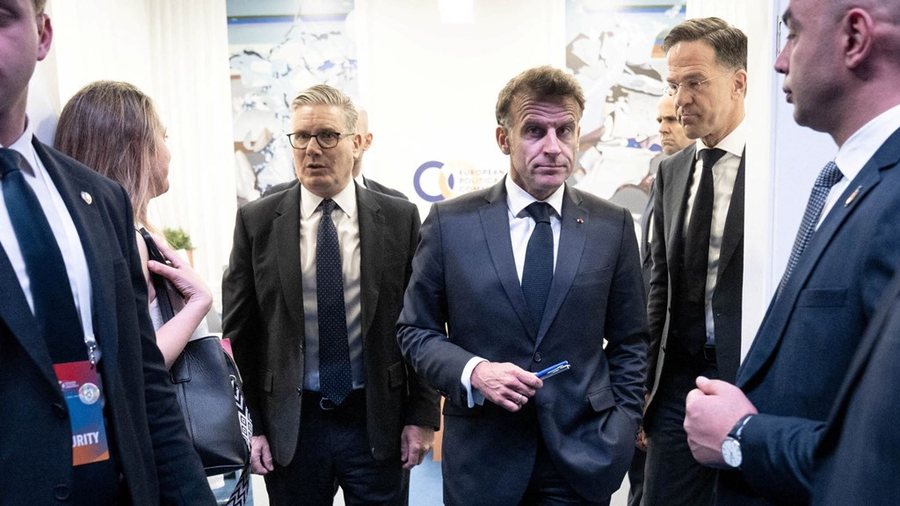
UK Prime Minister Keir Starmer called for a stronger European role within NATO during the European Political Community summit in the Armenian capital Yerevan.
This, Starmer said, is necessary after long-standing dependencies and assumptions about global security are no longer sustainable.
"There needs to be a stronger European element in NATO. I have no doubt about that. So, on defence and security, trade and energy, which have been weaponised, we need a much stronger Europe to come together around these issues," Starmer said.
He added that Europe has been "behind the curve for too long" in defense and security, citing overreliance on external partners and outdated assumptions about stability.
"Now it must be Europe that leads. Now we must lead to get out of this and we must do so at a rapid pace," he added.
Some alliances "are not where we would like them to be"
British Prime Minister Keir Starmer highlighted the changes in the global geopolitical scene, referring to the multiple conflicts that are unfolding and their far-reaching consequences.
"We are facing a war on two fronts. We are heading into the fifth year of the war in Ukraine and we have the conflict with Iran at the same time. Both of these are affecting all of us in very concrete ways," he said.
Starmer warned that the impact of these conflicts is not only economic, but also extends to security threats within European countries themselves.
"The impact is not just economic... there are also indirect attacks on our roads... through cyberattacks. So this is not something far-fetched, it is very real," he said.
He also noted the tensions in traditional alliances, adding that “We cannot deny that some of the alliances that we have long relied on are not in the state we would like them to be.”
However, in the face of these challenges, Starmer stressed that recent coordinated efforts show that European countries can act effectively together.
Referring to joint initiatives on Ukraine and maritime security, he said such cooperation shows that “we can be flexible, we can be tactical, and we can bring countries together in such configurations, as long as there is a common goal.”
European leaders are gathering this Monday at the eighth summit of the European Political Community to discuss closer cooperation in the areas of democracy, energy security and economic ties.
This year's summit, with the theme "Building the Future: Unity and Stability in Europe", will be co-chaired by the President of the European Council, Antonio Costa, and the Prime Minister of Armenia, Nikol Pashinyan.
Meanwhile, the first summit between the European Union and Armenia is expected to take place on Tuesday, with the aim of strengthening bilateral relations. Last year, the Armenian government announced its intention to pursue membership in the European Union, marking a move away from Moscow's influence.
European NATO
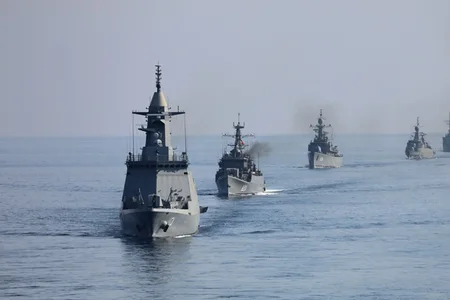
Britain has agreed to create a joint naval force with nine European countries to "complement" NATO, aimed at deterring future Russian threats from the "open sea border" in the north, the head of the Royal Navy has announced.
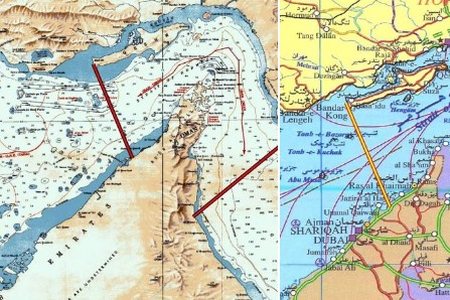
Despite the ongoing crisis in the Middle East, where the Strait of Hormuz remains closed following the US-Israeli war against Iran, according to him, "Russia remains the most serious threat to security."
In a speech, he said the 10 members of the Joint Expeditionary Force (JEF) signed a declaration of intent last week to create a "multinational naval force" that will act as a "complement to NATO."/ Pamphlet


Let’s GO EUROPE!!!!! Yes.. RROFTE EUROPA E BASHKUAR !!!