


 Shkruar nga Pamfleti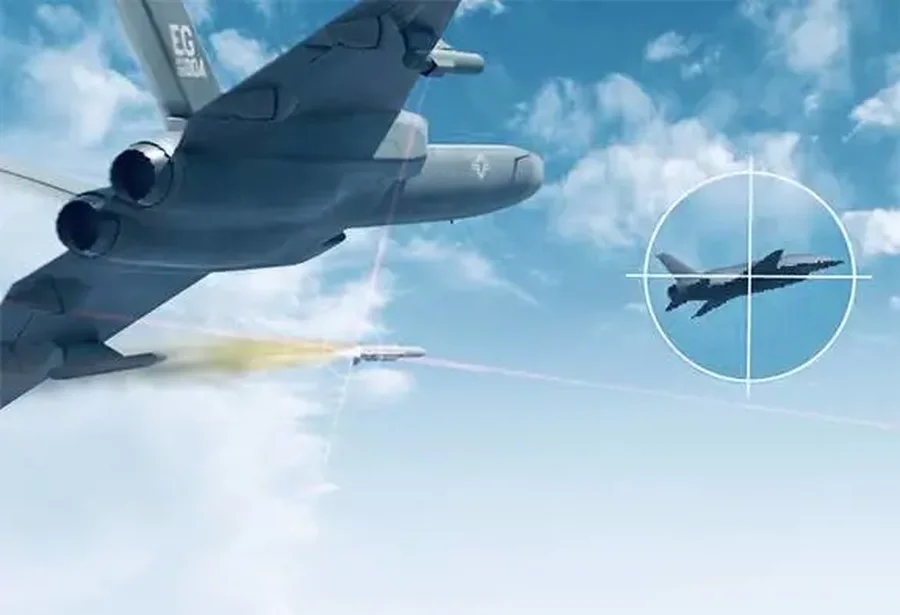
The US is focusing on autonomous weapons with a modular design and “buddy refueling” capabilities to provide air superiority and strategic projection in highly complex situations…
In the complex and dynamic landscape of current technological and military rivalries, the ability to secure air superiority is a key element in maintaining geopolitical influence on a global scale. Against this backdrop, Kratos Defense & Security Solutions is developing an innovative unmanned aerial system, destined to revolutionize the way military air operations are conducted.
The drone, known as the Clone Ranger, stands out for its modular design, stealth and advanced operational autonomy, making it a potential game changer compared to next-generation platforms, such as the Chinese J-20 fighter jet.
An analysis of open sources reveals that the Clone Ranger features an aerodynamic configuration that breaks with traditional design conventions, featuring delta wings with a modified geometric profile and a wide, functional central fuselage.
This design solution, which some experts vaguely recall the structure of a flying catamaran, maximizes internal space for cargo and fuel tanks, essential elements to ensure both high attack capabilities and considerable mission autonomy.
With a length of approximately 9 meters and the ability to operate from extremely short runways, the drone is an adaptable platform to the rapid deployment requirements typical of modern theaters of conflict. The presence of two large internal compartments for weapons and sensors, surrounded by pillars under the wings, allows for a wide range of specialized missions, increasing the tactical and strategic flexibility of the aircraft.
An integrated system for air superiority
Operationally, we learn that the Clone Ranger is equipped to perform a range of missions, from air interdiction to precision ground attack, including electronic support and electronic warfare. The drone can deploy GBU-39/B precision-guided bombs, AIM-120 AMRAAM advanced air-to-air missiles, ADM-160 MALD decoys, and AIM-9X Sidewinder short-range missiles, configurations that expand its ability to deal with a range of threats, including stealth systems like the Chinese J-20.
In addition, it is a sophisticated electro-optical sensor array, potentially integrated with radars and IRST systems, which facilitates the detection and engagement of multiple targets in complex scenarios, enhancing command and control capabilities and real-time tactical decision-making.
The strategic value of "refueling"
One of the most striking aspects of the Clone Ranger is its ability to self-refuel in flight through so-called buddy refueling, a feature that increases operational range and field survivability, reducing reliance on vulnerable logistical weapons such as traditional tankers. This translates into a significant strategic advantage in supporting long-term operations in highly contextualized theaters of conflict and an increasing asymmetric threat. The ability to use short runways also allows for a wider range of deployment options, facilitating employment from temporary bases and facilities, thus increasing the operational survivability of the aircraft and complicating enemy attack plans aimed at striking critical infrastructure.
Geostrategic influence and perspectives
From a strategic perspective, the Clone Ranger appears to represent an emerging paradigm in airpower design, integrating stealth, modularity, and autonomy into a single system capable of operating in coordinated and highly autonomous groups.
This configuration opens up new perspectives for creating a "critical mass" of cost-effective and resilient air platforms, capable of effectively countering advanced adversaries like China, which is increasingly deploying fifth-generation fighter jets like the J-20.
Although the project is still in the advanced conceptual phase, it clearly reflects the company's intention to consolidate its position in the field of next-generation unmanned aerial systems, with potentially significant implications for the industrial, technological and military strategies of the United States and its allies. / Adapted from Il Giornale /








Lini një Përgjigje