


 Shkruar nga Pamfleti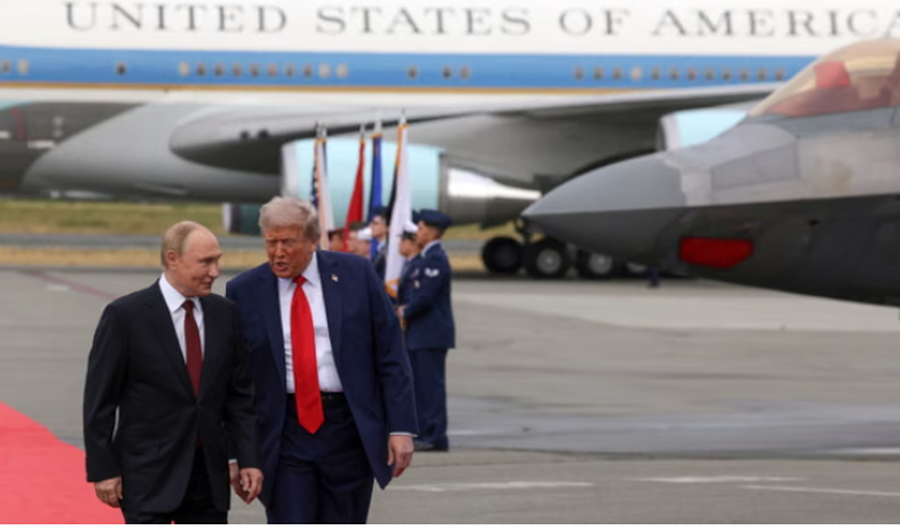
The much-anticipated summit between Donald Trump and Vladimir Putin in Alaska ended on Friday after just a few hours, with few details given about what they discussed and no agreement to end the war in Ukraine, despite warm words between the two leaders.
Six key lessons learned from the meeting:
1. The summit produced few choices… in other words, no agreement
As Donald Trump admitted during his brief press conference with Vladimir Putin, “understanding” and “progress” are oceans away from an agreement. At the end of a summit, most unique in terms of choreography but not in content, the leaders failed to negotiate even a pause in the fighting, let alone a ceasefire.
“There is no deal until there is one,” Trump acknowledged, while Putin described their talks as merely a “landmark” to end the conflict and, significantly, a possible starting point for better diplomatic and economic ties between Washington and Moscow.
2. This was a PR victory for a dominant Putin
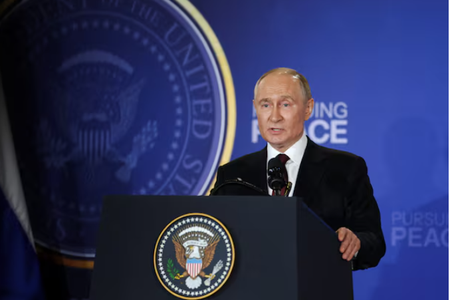
Putin may have been the guest at a meeting held on U.S. soil, but the Russian leader gained far more notoriety than his host. Putin spoke to reporters first, a break from tradition that gave him the opportunity to set the tone of a brief and, at times, quixotic press conference in Anchorage.
Clearly aware of his surroundings, Putin, who had traveled to the Summit site in “the beast,” the secure American presidential limousine, reminded the world that the US and Russia were, in fact, geographical neighbors, although he failed to mention that Alaska had once been a Russian colony.
Trump was effusive in his praise for the Russian leader, repeatedly thanking him for his time and later, in an interview with Sean Hannity on Fox, giving the Anchorage summit a “10” because “it’s great when two great powers get along.”
As if to underscore his dominant role in the proceedings, Putin concluded the briefing by suggesting that their next meeting be held in Moscow, an invitation that somewhat confused Trump, who had to admit that it would generate "a little tension" in the country. But he did not rule out the possibility.
3. Putin still talks about the 'root causes' that prevent major progress
This is code for his non-negotiable demand that Russia keep the eastern regions of Ukraine it has occupied during the more than 3-year war, as well as the Kremlin's other "red lines": no Ukrainian membership in NATO and the European Union, and an end to Volodymyr Zelensky's presidency.
In a message to Keir Starmer and other regional leaders who made a public show of support for Zelensky on the eve of the summit, Putin warned "European capitals" against "creating obstacles" to peace in Ukraine. "I have said more than once that for Russia, the events in Ukraine are associated with fundamental threats to our national security," he said.
4. Trump seems to have more in common with Putin than with Zelensky
The summit was a stark reminder of the absence of the man leading the country, whose fate now rests in the hands of Trump and a suspected war criminal. The contrast between Zelensky’s public reception by Trump and JD Vance in the Oval Office in February and the personal connection, some might even call warmth, in Anchorage was hard to ignore.
Kiev can perhaps take solace in the fact that Trump does not appear to have accepted all of Putin's demands, but the summit did little to reassure Ukraine that it can, in Zelensky's words, continue to "rely on America."
As he finished his comments to the media, Trump said he would call the Ukrainian leader "very soon," along with NATO leaders.
5. Trump couldn't resist revisiting domestic political grievances
Trump is not one to let go of the long list of grievances he harbors against his political opponents at home. Not surprisingly, he used a summit called in an effort to end Europe's bloodiest war in eight decades as a platform to revisit some of those grievances.
Perhaps encouraged by Putin, who revealed that he had told Trump that he agreed with the US president's assertion that the war in Ukraine would not have started if he, and not Joe Biden, had been in the White House when Russia began its full-scale invasion in February 2022, Trump repeatedly referred to "false" claims, supported by US intelligence, that Russia had interfered in the 2016 US presidential election.
In his interview with Hannity, he also claimed that Putin had told him that the 2020 US presidential election "was rigged" through the widespread use of mail-in voting.
6. The fighting in Ukraine will continue
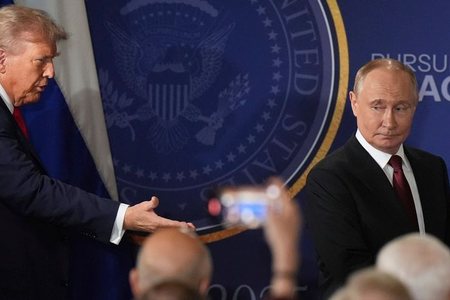
The war in Ukraine continues even as Trump and Putin sat in a room in front of a screen proclaiming they were “Pursuing Peace.” As preparations were underway for their first face-to-face meeting since 2019, there were no signs that Russian forces were preparing for a possible ceasefire, with reports that small groups had penetrated Ukrainian defenses in eastern Donbas.
Zelensky also warned that Russia was planning new offensives on three front lines. On the day of the summit, Ukrainian military intelligence claimed that Russia was preparing to conduct tests of a new nuclear-powered cruise missile capable of carrying bombs, which, if successful, would be used to strengthen its negotiating position with the US and European countries.
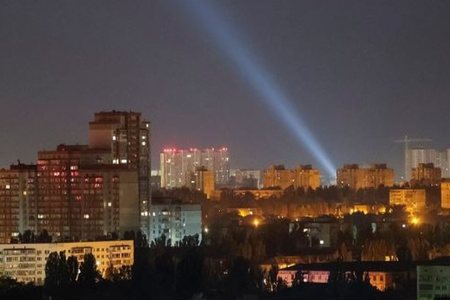
As the two leaders met, most of Ukraine's eastern regions were on alert for airstrikes, while the governors of Russia's Rostov and Bryansk regions reported that some of their territories were under attack by Ukrainian drones.
The ongoing fighting was proof that Putin had never been interested in negotiating a ceasefire, Ukrainian opposition lawmaker Oleksiy Honcharenko said on Telegram. “It seems that Putin has bought himself more time. No ceasefire or de-escalation has been agreed.” /Adapted from The Guardian/



Lini një Përgjigje