


 Shkruar nga Pamfleti
The negotiations involved everything. Washington's list of demands was constantly lengthened. The Commission President found herself in an increasingly unfavorable negotiating position. At one point she drew a line to stop the flow of concessions and yesterday put on the table countermeasures unimaginable just a few months ago: zero tariffs on American imports; a commitment to buy liquefied gas worth $750 billion and, in Trump's words, a "large amount of weapons"; direct investment in the US worth $600 billion.
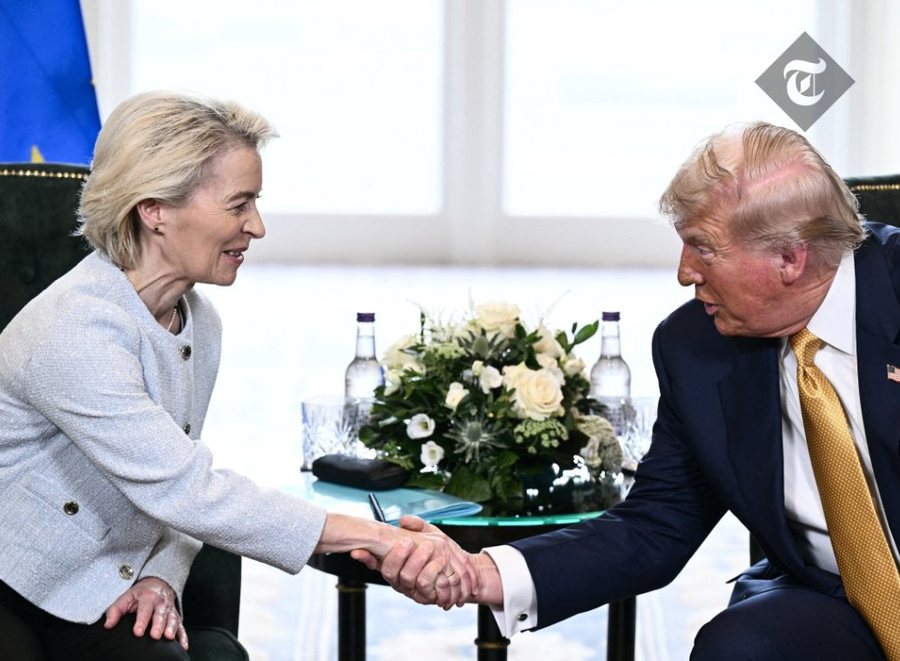
The European Union is paying a high price for “stability” in its relations with the United States. The terms of the agreement reached yesterday between Donald Trump and Ursula von der Leyen truly represent a “cold Scottish shower” for European businesses and, consequently, for their workforce. Essentially, this is a political agreement: the EU did not want to enter into a direct confrontation with the US.
In the pre-Trump era, the average tariff imposed by US customs on European goods was around 4.8%; now it is set at 15%. Three times more, without any real economic justification, because it is not true, as Trump claims, that Europe has been plundering the US in recent years.
Brussels and European capitals had created the illusion that the US president's offensive, launched on April 2, the day he announced tariffs on the rest of the planet, would fail in the face of the financial storm on Wall Street and other international markets. Or that it would stop to heed the alarm coming from the large retail chains in the US: the weight of customs tariffs would fall on prices, fueling inflation and curbing consumption, which is the key engine of the US economy.
Rightly or wrongly (this will be seen from the statistics in the coming months) Trump continued to move forward, until he faced the European Union with a difficult choice: accept a direct collision or try to limit the damage. The Commission, with the consent of the 27 EU partner countries, chose the second path and from that moment began a long and tiring pursuit of the American rabbit.
The negotiations involved everything. Washington's list of demands was constantly lengthened. The Commission President found herself in an increasingly unfavorable negotiating position. At one point she drew a line to stop the flow of concessions and yesterday put on the table countermeasures unimaginable just a few months ago: zero tariffs on American imports; a commitment to buy liquefied gas worth $750 billion and, in Trump's words, a "large amount of weapons"; direct investment in the US worth $600 billion.
Ursula, why did you do this?
Me shumë gjasa, për të shmangur rrëzimin në kaosin politik në ditët në vijim. Presidenti francez Emmanuel Macron dhe kancelari gjerman Friedrich Merz shfaqeshin gjithnjë e më të pakënaqur: strategjia pajtuese nuk po funksiononte. Më 1 gusht Trump do të rriste tarifat në 30% dhe, më 7 gusht, Komisioni do të përgjigjej me masa kundërpërgjigje me vlerë mbi 90 miliardë dollarë. Një skenar shkatërrues për ekonominë evropiane, i shoqëruar, me shumë gjasë, nga një tjetër stuhi financiare.
Von der Leyen u detyrua të zgjedhë mes një disfate të sigurt, por ndoshta të menaxhueshme, dhe rrezikut të një katastrofe me pasoja potencialisht shkatërruese. Ajo preferoi, për të thënë ashtu, të negocionte “dënimin” me Trump, në vend që të hynte në një përballje të pashembullt dhe objektivisht të rrezikshme.
Gabimi, ta përsërisim, u bë katër muaj më parë, kur nuk iu përgjigj siç duhej ofensivës së Trumpit, ashtu siç vepruan Kina apo Kanadaja, për shembull. Dhe nuk u hodh poshtë, me të dhëna konkrete për rritjen e prodhimit të brendshëm bruto gjatë tridhjetë viteve të fundit, përralla e një Amerike të shkatërruar nga evropianët. Por ta bëje këtë dje, do të kishte qenë shumë vonë. Tani, megjithatë, evropianët do të duhet të përballen me pasojat konkrete të kësaj goditjeje.
Sektori i vetëm që ndoshta mund të ndjejë njëfarë lehtësimi është ai i makinave. Kreu i Shtëpisë së Bardhë dëshiron që të gjitha automjetet që shiten në SHBA të prodhohen në fabrika amerikane. Për këtë arsye ai kishte vendosur një tarifë doganore prej 27.5% mbi makinat e importuara. Tani tarifa doganore është përcaktuar në 15%: do të shohim nëse prodhuesit evropianë do të arrijnë të rifitojnë konkurrueshmërinë. Ose nëse vështirësitë e hasura në tregun amerikan (dhe gjetkë) lidhen edhe me arsye të tjera. Tarifat mbi çelikun dhe aluminin mbeten në 50%: kjo do të thotë që do të vazhdojë procesi i zhvendosjes së eksporteve, i nisur tashmë edhe në Itali, drejt tregjeve të tjera.
Të dyja palët do të duhet më pas të zgjidhin çështje të tjera me rëndësi strategjike. Më e rëndësishmja: tema e teknologjisë dixhitale dhe furnizimit me gjysmëpërçues, pra përbërësit elektronikë të përdorur në një gamë të gjerë aplikimesh industriale. Amerikanët kërkojnë që evropianët të mos furnizohen nga Kina.
Çështjet specifike të disa vendeve ndërlidhen me probleme të përgjithshme. Dje, kryeministrja italiane Giorgia Meloni shprehu “kënaqësi” për faktin që BE dhe SHBA arritën gjithsesi një marrëveshje. Por ajo vuri në dukje se duhet të njihen detajet përpara se të jepet një gjykim për ndikimin mbi Italinë. Goditja, sidoqoftë, ekziston edhe për vendin tonë. Tani ministrat, grupet e interesit dhe diplomatët do të përpiqen të kufizojnë humbjet. Një rast është ai i sektorit agro-ushqimor: ideja është të nënshkruhen marrëveshje me importuesit amerikanë, në mënyrë që të ndajnë barrën e tarifave për të mos e kaluar të plotë te çmimet, duke larguar kështu konsumatorët.
On the European plan, the promise to buy many more weapons from the US seems in contradiction with the project to strengthen the military industry of the Old Continent, an essential step to build a common European defense, more independent of the United States./ Corriere Della Sera




Lini një Përgjigje