


 Shkruar nga Pamfleti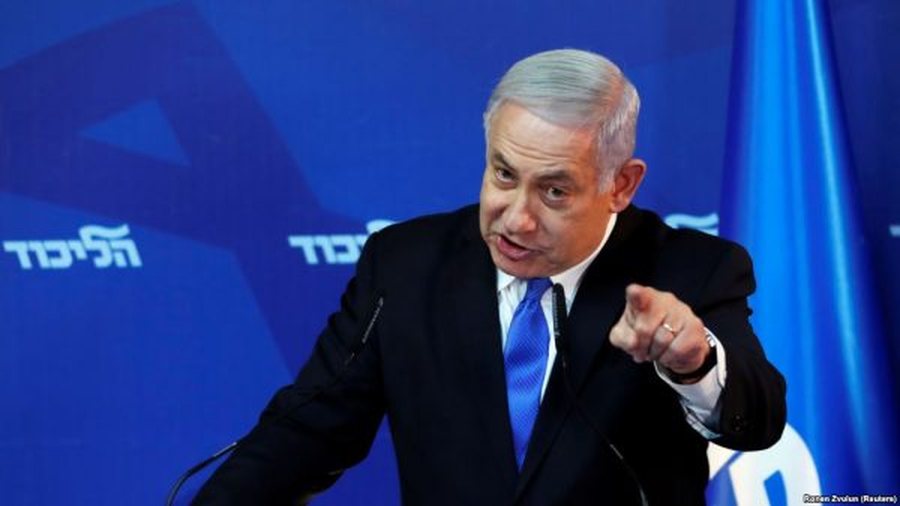
Senior Israeli generals and former commanders warned that this plan endangers the lives of Israeli hostages still being held by Hamas...
An Israeli security cabinet meeting scheduled to discuss Benjamin Netanyahu's call for a "total occupation" of Gaza has been postponed amid heightened tensions over the feasibility of the plan.
At a time when ceasefire talks with Hamas have stalled, Israeli officials had informed local and international media that the prime minister was considering an expanded offensive, aiming to take full control of Palestinian territory after 22 months of war against Hamas.
But senior Israeli generals and former commanders warned that the plan endangers the lives of Israeli hostages still held by Hamas, could lead to further international isolation of Israel and would require Israeli soldiers to administer a population where Hamas militants still operate.
Any move towards a full occupation is expected to meet strong resistance from much of the international community, already horrified by the way the Israeli military offensive is unfolding. Israel's devastating campaign has wiped out large parts of Gaza, killing more than 60,000 people, mostly civilians, forcing more than 2 million of its residents to flee their homes and causing, according to an international hunger report, an unprecedented famine.
This has caused widespread global outrage and prompted several European countries to warn they will recognize a Palestinian state next month if a ceasefire is not reached, amid growing calls for sanctions on Israel.
Tensions escalated after Israeli media reported on Monday that Netanyahu had already made the decision for the expanded offensive.
“The die has been cast. We will completely occupy the Gaza Strip and destroy Hamas ,” anonymous sources said, quoting Netanyahu. But on Tuesday it became clear that there were deep divisions between Netanyahu and the military high command, including Chief of Staff Eyal Zamir, who reportedly opposed the plan, prompting calls for his dismissal.
Even military analysts in the Israeli media expressed skepticism. Yossi Yehoshua, a military commentator for Yedioth Ahronoth, warned of the consequences.
"Hostages... will die, many IDF soldiers will lose their lives, and a serious logistical problem will be created, where will the approximately 1 million civilians who are in Gaza City be sheltered? Currently, Israel has neither the legitimacy to continue the war, nor to build a refugee city on its ruins ," he said.
Israeli officials said Netanyahu had discussed the plan with the White House as he sought to hold Hamas responsible for stalling ceasefire talks, a claim rejected by Hamas, which accuses Israel of blocking the negotiations.
The Trump administration has not commented on Netanyahu's proposal, but several leaked statements by US envoy Steve Witkoff, during a meeting with the hostages' families, suggested that the proposal for a hostage exchange in exchange for a temporary ceasefire had failed.
According to him, Donald Trump now believes that everyone should return home immediately. Not partial agreements, adding that an "all or nothing" plan was being pursued.
At the heart of Netanyahu's plan is the idea that by surrounding areas where hostages are thought to be being held, Israeli forces can carry out rescue operations, a strategy that has failed throughout the two years of war.
Some analysts suspect that Netanyahu's call is more political rhetoric to keep in the coalition far-right ministers, who have called for the construction of Israeli settlements in Gaza.
A Palestinian official close to the negotiations told Reuters: " These threats could only be pressure on Hamas to make concessions at the negotiating table. But this only complicates the situation, the resistance factions will not accept anything less than an end to the war and a complete withdrawal from Gaza."
Israel's real capabilities for such an operation are also in doubt, as the army is facing personnel shortages, repeated call-ups of reservists, and a mental health crisis among troops, including cases of suicide.
During a visit to Gaza on Tuesday, Israeli Defense Minister Israel Katz proposed a more limited long-term occupation, saying Israel would maintain a permanent IDF presence in a strategic “security zone” in Gaza to prevent future attacks and arms smuggling.
“This is the main lesson of October 7. As in other sectors, here too, the IDF must stand between the enemy and our communities – not just to fight the enemy, but to separate him from our civilians ,” Katz said.
Meanwhile, inside Gaza on Tuesday, Israeli gunfire and airstrikes killed at least 13 Palestinians, according to local authorities, including five people in a tent in Khan Younis and three others seeking aid near Rafah in the south.
Israeli tanks penetrated central Gaza, but it is not yet clear whether this is part of a wider ground offensive./ Adapted from "Pamphlet" by "TheGuardian"







Lini një Përgjigje