


 Shkruar nga Ben Aris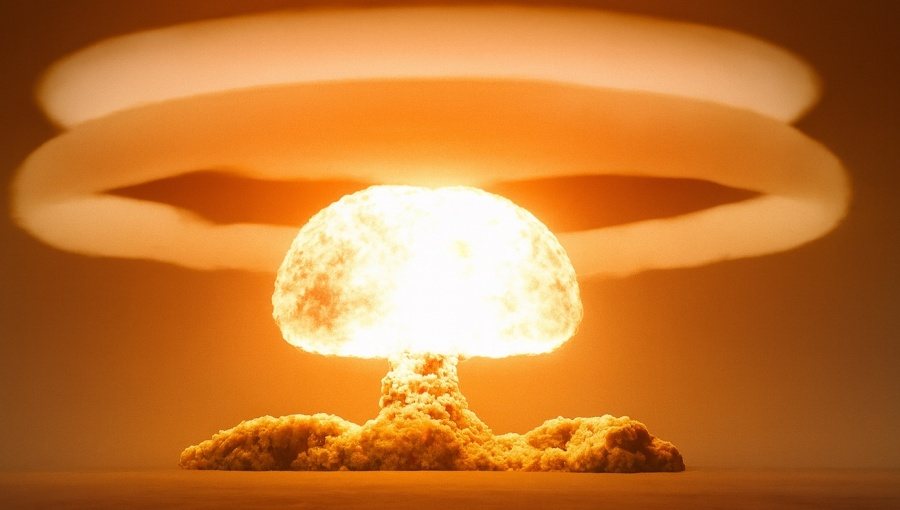
Russia has responded by threatening to move its Oreshnik ballistic missiles to Belarus, and the Russian Foreign Ministry says it will abandon its adherence to the Intermediate-Range Nuclear Forces Treaty (INF Treaty) that limits the deployment of short- to medium-range missiles near its borders.
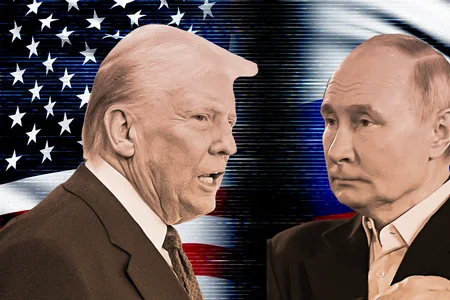
US President Donald Trump moved two nuclear submarines to a "suitable location" as part of his tough confrontation with Russian President Vladimir Putin, which culminates this week when a 10-day ultimatum set by the White House leader expires.
Russia has responded by threatening to move its Oreshnik intercontinental ballistic missiles to Belarus, and the Russian Foreign Ministry says it will abandon its adherence to the Intermediate-Range Nuclear Forces Treaty (INF Treaty), which limits the deployment of short- to medium-range missiles near the border of adversaries.
Trump pulled the US out of the treaty in 2019, but Russia has adhered to its terms unilaterally. Like Russia's decision to suspend, not withdraw from, the START missile treaty it signed with Joe Biden in January 2021, this was one of those gestures the Kremlin has made while keeping the door open for the revival of all Cold War missile agreements.
The Kremlin really wants to return to Cold War security arrangements and accepted Biden’s offer to renew the START missile treaty in January 2021, which now expires next year. The Kremlin immediately suggested renewing the INS Treaty as a follow-up, as the next most important step. Biden seemed open to such talks. As a senator, he strongly opposed George Bush’s decision to unilaterally withdraw from the key ABM (Anti-Ballistic Missile Treaty) treaty in 2002, saying it would be destabilizing.
This decision started what became an arms race, and you can draw a direct line from the cancellation of the ABM treaty to the invasion of Ukraine. The ABM treaty was the cornerstone of Cold War security agreements, the first arms deal, signed between Richard Nixon and Soviet leader Leonid Brezhnev in 1972.
Her removal was a really big deal and a really bad idea. I had friends involved in those talks and the Russians were outraged and horrified by the decision. This decision completely ruined what had been warming relations. If you recall, Putin's first foreign trip was to London, where he stood in the House of Commons with Tony Blair and gave half of the shares of the major oil company TNK to BP.
This was not a 49/51 joint venture, but a straight 50-50 split, a true partnership, which is rare in this business. Putin was very serious about making friends with the West. The cancellation of the anti-ballistic missile system two years later was a stinging slap in the face to those hopes, but it took Putin another five years before he began to object and take drastic measures.
Are we slowly sliding into a war between Russia and the US? There is a general decline in the security system that has actually been going on for more than a decade. Russia suspended its participation in the Treaty on Conventional Armed Forces in Europe (CFE Treaty) in 2007, the same year that Putin gave his famous speech at the Munich Security Conference (MSC), and officially withdrew on November 7, 2023. Belarus announced the same day that it was also withdrawing from the treaty.
Russia’s decision to now ignore the INF treaty is another escalation of tensions, and Ukraine’s policy of increasingly striking targets inside Russia — something its allies have strongly discouraged as part of its “escalation management” strategy — is adding fuel to the fire. Biden’s team worked hard to prevent these attacks, but since Trump left Ukraine, Bankova has increasingly taken the initiative and is counterattacking in the only way she can. Targeting Russian refineries or oil infrastructure, with a few token drone strikes in Moscow and other cities thrown in to make the war more palatable to the Russian population, is a clear strategy.
The good start that Putin and Biden made in their Geneva meetings in early 2021 was a golden opportunity to restore relations and at least rebuild the security infrastructure that helped us get through the Cold War without destroying the earth. The slow decay of what is left of that infrastructure is deeply troubling and dangerous — especially with what Jon Stewart cleverly called, “a man-child” at the helm of the White House.
However, Putin is also to blame, having continued his insistence that Ukraine remain neutral for far too long. He first massed troops on the Ukrainian border in March 2021 and then again in the fall. This was also the year of Russian Foreign Minister Sergei Lavrov’s “new rules of the game” speech in February 2021, which rejected the test, and the year ended with the Russian Foreign Ministry’s eight-point list of demands in December, which set the stage for the start of war in February of the following year.
I read Bob Woodward's excellent book "The Attack Plan" (2004) about the start of the Iraq War, which showed at length how a series of harmless "just in case" preparations led inevitably to the start of a war that no one intended to fight or thought necessary, but which eventually reached the point of no return. It seems as if we are wandering down the same path now. /Adapted from Intellinews/




Lini një Përgjigje