


 Shkruar nga Pamfleti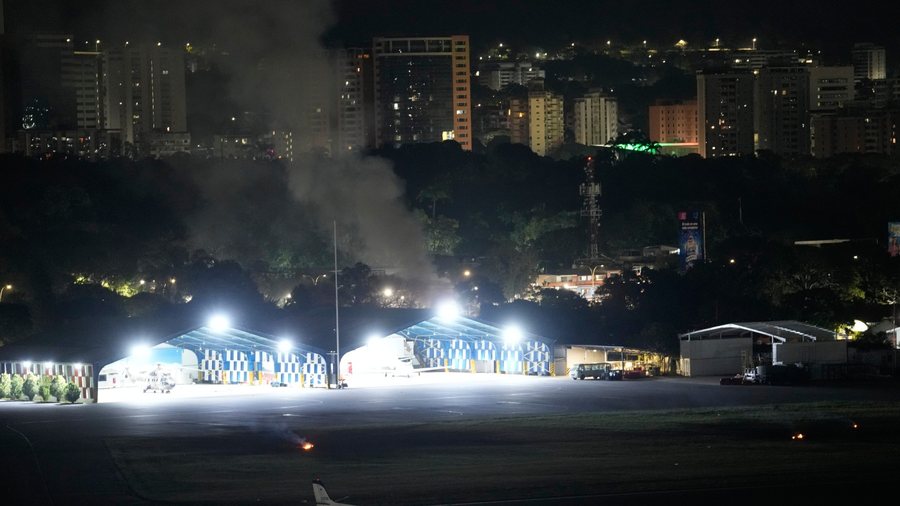
An in-depth analysis of the geopolitical factors and internal forces that will determine whether the capture of Nicolás Maduro will serve as a catalyst for Venezuela's democratic renaissance, or as the opening of a "Pandora's Box" that will lead to a new phase of asymmetric violence and state fragmentation...
The operation launched this morning in Caracas, codenamed "Southern Spear," marked the end of a long isolation strategy built by the second Trump administration. For years, Washington had oscillated between economic sanctions and diplomatic pressure, but it was the appointment of Marco Rubio as Secretary of State that fundamentally changed the game.
Rubio managed to establish a legal and political framework where Nicolás Maduro was no longer treated as a legitimate leader, but as the head of a transnational “narco-state.” This relabeling allowed the US to frame the attack not as an act of traditional warfare, but as a massive law enforcement operation against narco-terrorism.
The logic of the “Decapitation Strike” was executed with precision by US special forces. Within hours, Venezuela’s air defenses were neutralized and Delta Special Forces penetrated the command centers, capturing Maduro and his inner circle.
This moment was not simply a military victory; it was a crushing blow intended to destroy the military's confidence in the regime. By flying Maduro out of the country to face American justice, the US created an immediate vacuum, forcing his successors to choose between desperate resistance and negotiations for survival.
The descendants and the struggle for the legacy of Chavismo
With Maduro's capture, the most important question is: who can hold together the remnants of the "Bolivarian Revolution"? The first candidate in the hierarchy is Vice President Delcy Rodriguez. She represents ideological continuity and close ties to intelligence networks.
However, Rodriguez faces an existential challenge: without Chavez's former charisma or Maduro's iron grip on the money supply, her power is largely rhetorical. She is attempting to invoke the "Constitution" to declare herself legitimate president, but without international recognition and with her bank accounts frozen, her authority is fading by the hour.
In the shadows stands Diosdado Cabejo, the party's (PSUV) strongman and closely linked to military and paramilitary structures. Cabejo is the most dangerous figure for a peaceful transition because, unlike Rodriguez, he controls the "colectivos" (armed groups) and has the support of some hard-line segments of the military who fear extradition to the US.
The scenario of a “bunker resistance” led by him could turn Caracas into an urban conflict zone. On the other hand, the figure expected to take the reins of the civilian transition is Maria Corina Macado. Known for her uncompromising stance against the current regime, she enjoys great popular legitimacy and the unstinting support of Washington.
Her main challenge is to transform from an opposition leader into a president of national unity, convincing the army's middle officers that their future is safer in a democratic Venezuela than in a civil war at the expense of the old Chavista elites.
Three possible scenarios
The future of Venezuela after today's events fluctuates between three main scenarios.
1. “Controlled transition”: This is the optimistic US scenario: the military abandons Maduro’s successors in exchange for amnesty, Delcy Rodriguez is forced to flee the country, and a transitional government led by Machado announces free elections within 6 months. This scenario requires a massive injection of capital to stabilize the local currency and secure food supplies, thus buying social peace.
2. “Somali-style fragmentation”: If the army splits into factions and Cabello activates paramilitary groups, the country could slide into an asymmetric conflict. In this case, Maduro’s successors would no longer govern the country, but would lead cartels and guerrilla cells that control oil resources and gold mines in the south. This scenario would require a prolonged US military presence, something Trump is keen to avoid in order to avoid getting involved in “another Iraq.”
3. “Military protectorates”: In this variant, the military takes power to “restore order,” sidelining both Maduro’s successors and the civilian opposition. This would be an Egyptian-style transition model, where generals promise democracy but retain control over the economy and security.
On the geopolitical front, the apathy of Russia and Iran (despite formal statements) suggests that they are waiting to see which of these scenarios will prevail. Moscow will not risk a war for a regime that has already fallen, but it will certainly use disinformation to stoke anti-American sentiment, especially if the transition turns violent.
Venezuela's fate no longer depends on the capture of one man, but on the ability of Washington and the opposition to manage the regime's successors without turning the country into a firestorm in the heart of Latin America. / Adapted from "Pamphlet" by the "Lansing Institute"


Lini një Përgjigje