


 Shkruar nga Nicholas Vinocur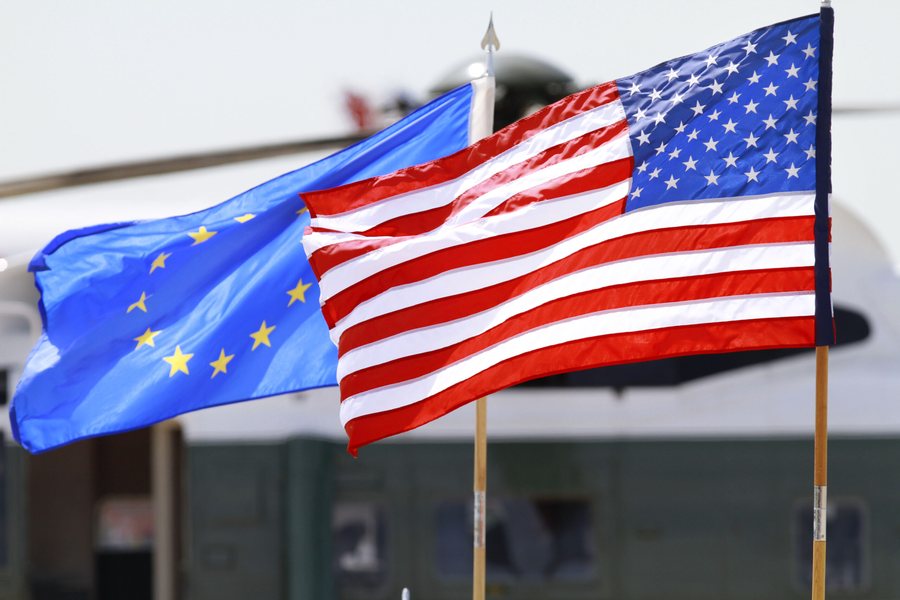
Europe is simply not as important to Washington as it once was. Aged and shrinking, allergic to power politics, divided and risk averse
As American voters choose a new president, Europeans anxiously await whether the winner will be Donald Trump – another nightmare – or Kamala Harris, who is seen as much better for transatlantic relations.
Here's a tip from a lifelong Euro-American: Worry less about the US presidency and more about how Europe can hack it alone on a dangerous global stage. The uncomfortable truth is that American interest in Europe has been waning over the past 30 years. And neither candidate is likely to restore the transatlantic boom of the early 1990s.
This does not mean that these elections will not affect Europe. One candidate is an admirer of Vladimir Putin, who wants to impose 100 percent tariffs on European goods and vows to end the war in Ukraine the day after his election. His reported threats to pull Washington out of NATO should be taken seriously, because, this time, Trump would probably not be surrounded by "Deep State" restraints. Harris, on the other hand, promises continuity in the US's global leadership role and has a Europhile adviser, Phil Gordon, in whom Europe has high hopes.
But if you take a step back, the bigger picture is this: Europe is simply not as important to Washington as it once was. Aging and shrinking, allergic to power politics, fractured and risk-averse, Europe increasingly evokes not love in many Americans, but sneering disdain—a nice vacation spot and not much else. It doesn't help that the performance gap between the US and European economies is inexorably widening, to America's advantage.
Transatlantic boosters will point out, rightly, that the US-EU relationship has been good under President Joe Biden. His support for Ukraine (including a $20 billion loan announced last week) has been unwavering, even if it falls short of wild hopes. His administration, through national security adviser Jake Sullivan, has forged a close relationship with European Commission President Ursula von der Leyen.
"Because of the war in Ukraine, I think the US is more passionately engaged with Europe than it has been in 70 years," wrote Whit Stillman, an American filmmaker who has spent most of his career in Europe. .
But Biden is bound to be America's last Cold War president. In its wake, le déluge—or rather a group of policymakers who think Russia poses no substantial threat to U.S. interests, or who have an extremely diminished sense of Washington's role in the world.
To understand how much things have already changed, it is useful (or masochistic) to look back to the days when the gold standard of Pax Americana was at its highest and proudest in the European sky - or the day when the "Peak of America" was achieved.
The date was June 6, 1994. America's allies had gathered in northern France to celebrate the 50th anniversary of D-Day. A young, saxophone-playing president, Bill Clinton, was the star of the show. The US had won the Cold War and now stretched across the entire western territory of Eurasia, militarily unchallenged but still having more than 120,000 troops. A few years ago, Washington issued the call and 40 countries, including several European ones, joined Operation Desert Storm. On the diplomatic front, the giants Richard Holbrooke towered over Berlin from the US Embassy.
Culturally, it was also a different era. The Dream Team, featuring NBA stars Michael Jordan, Charles Barkley and Larry Bird, had danced and dribbled their way, effortlessly, to a gold medal at the 1992 Barcelona Olympics. EuroDisney - a kind of American colony , tastefully on the outskirts of Paris—had just opened, imposing Mickey-mania on a groaning French public. American media, from the Herald Tribune to the Wall Street Journal Europe, were still big, bold presences in European life, richly staffed and highly regarded.
Compare and contrast with today's situation. The US has withdrawn or reduced its European footprint in almost every department except one – the digital sphere, where US tech companies like Facebook and X reign more or less supreme on our screens but bring no glamour. Troop levels are well below 100,000, despite the hot war on NATO's doorstep.
For Jérémie Gallon, a Frenchman who has worked in Washington and written a biography of Henry Kissinger, the waning of US interest in Europe is not a bad thing, per se. But, according to him, it is an indisputable fact related to a change in the elite of Washington's foreign policy.
"There was a whole generation of high officials who had organic ties to Europe, either because their parents emigrated, or because they were refugees from Europe. Kissinger, [former national security adviser Zbigniew] Brzezinski, [former Secretary of State Madeleine] Albright. They were all European at one level," Gallon said.
Zhvendosja formale nga Evropa filloi në kohën e ish-presidentit Barack Obama, i cili drejtoi axhendën Pivot në Azi. Por Obama thjesht nxiti një proces tashmë në lëvizje, i cili tani mund të përshpejtohet.
"Tani ne kemi një brez të ri në rritje që pasqyron demografinë amerikane. Ata [zyrtarët e qeverisë amerikane ose diplomatët] ose janë të lidhur me botën spanjolle, ose shikojnë drejt Azisë. Ata që kanë lidhje me Evropën janë thjesht më pak të pranishëm", tha ai.
Degradimi i Evropës në psikikën e elitave amerikane reflektohet në zgjedhjet arsimore dhe të karrierës. Zotërimi i gjuhës Mandarin tregon më shumë ambicie për një diplomat aspirant sesa, të themi, francez apo edhe rus.
Ironia e madhe e tërheqjes së Amerikës nga Evropa është se është e vështirë të përcaktosh një arsye specifike pse po ndodh. Per Ben Hodges, i cili dikur komandonte ushtritë e Amerikës në Evropë, kostoja e Amerikës për vendosjen e deri në 450,000 trupave në kontinent në kulmin e Luftës së Ftohtë është përballuar lehtësisht gjatë 70 viteve të fundit dhe ka sjell përfitime për Shtetet e Bashkuara që janë shumë jashtë proporcionit me investimin.
Për më tepër, edhe tani, marrëdhënia ekonomike midis SHBA-së dhe Bashkimit Evropian është më e madhe se sa ka qenë ndonjëherë në histori. Vëllimet në tregtinë transatlantike të mallrave dhe shërbimeve janë të mëdha dhe po rriten vit pas viti.
Disa evropianë e kanë marrë përsipër t'i kujtojnë Uashingtonit këto fakte. Në një letër prej pesë faqesh dërguar ministrave të jashtëm evropianë në korrik, Ministri i Jashtëm polak Radek Sikorski u kërkoi homologëve të tij të flisnin për përfitimet reciproke të marrëdhënieve dhe të shpërndanin perceptimet negative për marrëdhëniet transatlantike që kanë zënë vend kryesisht në anën republikane.
Por ky është një kërkim i vetmuar dhe që duket se nuk ka shumë kamion me izolacionistët MAGA. Për Trump, i cili e sheh NATO-n si një barrë, ose kandidatin e tij, JD Vance, i cili e barazon frenimin e Rusisë me "luftënxitës", prania e Amerikës jashtë shtetit duket si një bezdi, një shpërqendrim nga prioritetet e brendshme si deportimi i emigrantëve ose mbajtja e çmimeve të ulëta.
Ndërsa ora shkon poshtë për në 5 nëntor, evropianët po përballen me perspektivën e shkëputjes së mëtejshme të SHBA. Nëse Harris fiton, mendohet se Shtëpia e Bardhë do të vazhdojë të mbështesë Ukrainën, por në fund do ta drejtojë Kievin drejt një marrëveshjeje me Rusinë në një të ardhme jo shumë të largët. Investimi në NATO do të mbetet i qëndrueshëm, megjithëse prirja themelore do të ishte prioritizimi i mëtejshëm i Indo-Paqësorit mbi Evropën.
Nëse Trump fiton, ka një ndjenjë në rritje se të gjitha bastet janë të dështuara. Disa besojnë se administrata e tij do të sillej në mënyrë racionale, ose të paktën në mënyrë racionale sipas standardeve të tij, dhe nuk do ta kthente tryezën për NATO-n dhe se ai do të ndiqte një marrëveshje për luftën në Ukrainë që do t'i lejonte të dyja palët të pretendonin fitoren.
But not everyone is so sure. Caught by surprise in 2016, EU officials now say they are preparing for anything Trump might throw at them. Diplomats and trade officials promise they are ready to hit back "swiftly and hard" if Trump tries to start a trade war with the EU. However, this type of trade is arguably the easiest part when it comes to predicting Europe's long-term relationship with the United States. Much more challenging is planning for a future in which the US is significantly and permanently less engaged in Europe's defense.
On this front, France is playing the role of Europe's Cassandra, warning that the bloc must get its act together on defense regardless of who is elected president.
The tune has been picked up by the European Commission in Brussels, which wants Europe to be more independent in technology, defense and raw materials. But the truth is that when it comes to imagining a future with less America, the bloc is deeply divided. However enthusiastic the proponents of European "strategic autonomy" may be, there is no momentum behind the creation of a European military or a European nuclear umbrella.
Some countries see the push from Paris as a ploy to bolster French companies. They consider the proposals for a stronger Europe with unified strategic and military goals as a Trojan horse that would be subject only to the largest states, ie France and Germany. For others, Putin's Russia is merely an existential threat. Losing America's protective umbrella is simply unthinkable. This would expose them to the brunt of Russia's nuclear and conventional arsenal, with no credible counterbalance.
"Without the United States, Europe is lost," French analyst Nicolas Tenzer wrote last year. Much more dangerous is the risk that Europe will not admit that it is already lost and as a result will remain in a paralyzed country./ Adapted "Pamphlet" from "Politico"




Lini një Përgjigje