


 Shkruar nga Michele Valensise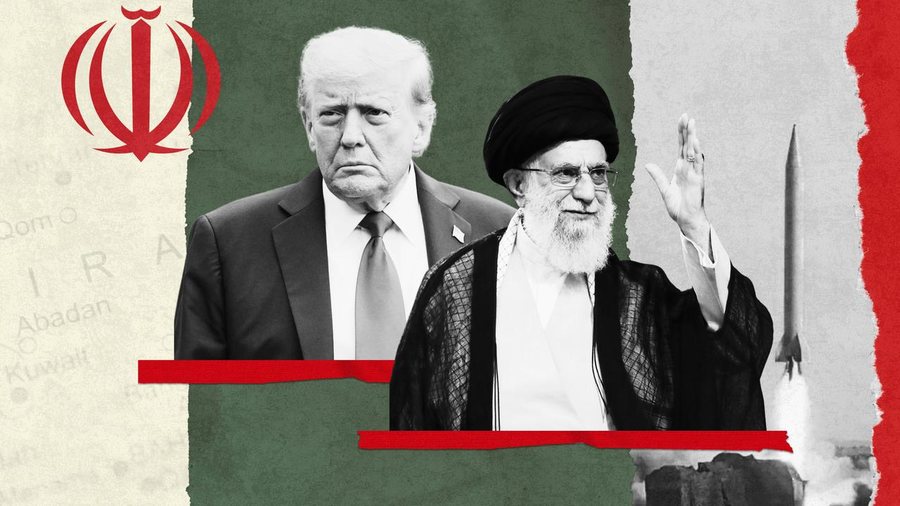
The American president wants to do it all himself and no one tells him that the military option is tempting. The Iranian supreme leader does not question his failed and bloody regime...
Possible US military intervention against Iran hangs by a thread, shrouded in uncertainty. Donald Trump has given Tehran two weeks to finalize a deal, threatening "bad things" if no deal is reached. Iranian Foreign Minister Abbas Araghchi has pledged to present a meaningful proposal within two to three days. But tensions are rising, with the deployment of US naval and air forces in the region the largest since the Iraq war.
Are US aircraft carriers approaching Iran to pressure the ayatollahs for acceptable terms or to launch an attack on the regime? Is this a Trump-style negotiating tactic or a prelude to an armed offensive? The precedent of June 2025, when the Americans bombed Iranian nuclear facilities in support of Israeli intervention, is not helpful in making predictions. Then, having set a deadline for talks, the United States attacked before the deadline. Today, all options are open, but at this point, the US commitment to the region may be so great that it no longer justifies a withdrawal without action.
Henry Kissinger argued that there were few countries in the world with which the United States had less to quarrel than Iran; he was thinking of Afghanistan, Sunni fundamentalism, and other issues. Times have changed, logics are different, dialogue is very complicated. Will they understand each other? However, there is room for an agreement that would prevent the use of weapons. With the IAEA, control over the civilian or military use of uranium should not be an unattainable goal, even if the possibility of transferring enriched uranium stocks to third countries fades. For Iran, this is a matter of political will and, even more, a misguided sense of national pride, in reality the fruit of a Khomeini-style ideology of open antagonism and ancestral distrust, deeply rooted for some time. On the streets, the cry of the supreme leader's followers is always "death to Israel" or "death to America," never "long live Iran": the priority is challenge, not development, notes Karim Sadjapour of the Carnegie Endowment.
In Tehran, the regime ignores its own weakness. Its proxies in the region (Hezbollah, Hamas, the Houthis) have suffered devastating blows, and its closest ally, Bashar al-Assad’s Syria, has collapsed. The June attack left its mark, demonstrating the fragility of key systems. Domestically, the situation is dire, with the ayatollahs hated, the economy in disarray, and protests drowned in blood. But the harsh and relentless repression does not dampen the extraordinary courage of many people who are willing to die for freedom. In early January alone, crushing a large but fragmented and disorganized opposition, Iranian police killed more people (32,000 according to US estimates) than in the thirteen months before the 1979 revolution. Now Khamenei and his followers, disoriented by external and internal pressure, may underestimate Donald Trump’s impatience, the appeal of action to the American president, and his taste for displays of power and determination. They should have read the new US National Security Strategy.
In Washington, life moves from day to day, amidst uncertainty. The State Department remains marginalized, and the president will decide if and when to strike. Meanwhile, questions remain about the effects of a possible new round of bombings in Tehran. The possibility of the physical elimination of the supreme leader, who has led the Islamic Republic for forty-seven years, is not linked to a later scenario. From the continuity of power held by the Shiite clergy to an even more influential role for the military hierarchy, from a new nationalism to a hybrid solution, the developments are far from clear. The inevitable response from Iran, whose missile capabilities are well known, targeting American, Israeli or other interests, can also be foreseen. This is even more true considering that precisely because of Tehran's missiles and ties to its proxies, indirect talks with the United States have encountered a fundamental difficulty, given that the Iranians have categorically excluded these two items from the agenda in order to focus solely on the nuclear issue.
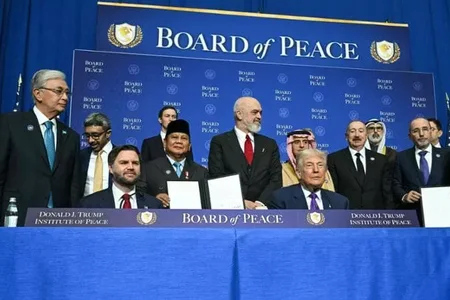
IAEA inspections, curbing repression, and reform sound like anathema to the Iranian regime. For the ayatollahs, weakening the principles of Khomeini’s revolution would lead to the end of Iran, just as, according to them, perestroika and glasnost led to the collapse of the USSR. Intransigence is the existential hallmark of a failed revolution, a prisoner of its absurd dogmas. Opposite it, without any plan for the future, stands Donald Trump’s army, to which no one has been able to show, not even at the Peace Council, that the military option risks being ineffective and instead igniting a dangerous conflagration throughout the Middle East./ Adapted “Pamphlet” from “ HuffPost ”



Lini një Përgjigje