


 Shkruar nga Pamfleti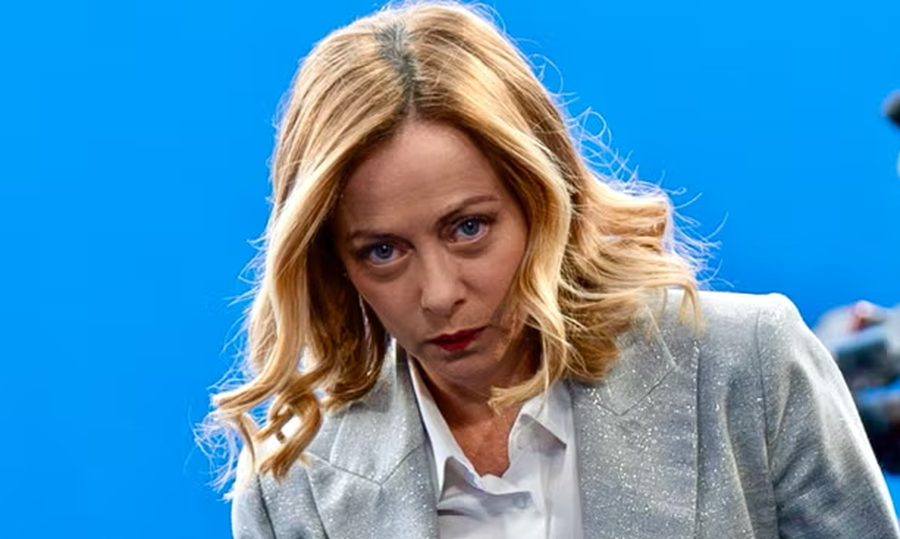
Europe must find a balance. We know what we have to do.
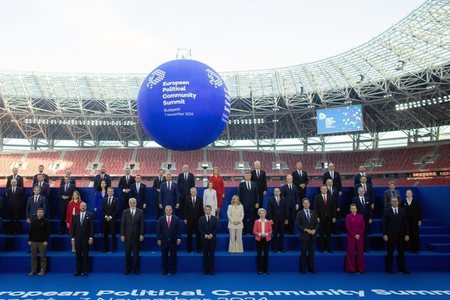
EU leaders have gathered in Budapest for an informal summit on the bloc's weak competitiveness, adding to the threat of the "America first" trade policies promised by US President-elect Donald Trump.
" Ask not what the US can do for you, ask what Europe must do for itself. Europe must find a balance. We know what we have to do" , said the Italian Prime Minister, Giorgia Meloni, while the meeting was taking place.
European officials are alarmed by Trump's imminent return not only because of his hostility to NATO and ambivalence toward Ukraine, but also because of the economic consequences of his threat to make the EU "pay a big price" " for not buying enough imports from the US.
Leaders will focus on discussing a series of radical reforms proposed in a major report published in September by former Italian prime minister and European Central Bank chief Mario Draghi, who warned the bloc would face a "collapse of slow and painful" if it does not act quickly and decisively to end the years of stagnation.
The EU's response to its economic woes - and Trump's re-election, however - is hampered by the fact that its two biggest powers have been weakened by political crises at home. Germany's coalition government fell on Wednesday, while France's president, Emmanuel Macron, lacks a parliamentary majority.
Saying that the Covid pandemic and the Ukraine war had changed the rules of international trade to the detriment of the EU, Draghi's report called for a massive investment of €800bn a year in the bloc's economy - equivalent to around 5% of the EU's annual economic output.
But its 170 key recommendations, outlining how the EU can boost growth while moving towards a greener and digital economy that would be competitive at a time of rising global trade tension and conflict, contained some choices difficult.
Draghi's proposals to finance urgently needed additional investment include more mainstream borrowing – a prospect that is anathema to traditionally more "thrifty" nations in the bloc, such as Germany and the Netherlands.
Draghi, who was due to present his detailed report to the 27 EU heads of state and government attending the summit, said on Friday that the bloc could no longer avoid vital decisions, adding that "the sense of urgency today is bigger" than the one a week ago.
" We have postponed many important decisions to find consensus [among EU member states]. This consensus did not come and as a result we have suffered lower economic growth, and now stagnation ," Draghi told reporters.
He said joint borrowing, initially undertaken by the bloc to fund its pandemic recovery funds, would be essential. "But it is not the priority - it should be a real single capital market," he said, to ensure that investment and savings flow across all member states.
The summit was expected to adopt a four-page "new European competition deal", acknowledging the broad conclusions of the Draghi report and calling for efforts to cut red tape, boost key sectors such as defence, biotechnology and artificial intelligence, to ensure a level commercial playing field and to explore public and private financing options.
Diplomats and analysts saw a reversal and collapse of the ongoing crisis of the German government, triggered when the chancellor, Olaf Scholz, fired his liberal finance minister, Christian Lindner, collapsing the three-party coalition. Many were encouraged by the departure of the extremely frugal Lindner.
"With Lindner there, there was no way to have a discussion about a more ambitious long-term budget or strengthening defense funding at the EU level," said one diplomat.
Others expressed hope that a new German government could prove more constructive on the European stage than the current coalition, whose ongoing internal disputes and infighting often led Berlin to abstain in key votes.
The hope was that the next German government would be "more coherent" and "therefore finally able to take clearer positions on European initiatives," said Sylvie Matelly, of the Jacques Delors institute.
However, with Europe's largest economy likely to be mired in political limbo for the next few months, there was little hope of any concrete steps being taken to stimulate Europe's economy in the near future . Pamphlet" from "TheGuardian"


Lini një Përgjigje