


 Shkruar nga Pamfleti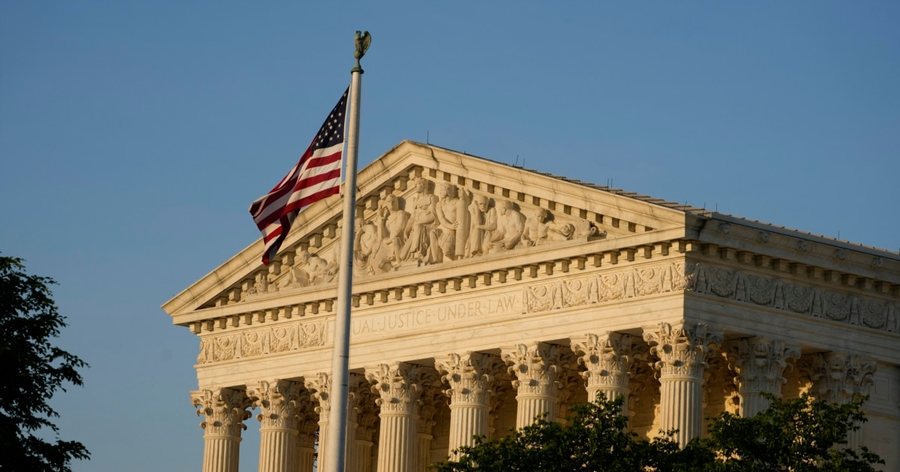
The administration of US President Donald Trump has taken the tariff issue to the Supreme Court and asked the justices to quickly decide whether the president has the power to impose tariffs on imports, under federal law.
The administration called on the Supreme Court to overturn an Appeals Court ruling that found that most of the tariffs imposed by Trump constituted an illegal use of the emergency powers law.
This is the latest in a series of cases sent by the US administration to the Supreme Court and is expected to put before the judges one of the main pillars of President Trump's trade policy.
The Court of Appeals for the Federal Circuit has left the tariffs in place, but the administration called on the highest court in the US to intervene quickly, through a petition filed electronically on the evening of September 3. The case before the court is expected to be formally registered on September 4.
Attorney General D. John Sauer has asked the judges to take up the case and hear arguments from the parties in early November.
“That [Appeals Court] decision casts a shadow of uncertainty over the negotiations with foreign countries that the president has pursued through tariffs over the past five months, jeopardizing both the framework agreements already reached and the negotiations that are underway,” he wrote. “The stakes in this case are very high.”
Businesses have won twice in court, once in a federal court that deals with commercial matters and then in the Court of Appeals.
The tariffs and their implementation have shaken global markets and raised fears of rising prices and slowing economic growth.
But Trump has used the tariffs to pressure the European Union, Japan and other countries to agree to new trade deals with Washington. Revenue from the tariffs reached $159 billion by the end of the year, double the revenue from the same period last year.
A majority of judges on the Court of Appeals for the Federal Circuit found that the International Trade Act of 1977 does not allow Trump to usurp Congress's power to impose tariffs. But the dissenting judges said the law allows the president to regulate imports during emergencies without clear restrictions.
The decision includes two sets of tariffs on imports that Trump imposed after declaring a national emergency: tariffs announced in April and those in February on imports from Canada, China and Mexico.
The U.S. Constitution gives Congress the power to impose taxes, including tariffs. But in recent decades, lawmakers have delegated this authority to the president.
Several tariffs imposed by Trump, including those on steel, aluminum and foreign cars, were not included in the appeals court's ruling. The ruling also does not include tariffs the US president imposed on China during his first term, tariffs that remained in effect during Joe Biden's presidency.
Trump can also impose tariffs under other laws, but they have more restrictions on the speed and severity with which he can act.
The US administration has argued that, if the tariffs are repealed, it may have to refund some of the import taxes it has collected, which would cause a financial blow to the US Treasury./ REL




Lini një Përgjigje